Cardinal Flower
Lobelia cardinalis
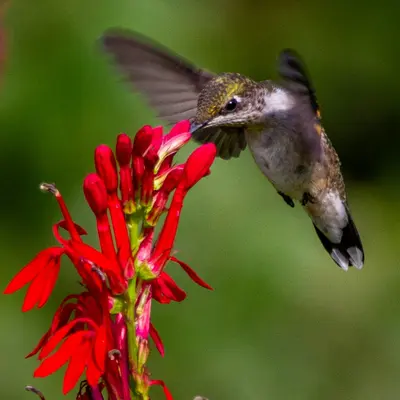
Nature's most brilliant red wildflower creates an unforgettable display with its intense scarlet blooms that seem to glow in shade gardens. This native beauty is a hummingbird magnet, drawing ruby-throated hummingbirds from miles around with its tubular flowers perfectly designed for their long beaks. Thriving in moist soils where many plants struggle, it brings vibrant color to pond edges, rain gardens, and woodland borders.
Sun
Full sun to partial shade
Zones
3–9
USDA hardiness
Height
4-5 feet
Planting Timeline
Showing dates for Cardinal Flower in USDA Zone 7
All Zone 7 native-wildflower →Zone Map
Click a state to update dates
Cardinal Flower · Zones 3–9
Growing Details
Complete Growing Guide
Light: Dappled Sunlight (Shade through upper canopy all day), Full sun (6 or more hours of direct sunlight a day), Partial Shade (Direct sunlight only part of the day, 2-6 hours). Soil: High Organic Matter. Drainage: Moist, Occasionally Wet. Height: 4 ft. 0 in. - 5 ft. 0 in.. Spread: 1 ft. 0 in. - 2 ft. 0 in.. Spacing: 12 inches-3 feet, 3 feet-6 feet. Maintenance: Low. Propagation: Division, Seed. Regions: Coastal, Mountains, Piedmont.
Harvesting
Displays from August to November
Color: Brown/Copper. Type: Capsule. Length: < 1 inch. Width: < 1 inch.
Harvest time: Fall
Storage & Preservation
Cardinal Flower blooms are best enjoyed fresh and don't require cold storage—keep cut flowers in a cool room (65-70°F) in a vase with fresh water, changing water every 2-3 days. Cut flowers last 7-10 days. Since this is an ornamental wildflower, preservation focuses on extending bloom display and seed saving. Dry seed pods in paper bags at room temperature for winter storage and spring planting. Press individual blooms between parchment paper for botanical crafts. For long-term seed preservation, store dried seeds in cool, dry conditions (40-50°F, low humidity) in sealed containers for 2-3 years.
History & Origin
Native to eastern North America from Nova Scotia to Florida, Lobelia cardinalis has been cultivated in gardens for centuries, valued by indigenous peoples and early colonists alike for its striking beauty and ecological importance. The species itself represents the culmination of natural selection in moist woodland and wetland habitats rather than deliberate breeding; no specific breeder or cultivar development is documented. Its common name "Cardinal Flower" derives from the vibrant red plumage of the Northern Cardinal, reflecting how early American gardeners recognized the flower's similarity to this iconic native bird. The plant entered European horticulture in the 18th century and has remained a garden staple since, appreciated as an authentic native wildflower rather than a modern hybrid selection.
Origin: Eastern United States
Advantages
- +Attracts: Butterflies, Hummingbirds, Pollinators
- +Low maintenance
Considerations
- -Toxic (Flowers, Fruits, Leaves, Roots, Sap/Juice, Seeds, Stems): Medium severity
Companion Plants
Wild Columbine and Monarda are the strongest pairings — both share Cardinal Flower's preference for consistently moist, slightly acidic soil (pH 6.0–6.5) and bloom in overlapping windows that string together a hummingbird and long-tongued bee corridor from late spring into summer. Astilbe, Hosta, and Ferns fill the understory without crowding the root zone, since Cardinal Flower roots stay relatively shallow. Skip Black Walnut entirely — juglone, the allelopathic compound walnut roots and leaf litter release, is broad-spectrum enough to kill Cardinal Flower outright. Lavender and Rosemary fail for a different reason: both need dry, alkaline conditions, and the steady moisture Cardinal Flower requires will rot them out within a season.
Plant Together
Wild Ginger
Provides ground cover and retains moisture in the shared shade habitat
Astilbe
Similar moisture and partial shade requirements, creates layered woodland garden
Hosta
Complementary foliage provides backdrop while sharing moist soil preferences
Ferns
Natural woodland companions that help maintain soil moisture and humidity
Wild Columbine
Both attract hummingbirds and thrive in similar moist, partially shaded conditions
Monarda
Fellow native that attracts beneficial insects and shares similar growing conditions
Heuchera
Provides contrasting foliage texture while tolerating same moist, shaded environment
Impatiens
Shares preference for moist soil and partial shade, extends blooming season
Keep Apart
Black Walnut
Produces juglone which is toxic to many plants including Cardinal Flower
Lavender
Requires dry, well-drained soil opposite to Cardinal Flower's moist soil needs
Rosemary
Needs dry Mediterranean conditions that conflict with Cardinal Flower's moisture requirements
Pests & Disease Resistance
Resistance
Generally healthy, may get leaf spot in very wet conditions
Common Pests
Slugs, snails, aphids
Diseases
Crown rot if soil drainage is poor, leaf spot
Troubleshooting Cardinal Flower
What you'll see, why it happens, and what to do about it.
Stems collapsing at soil level, crown turning brown and mushy
Likely Causes
- Crown rot — typically Phytophthora or Pythium species thriving in waterlogged soil
- Planting too deep, burying the crown below the soil surface
What to Do
- 1.Dig the plant, cut away rotted tissue, and replant in a spot with better drainage — raised beds work well
- 2.Amend heavy clay with coarse sand or perlite before replanting; target a soil pH of 6.0–7.0 and never let water pool for more than an hour after rain
- 3.Keep mulch at least 2 inches back from the crown — direct contact holds moisture right where rot starts
Ragged holes chewed in lower leaves and new growth, often worse after cool, wet nights
Likely Causes
- Slugs or snails — they feed at night and hide under debris or mulch during the day
- Aphid colonies clustering on tender stem tips, causing distorted new leaves
What to Do
- 1.For slugs, scatter iron phosphate bait (Sluggo is a common brand) around the base at dusk — reapply after heavy rain
- 2.For aphids, knock them off with a strong spray of water on two or three consecutive mornings, or apply insecticidal soap directly to the colony
- 3.Pull back mulch a few inches from the stems to reduce slug harborage
Frequently Asked Questions
Is Cardinal Flower good for beginner gardeners?▼
When should I plant Cardinal Flower?▼
Can I grow Cardinal Flower in containers?▼
How long do Cardinal Flower blooms last?▼
Will Cardinal Flower attract hummingbirds?▼
What pests should I watch for on Cardinal Flower?▼
Zone-by-Zone Planting Calendar
Growing Guides from Wind River Greens
Sources & References
External authority sources used in compiling this guide.
- ExtensionNC State Extension
See the Methodology page for how this data is sourced, what's AI-assisted, and known limitations.