PeeGee Hydrangea
Hydrangea paniculata 'Grandiflora'
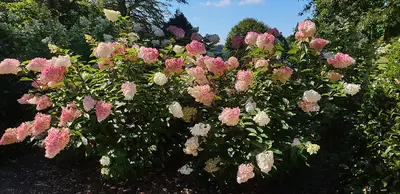
A classic Victorian-era hydrangea that produces enormous cone-shaped flower clusters that age from white to pink to bronze throughout the season. This reliable shrub is exceptionally cold hardy and blooms on new wood, ensuring flowers every year regardless of winter damage. The dramatic flower heads can reach 12 inches long and make stunning cut flowers for both fresh and dried arrangements.
Sun
Full sun to partial shade
Zones
3–8
USDA hardiness
Height
8-25 feet
Planting Timeline
Showing dates for PeeGee Hydrangea in USDA Zone 7
All Zone 7 shrub →Zone Map
Click a state to update dates
PeeGee Hydrangea · Zones 3–8
Growing Details
Complete Growing Guide
Light: Full sun (6 or more hours of direct sunlight a day), Partial Shade (Direct sunlight only part of the day, 2-6 hours). Soil: Clay, High Organic Matter, Loam (Silt), Sand. Soil pH: Acid (<6.0), Neutral (6.0-8.0). Drainage: Good Drainage, Moist, Occasionally Wet. Height: 8 ft. 0 in. - 25 ft. 0 in.. Spread: 6 ft. 0 in. - 25 ft. 0 in.. Spacing: 6-feet-12 feet. Growth rate: Rapid. Maintenance: Medium. Propagation: Seed, Stem Cutting. Regions: Coastal, Mountains, Piedmont.
Harvesting
The fruit is a brownish-pink dehiscent oval capsule that does not attract wildlife. It appears during the summer and fall.
Color: Brown/Copper, Pink. Type: Capsule. Length: < 1 inch. Width: < 1 inch.
Harvest time: Fall, Summer
Storage & Preservation
Fresh PeeGee Hydrangea panicles last 7-10 days in a vase with weekly water changes and stem recuts. Store cut arrangements in a cool room (60-65°F) away from direct sun and ripening fruit.
Drying is the primary preservation method and extends enjoyment for months or years. Hang bundles upside-down in a warm, dark, well-ventilated room (attic or spare closet works well). Flowers dry in 3-4 weeks and become remarkably long-lasting. Store dried stems in a cool, dry location in lidded boxes to prevent dust accumulation.
Alternatively, dry panicles using silica gel for a more controlled, faster process (7-10 days), though this requires extra materials and space. Some gardeners press individual flowers between parchment paper for two weeks, then store in archival boxes for crafting projects.
History & Origin
Origin: Eastern and southern China, Japan, Sakhalin, Kuril Island
Advantages
- +Attracts: Pollinators
- +Fast-growing
Companion Plants
Hostas, astilbe, and ferns pair naturally here because they share the same preference for consistent moisture and tolerate partial shade — the kind of dappled light that builds up around a PeeGee that's been trained into tree form over 8 or 10 feet. Their shallow, spreading root systems don't compete aggressively for water, and the layered foliage fills the skirt of the shrub without crowding it. Japanese forest grass and coral bells do similar work with more textural contrast if you want something with movement at ground level.
Black walnut is a hard no — roots and decomposing leaf litter both release juglone, a compound that interferes with cellular respiration in many broadleaf shrubs, including hydrangeas. Fennel causes problems through a different mechanism: its root exudates actively suppress neighboring plants, and it self-seeds aggressively enough to become a management problem in its own right. Neither belongs anywhere near an ornamental planting you're trying to keep stable for 15 or 20 years.
Plant Together
Hostas
Shade-tolerant groundcover that complements hydrangea's partial shade needs and provides contrasting foliage texture
Astilbe
Similar moisture and partial shade requirements, blooms at different times extending garden interest
Ferns
Thrives in same acidic, moist soil conditions and provides elegant textural contrast
Azaleas
Both prefer acidic soil and similar watering needs, bloom in spring before hydrangea flowers
Japanese Forest Grass
Tolerates partial shade and provides graceful movement and golden color contrast
Coral Bells
Colorful foliage complements hydrangea blooms, both prefer well-draining but moist soil
Caladiums
Shade-tolerant with colorful leaves that provide summer interest beneath hydrangea canopy
Boxwood
Provides evergreen structure and similar soil pH preferences for year-round garden framework
Keep Apart
Black Walnut
Produces juglone toxin that can stunt hydrangea growth and cause leaf yellowing
Eucalyptus
Allelopathic oils inhibit growth of nearby plants and competes aggressively for water
Fennel
Strong allelopathic effects can inhibit hydrangea root development and overall vigor
Pests & Disease Resistance
Resistance
Generally disease resistant, good air circulation prevents issues
Common Pests
Aphids, scale insects, spider mites in hot weather
Diseases
Powdery mildew in humid conditions, leaf spot
Troubleshooting PeeGee Hydrangea
What you'll see, why it happens, and what to do about it.
White powdery coating on leaves, usually showing up mid-to-late summer when nights cool down but humidity stays high
Likely Causes
- Powdery mildew (Erysiphe polygoni or related species) — a fungal infection that thrives in humid, low-airflow conditions
- Planting too close to walls or other shrubs, cutting off air circulation
What to Do
- 1.Prune out the worst-affected stems and dispose of them in the trash, not the compost pile
- 2.Thin the interior of the shrub to open up airflow — PeeGee hydrangeas can handle a hard look-over without losing their shape
- 3.Apply a dilute neem oil spray (2 tbsp per gallon of water) every 7-10 days until the flush clears
Leaves stippled yellow or bronze, possibly with fine webbing on the undersides, during stretches of hot, dry weather
Likely Causes
- Two-spotted spider mites (Tetranychus urticae) — populations explode when temps push above 90°F and humidity drops
- Dusty conditions near gravel paths or dry mulch, which mites prefer
What to Do
- 1.Blast the undersides of leaves with a strong jet of water from the hose — knocks mites off and disrupts the colony
- 2.If the infestation persists after 3-4 days, apply insecticidal soap, coating the leaf undersides thoroughly
- 3.Keep the root zone mulched with 2-3 inches of shredded wood or straw to hold soil moisture and reduce dust
Frequently Asked Questions
How long does PeeGee Hydrangea take to bloom?▼
Is PeeGee Hydrangea good for beginners?▼
Can PeeGee Hydrangea grow in containers?▼
When should I plant PeeGee Hydrangea?▼
PeeGee Hydrangea vs Limelight—what's the difference?▼
How do I dry PeeGee Hydrangea flowers for arrangements?▼
Zone-by-Zone Planting Calendar
Growing Guides from Wind River Greens
Sources & References
External authority sources used in compiling this guide.
- ExtensionNC State Extension
See the Methodology page for how this data is sourced, what's AI-assisted, and known limitations.