Haworthia cooperi
Haworthia cooperi
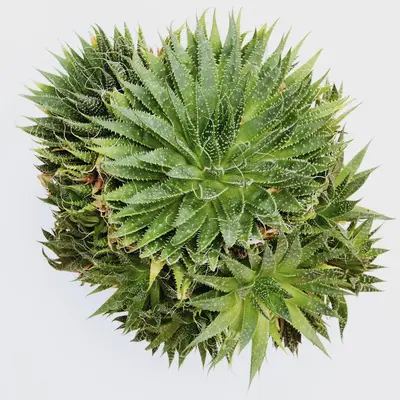
An extraordinary small succulent known for its translucent, bubble-like leaves that seem to glow when backlit. These fascinating 'windows' at the leaf tips allow light to penetrate deep into the plant, creating an almost magical appearance that captivates anyone who sees it. Compact and easy to grow, it's perfect for beginners wanting something truly unique in their collection.
Sun
Full sun to partial shade
Zones
9–11
USDA hardiness
Height
2-12 inches
Complete Growing Guide
This mesmerizing succulent thrives in bright, indirect light where its translucent leaves can fully develop their characteristic "windows"—direct afternoon sun may scorch the delicate leaf tips, while insufficient light causes them to lose transparency and the plant to stretch awkwardly. Unlike hardier succulents, Haworthia cooperi prefers slightly more frequent watering during the growing season (spring and summer), though soil must drain perfectly to prevent root rot, its primary vulnerability. The cultivar is notably susceptible to mealybugs and spider mites in dry indoor environments, so occasional misting improves humidity without waterlogging. Avoid repotting frequently, as this compact grower dislikes disturbance; instead, refresh the top inch of soil annually. A practical tip: water from below by placing the pot in a shallow tray for 10-15 minutes, then removing it—this method keeps the rosette dry while ensuring thorough hydration of the root zone.
Light: Full sun (6 or more hours of direct sunlight a day), Partial Shade (Direct sunlight only part of the day, 2-6 hours). Soil: Sand, Shallow Rocky. Soil pH: Neutral (6.0-8.0). Drainage: Good Drainage, Occasionally Dry. Height: 0 ft. 2 in. - 1 ft. 0 in.. Spread: 0 ft. 2 in. - 1 ft. 0 in.. Spacing: Less than 12 inches. Growth rate: Medium. Maintenance: Low. Propagation: Division, Leaf Cutting, Seed.
Harvesting
Haworthia cooperi doesn't produce harvestable foliage or fruits in the traditional sense, but you can propagate leaves once they reach full maturity, signaled by their plump, translucent appearance and firm feel when gently pressed. The ideal visual cue is when individual leaves display maximum transparency and the characteristic window formations appear fully developed, typically when the rosette reaches 2-3 inches in diameter. Rather than a single harvest event, leaf propagation follows a continuous pattern where you can gently remove mature outer leaves throughout the growing season whenever needed for propagation. Timing your leaf removal in spring or early summer, when the plant is actively growing, maximizes the success rate of new plantlet development and allows the parent plant to recover quickly without stress.
Capsule ovoid to oblong, 3-locular. Seeds with angles winged.
Type: Capsule.
Storage & Preservation
Haworthia cooperi thrives as a living plant and doesn't require traditional storage. Keep the potted plant on a bright windowsill or shelf at room temperature (65-75°F) with low humidity. As a succulent, it stores water in its leaves and can survive 2-3 weeks without watering. Propagation methods include: (1) leaf cuttings placed on dry succulent soil, misting lightly after 2 weeks until roots form; (2) offsets separated from the mother plant and left to callus for 2-3 days before planting; (3) division of established clumps during spring repotting.
History & Origin
Haworthia cooperi originates from South Africa, where the Haworthia genus evolved in the arid regions of the Eastern Cape and Western Cape provinces. The species was named in honor of Thomas Cooper, a 19th-century botanist and plant collector, though detailed documentation of its formal description and the exact year of discovery remains sparse in widely available horticultural records. Like many Haworthia species, it likely emerged from natural populations adapted to rocky, drought-prone habitats, and was subsequently cultivated and propagated by succulent enthusiasts and botanical institutions. The plant's distinctive translucent leaf windows represent an evolutionary adaptation to survive intense sunlight in its native environment, a characteristic that has made it increasingly popular in contemporary houseplant cultivation worldwide.
Origin: South Africa
Advantages
- +Translucent bubble-like leaves create a stunning magical glow effect when backlit.
- +Extremely compact size makes it perfect for small spaces and tight shelves.
- +Beginner-friendly succulent requiring minimal care and attention to thrive successfully.
- +Unique appearance captivates plant enthusiasts and serves as excellent conversation starter.
- +Low maintenance watering needs fit well into busy lifestyles.
Considerations
- -Highly susceptible to root rot if soil drainage is inadequate or overwatered.
- -Mealybug infestations can quickly spread and damage the delicate translucent foliage.
- -Requires bright indirect light to maintain leaf transparency and prevent etiolation.
- -Fungus gnats attracted to moist soil conditions around this particular species.
Companion Plants
Haworthia cooperi groups well with other low-water succulents — Jade Plant (Crassula ovata), Echeveria, Gasteria, and Sedum varieties all run on the same drench-and-dry-out cycle, so one watering schedule covers the whole arrangement. Gasteria is a particularly practical pairing because it also tolerates 4-6 hours of indirect light, meaning neither plant is being asked to stretch beyond its range. Lithops (Living Stones) match on water needs but go nearly bone-dry through summer dormancy — fine if they're in separate pots, trickier if you've combined them in one container.
Mint, ferns, impatiens, and hostas all want consistently moist soil — ferns especially may need water every 2-3 days in warm indoor conditions. That pace will rot Haworthia cooperi's roots before you notice anything's wrong. These aren't borderline cases; the moisture requirements are just incompatible at the root level.
Plant Together
Jade Plant (Crassula ovata)
Similar water and light requirements, creates complementary textures in succulent arrangements
Echeveria
Shares identical drainage and watering needs, provides contrasting rosette forms
String of Pearls (Senecio rowleyanus)
Matching low-water requirements, trailing habit creates visual interest without competing for space
Aloe vera
Compatible watering schedule and bright indirect light preferences, similar South African origins
Sedum varieties
Identical drought tolerance and well-draining soil needs, attracts beneficial insects when flowering
Lithops (Living Stones)
Extremely low water requirements complement Haworthia's drought tolerance, similar mineral soil preferences
Gasteria
Close botanical relative with identical care requirements and light preferences
Cactus varieties
Similar water restrictions and bright light needs, creates diverse textural combinations
Keep Apart
Mint
Aggressive spreader that requires frequent watering, incompatible with succulent's dry conditions
Ferns
High humidity and moisture requirements conflict with Haworthia's need for dry, well-draining conditions
Impatiens
Requires consistently moist soil and high water frequency that would cause root rot in Haworthia
Hostas
Prefers shade and regular moisture, opposite of Haworthia's bright light and drought tolerance needs
Pests & Disease Resistance
Resistance
Excellent when grown in proper conditions
Common Pests
Mealybugs, fungus gnats
Diseases
Root rot from overwatering or poor drainage
Troubleshooting Haworthia cooperi
What you'll see, why it happens, and what to do about it.
Soft, mushy base or roots that are brown and fall apart when you unpot the plant
Likely Causes
- Root rot caused by Pythium or Phytophthora — typically triggered by watering before the soil has fully dried out
- Soil mix retaining too much moisture (standard potting mix instead of a fast-draining succulent/cactus blend)
What to Do
- 1.Unpot immediately, trim all brown or mushy roots with clean scissors, and let the plant air-dry on a paper towel for 24-48 hours before repotting
- 2.Repot into a mix of at least 50% perlite or coarse sand blended with potting soil — Haworthia cooperi needs water gone within 24 hours of watering
- 3.Hold off on watering for 10-14 days after repotting to let any root cuts callous over
White cottony clusters in the leaf axils or at the soil line, sometimes accompanied by sticky residue
Likely Causes
- Mealybugs (Pseudococcidae family) — they favor the tight, sheltered spots where Haworthia cooperi leaves meet the stem
- Bringing in a new plant from a nursery without quarantining it first
What to Do
- 1.Dab individual bugs with a cotton swab soaked in 70% isopropyl alcohol — get into every crevice
- 2.Follow up with a diluted neem oil spray (2 tsp neem per quart of water with a drop of dish soap) every 7 days for 3 weeks
- 3.Quarantine any new succulents for at least 2 weeks before placing them near your existing collection