Spearmint
Mentha spicata
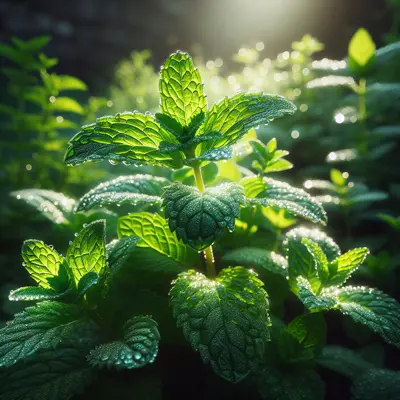
The classic mint variety beloved for its bright, refreshing flavor and vigorous spreading habit that makes it perfect for beginning gardeners. Unlike peppermint, spearmint has a sweeter, less intense flavor that's perfect for teas, cocktails, and Middle Eastern cuisine. This hardy perennial spreads rapidly through underground runners, making it ideal for contained growing or naturalizing in moist areas.
Harvest
60-90d
Days to harvest
Sun
Full sun to partial shade
Zones
4–9
USDA hardiness
Height
12-24 inches
Planting Timeline
Showing dates for Spearmint in USDA Zone 7
All Zone 7 herb →Zone Map
Click a state to update dates
Spearmint · Zones 4–9
Growing Details
Complete Growing Guide
Light: Full sun (6 or more hours of direct sunlight a day), Partial Shade (Direct sunlight only part of the day, 2-6 hours). Soil: Clay, High Organic Matter, Loam (Silt), Sand. Soil pH: Neutral (6.0-8.0). Drainage: Good Drainage, Moist, Occasionally Dry, Occasionally Wet. Height: 1 ft. 0 in. - 2 ft. 0 in.. Spread: 1 ft. 0 in. - 2 ft. 0 in.. Spacing: 12 inches-3 feet. Growth rate: Rapid. Maintenance: Medium. Propagation: Division, Seed, Stem Cutting. Regions: Coastal, Mountains, Piedmont.
Harvesting
Each flower is replaced by four small nutlets in the fall.
Type: Nut.
Harvest time: Fall
Edibility: Fresh or dried leaves and flowers in teas, beverages, sauces, jellies, vinegars; Fresh leaves in fruit salad, peas, syrups, candies, ice creams, lamb dishes, mint sauce.
Storage & Preservation
Fresh spearmint leaves stay crisp for 7-10 days when stored properly in the refrigerator. Trim stem ends and place in a glass of water, covering leaves loosely with a plastic bag, then refrigerate. Alternatively, wrap unwashed leaves in slightly damp paper towels and store in perforated plastic bags in the crisper drawer.
For preservation, air-drying works excellently—bundle small stems and hang in a warm, dry area with good air circulation for 2-3 weeks until leaves crumble easily. Dried spearmint retains sweet flavor for up to one year when stored in airtight containers away from light.
Freeze-drying maintains the best flavor: wash and thoroughly dry leaves, then freeze in single layers on baking sheets before transferring to freezer bags. Frozen leaves work perfectly in cooked dishes and beverages. For ice cube preservation, chop fresh leaves and freeze in water or olive oil—ideal for instant flavor additions to drinks and cooking.
History & Origin
Origin: Europe to China
Advantages
- +Attracts: Bees, Butterflies, Pollinators
- +Edible: Fresh or dried leaves and flowers in teas, beverages, sauces, jellies, vinegars; Fresh leaves in fruit salad, peas, syrups, candies, ice creams, lamb dishes, mint sauce.
- +Fast-growing
Considerations
- -Toxic: Low severity
Companion Plants
Spearmint does real work near brassicas — cabbage, broccoli — because its volatile oils interfere with the host-finding of aphids and cabbage moths. Those insects locate their target plants largely by scent, and spearmint's strong terpenoids muddy the signal. It won't eliminate pest pressure, but it reliably reduces the number of insects that land and stay. Carrots benefit for a similar reason: carrot flies (Psila rosae) are put off by the spearmint scent masking the compounds carrots emit. Pair spearmint near tomatoes and you get a similar above-ground disruption effect, though the evidence there is softer than for the brassica pairing.
Marigolds — French marigolds specifically — are worth growing alongside spearmint because they address a different problem layer. Spearmint handles above-ground pest confusion; French marigolds produce thiophenes in their roots that suppress root-knot nematodes in the surrounding soil. The two together cover more ground than either one does alone. One practical note: spearmint spreads aggressively by underground runners, so any low-growing companion — lettuce, radishes — needs a physical barrier or a sunken container between them, or the mint will crowd them out within a single season.
Parsley and chamomile are listed as poor companions mostly because of competitive overlap — same moisture needs, similar growth habit, and neither one holds its own against mint's spreading. Rue (Ruta graveolens) is a harder problem: it produces allelopathic compounds that actively suppress neighboring plants, and mint planted within 18-24 inches of rue tends to show reduced vigor. Keep at least 2 feet of separation, or just don't plant them in the same bed.
Plant Together
Tomatoes
Spearmint repels ants and rodents that damage tomatoes, while improving their flavor
Cabbage
Deters cabbage moths, aphids, and flea beetles from brassica crops
Broccoli
Repels cabbage worms and aphids that commonly attack brassicas
Carrots
Helps deter carrot fly and other root pests while improving soil health
Lettuce
Provides natural pest deterrent for aphids and improves growth of leafy greens
Peas
Spearmint repels ants and aphids while peas fix nitrogen in soil
Radishes
Mint deters flea beetles and root maggots that attack radish crops
Marigolds
Both plants repel similar pests and create strong aromatic barrier against insects
Keep Apart
Parsley
Mint's aggressive spreading nature can overwhelm and compete with parsley for nutrients
Chamomile
Mint can inhibit chamomile's delicate growth and overpower its subtle properties
Rue
Strong allelopathic effects between both plants can inhibit each other's growth
Nutrition Facts
Per 100g serving. % Daily Value based on 2,000 calorie diet. Source: USDA FoodData Central (FDC #173474)
Pests & Disease Resistance
Resistance
Generally hardy, good air circulation prevents fungal issues
Common Pests
Aphids, spider mites, flea beetles
Diseases
Mint rust, powdery mildew, root rot in poorly drained soil
Troubleshooting Spearmint
What you'll see, why it happens, and what to do about it.
Orange or yellow powdery pustules on leaf undersides, with distorted or stunted new growth
Likely Causes
- Mint rust (Puccinia menthae) — a fungal pathogen specific to mint family plants
- Overcrowded planting with poor airflow
What to Do
- 1.Cut infected stems back hard — down to soil level — and dispose of them in the trash, not the compost pile
- 2.NC State's organic disease guidance recommends sulfur-based fungicides (OMRI-listed) as a preventive; apply before the infection spreads to new growth
- 3.Thin the planting so stems aren't touching; mint at 12-18 inches apart dries out faster after rain and gives rust fewer entry points
White powdery coating on upper leaf surfaces, usually appearing in late summer when nights cool down
Likely Causes
- Powdery mildew — warm days and cool nights favor spore germination on mint
- Dense, shaded plantings that trap humidity around the foliage
What to Do
- 1.NC State's organic gardening notes recommend 1 tablespoon baking soda plus 1 tablespoon summer horticultural oil per gallon of water, sprayed preventively every 3 to 5 days
- 2.Don't mix at higher concentration than that — leaf scorch is a real outcome, not a theoretical one
- 3.Relocate a recurring problem planting to a spot with at least 6 hours of direct sun, where foliage dries quickly after morning dew
Wilting despite wet soil, stems turning brown or mushy at the base
Likely Causes
- Root rot — most often Pythium or Phytophthora species in waterlogged conditions
- Heavy clay soil or low-lying beds that pool water after rain
What to Do
- 1.Dig up a section and check the roots — healthy mint roots are white or tan; rotted ones are brown and smell sour
- 2.Work 2-3 inches of compost into the bed before replanting to open up the soil structure, or shift to a raised bed entirely
- 3.Let the top inch of soil dry between waterings; mint needs consistent moisture, not constant saturation
Frequently Asked Questions
How long does spearmint take to grow from planting to harvest?▼
Can you grow spearmint in containers or pots?▼
What does spearmint taste like compared to peppermint?▼
Is spearmint good for beginner gardeners?▼
When should I plant spearmint in my garden?▼
How do I stop spearmint from taking over my garden?▼
Zone-by-Zone Planting Calendar
| Zone | Indoor Start | Transplant | Direct Sow | Harvest |
|---|---|---|---|---|
| Zone 4 | March – April | June – July | — | July – October |
| Zone 5 | March – April | May – June | — | June – October |
| Zone 6 | March – April | May – June | — | June – November |
| Zone 7 | February – March | April – June | — | June – November |
| Zone 8 | February – March | April – May | — | May – December |
| Zone 9 | January – February | March – April | — | April – December |
Growing Guides from Wind River Greens
Sources & References
External authority sources used in compiling this guide.
See the Methodology page for how this data is sourced, what's AI-assisted, and known limitations.