Mars
Lathyrus odoratus
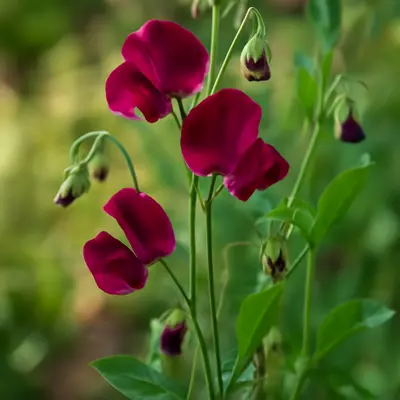
From the Spencer series. Brilliant crimson streaks throughout and lining the petal edge. Plants produce 3-4 blooms per 9-12" stem. Highly fragrant. NOTE: Spencer series sweet peas are known as late-flowering because they require at least 12 hours of daylight, unlike more modern sweet pea varieties bred for winter production, which may require only 10-11 hours of daylight. Attracts hummingbirds.
Harvest
75-85d
Days to harvest
Sun
Full sun
Zones
2–11
USDA hardiness
Height
3-8 feet
Planting Timeline
Showing dates for Mars in USDA Zone 7
All Zone 7 flower →Zone Map
Click a state to update dates
Mars · Zones 2–11
Growing Details
Succession Planting
Sweet peas bloom in one window and stop once heat takes over, so the goal isn't replanting after harvest — it's staggering your sow dates to stretch that window. Start seeds indoors in February, direct sow again in late March, then once more in early April; each wave flowers roughly 75-85 days later, which puts blooms from late May into early June before daytime highs push past 80°F and bud set shuts down.
Past 85°F consistently, don't bother putting seed in the ground. Pull the spent vines in June or July and hand that trellis space to a heat-tolerant crop — pole beans or cucumbers will take right off where the sweet peas quit.
Complete Growing Guide
Mars sweet peas thrive when started indoors under controlled conditions about four to six weeks before your last spring frost date. Begin seeds in individual pots or cell trays filled with moist seed-starting mix, pressing each seed about half an inch deep. You can also direct sow outdoors two to three weeks before the last frost, as these hardy plants tolerate cool soil and actually prefer it for germination. If starting indoors, maintain temperatures around 55 to 65 degrees Fahrenheit and provide bright light once seedlings emerge to prevent legginess. Harden off transplants gradually over a week before moving them outside.
Space Mars plants about six inches apart in full sun with rich, well-draining soil amended with compost or aged manure before planting. These vigorous growers benefit from slightly alkaline to neutral soil pH between 7.0 and 7.5. Direct sow seeds one-half inch deep and thin seedlings to your desired spacing once they've developed their first true leaves. Installing sturdy trellises, stakes, or netting at planting time prevents root disturbance later; Mars plants reach three to eight feet depending on growing conditions and trellising support.
Water consistently, providing one to one and a half inches per week through rainfall or irrigation, keeping soil evenly moist but never waterlogged. Feed with a balanced, low-nitrogen fertilizer every three weeks once plants reach about six inches tall, or use a slow-release granular formula at planting. Excessive nitrogen encourages foliage over the stunning crimson-streaked blooms Mars is prized for. Deadhead spent flowers regularly throughout the season to extend blooming from roughly week twelve onward.
Mars benefits from succession planting in early spring and again in mid-summer for cooler-season blooms, since this Spencer series variety requires at least twelve hours of daylight to flower reliably. Watch for common sweet pea pests including spider mites and aphids, which especially plague stressed plants in hot, dry conditions. Powdery mildew can develop when air circulation is poor or humidity remains high; spacing plants properly and avoiding overhead watering helps prevent infection. Root rot threatens in poorly draining soil, so amend heavy clay with compost before planting.
The critical mistake most gardeners make with Mars is underestimating its need for consistent moisture paired with excellent drainage while also failing to provide adequate daylength or light. Many expect this variety to perform like modern compact varieties that tolerate part shade, but Mars as a true Spencer series sweet pea demands full sun and longer days to produce those spectacular three- to four-bloom stems the variety is famous for. Plant where it receives unobstructed morning sun, provide sturdy support, and resist the urge to overwater, which kills these plants faster than drought ever could.
Harvesting
Mars reaches harvest at 75 - 85 days from sowing per Johnny's Selected Seeds. Expect 9-12" at peak. As an annual, harvest continues until frost ends the season.
Type: Legume.
Edibility: Sweet pea fruits are inedible and poisonous to humans.
Storage & Preservation
Fresh-cut Mars sweet peas last 7-10 days in the vase. Keep them in cool water (60-65°F) away from direct sun and ripening fruit, which produces ethylene gas and shortens vase life. Change water every 2-3 days and re-cut stems by ½ inch. Use floral preservative to extend longevity.
Dried sweet pea flowers retain color beautifully. Hang small bunches upside down in a dark, airy space with low humidity for 2-3 weeks. Once dry, store in an airtight container away from light and heat; they'll last 6-12 months. Pressing flowers between parchment in a heavy book over 4-6 weeks creates flat, colorful specimens for crafts, herbals, or framing. Silica gel drying (2-3 weeks) preserves 3D form and vibrant color exceptionally well. Mars's fragrance holds moderately well through all drying methods.
History & Origin
Mars is open-pollinated, meaning seed saved from healthy plants will produce true-to-type offspring. Listed in the Johnny's Selected Seeds catalog.
Origin: Southern Italy, Sicily, Crete
Advantages
- +Brilliant crimson streaks create stunning visual impact in gardens
- +Produces abundant 3-4 blooms per stem for excellent cut flowers
- +Highly fragrant flowers attract hummingbirds and pollinators naturally
- +Easy to grow making it ideal for beginning gardeners
- +Spencer series genetics ensure classic beauty and proven performance
Considerations
- -Requires minimum 12 hours daylight limiting spring and fall planting
- -Late-flowering nature means delayed blooms compared to modern varieties
- -Needs cool weather and consistent moisture for optimal growth
Companion Plants
Nasturtiums and zinnias are the two worth planting closest — nasturtiums act as a sacrificial host, pulling aphids off Mars stems before a colony gets going, and zinnias draw parasitic wasps that keep thrips from becoming a real problem. Petunias pull their weight by repelling aphids outright rather than just redirecting them. In our zone 7 Georgia garden, roses pair well because they share Mars's preference for full sun and 1 inch of water per week, with no meaningful disease overlap. Keep Mars away from beans and the cabbage family — both compete directly for the soil nitrogen that sweet peas are actively fixing — and skip fennel entirely, which releases allelopathic compounds that stunt nearby annuals.
Plant Together
Nasturtiums
Act as trap crops for aphids and flea beetles, protecting marigolds from pest damage
Petunias
Repel aphids, tomato hornworms, and other soft-bodied insects
Tomatoes
Marigolds repel nematodes and whiteflies that commonly attack tomato plants
Cucumbers
Marigolds deter cucumber beetles and improve overall garden health
Roses
Repel aphids and may reduce black spot and other fungal diseases
Basil
Attracts beneficial insects and creates aromatic pest barrier
Lettuce
Marigolds provide pest protection while lettuce utilizes space efficiently
Zinnias
Attract beneficial predatory insects and create diverse pollinator habitat
Keep Apart
Beans
Marigolds may inhibit bean growth and nitrogen fixation through root secretions
Cabbage family
Strong marigold scent can interfere with beneficial insects needed for brassica pollination
Fennel
Allelopathic compounds inhibit growth of most companion plants including marigolds
Pests & Disease Resistance
Common Pests
Aphids, spider mites, thrips
Diseases
Powdery mildew, fusarium wilt, root rot in wet conditions
Troubleshooting Mars
What you'll see, why it happens, and what to do about it.
White powdery coating on leaves and stems, usually showing up first on the upper leaf surface in late spring or early summer
Likely Causes
- Powdery mildew (Erysiphe polygoni) — a fungal pathogen that thrives in warm days and cool nights with low airflow
- Crowded planting or a trellis that doesn't let air move through
What to Do
- 1.Thin plants to maintain your 6-inch spacing and make sure the trellis isn't a solid wall of foliage
- 2.Spray affected plants with a dilute solution of 1 tablespoon baking soda per gallon of water — not a cure, but it slows spread
- 3.Pull and bag badly infected stems; don't compost them
Plant wilts suddenly and doesn't recover overnight, even with adequate water — lower stems may show brown streaking if you cut them open
Likely Causes
- Fusarium wilt (Fusarium oxysporum) — a soil-borne fungus that blocks water uptake from the inside out
- Planting into soil that's had sweet peas or other legumes with a wilt history in the past 2-3 seasons
What to Do
- 1.Pull the plant — there's no saving a Fusarium-infected sweet pea — and bin it, not the compost pile
- 2.Don't replant Lathyrus odoratus in that bed for at least 3 years
- 3.Before the next planting, work in finished compost to improve drainage and reduce pathogen load; standing water after rain is what accelerates spread
Frequently Asked Questions
How long does it take Mars sweet pea to grow from seed to flower?▼
Is Mars sweet pea good for beginners?▼
Can you grow Mars sweet pea in containers?▼
What's special about Spencer series sweet peas like Mars compared to other types?▼
When should I plant Mars sweet pea seeds?▼
Why isn't my Mars sweet pea producing flowers even though the plant is healthy?▼
Zone-by-Zone Planting Calendar
| Zone | Indoor Start | Transplant | Direct Sow | Harvest |
|---|---|---|---|---|
| Zone 1 | May – June | July – August | July – September | — |
| Zone 2 | April – May | June – July | June – August | — |
| Zone 11 | January – January | January – February | January – March | — |
| Zone 12 | January – January | January – February | January – March | — |
| Zone 13 | January – January | January – February | January – March | — |
| Zone 3 | April – May | June – July | June – August | — |
| Zone 4 | March – April | June – June | June – July | — |
| Zone 5 | March – April | May – June | May – July | — |
| Zone 6 | March – April | May – June | May – July | — |
| Zone 7 | February – March | April – May | April – June | — |
| Zone 8 | February – March | April – May | April – June | — |
| Zone 9 | January – February | March – April | March – May | — |
| Zone 10 | January – January | February – March | February – April | — |
Growing Guides from Wind River Greens
Sources & References
External authority sources used in compiling this guide.
- BreederJohnny's Selected Seeds
See the Methodology page for how this data is sourced, what's AI-assisted, and known limitations.