Lakota Winter Squash
Cucurbita maxima 'Lakota'
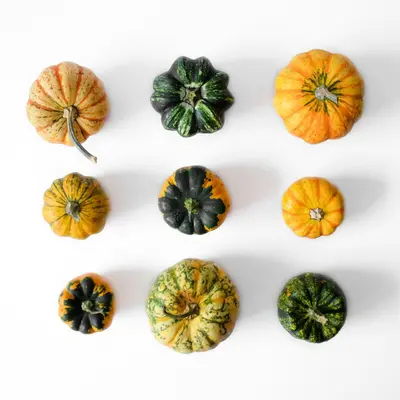
A stunning heirloom winter squash with distinctive orange and green teardrop-shaped fruits that were traditionally grown by the Lakota Sioux tribe. The beautiful pear-shaped squash features sweet, fine-textured orange flesh that rivals butternut in flavor and cooking quality. These eye-catching squash store exceptionally well and make gorgeous autumn decorations before being transformed into delicious meals.
Harvest
100-110d
Days to harvest
Sun
Full sun
Zones
3–11
USDA hardiness
Difficulty
Moderate
Planting Timeline
Showing dates for Lakota Winter Squash in USDA Zone 7
All Zone 7 squash →Zone Map
Click a state to update dates
Lakota Winter Squash · Zones 3–11
Growing Details
Succession Planting
Lakota needs 100–110 days to maturity, which leaves room for one planting per season across most of zone 7. Direct sow from late April through early June, and try to get seeds in the ground by May 15 if you can — NC State Extension's IPM guidance recommends planting squash as early as the season allows to get ahead of squash vine borer moths, which peak in July. An earlier start also gives the fruit more time to cure on the vine before the first fall frost hits in October.
A second sowing in early June is worth trying only if your first planting fails or gets cut down by vine borers before the vines establish. Don't push past June 10 in zone 7; a later sowing puts harvest right against the frost window, and Lakota needs the full 100-day run to build the dense flesh that makes it worth growing.
Complete Growing Guide
With a 100-110 day maturity, Lakota Winter Squash requires starting seeds indoors 3-4 weeks before your last frost or direct seeding after soil reaches 70°F, as this cultivar is sensitive to cold soil and won't germinate reliably below that temperature. Plant in full sun with rich, well-draining soil amended with compost, spacing vines 4-5 feet apart since Lakota produces vigorous runners. This heirloom shows moderate susceptibility to powdery mildew and squash vine borers, particularly in humid conditions, so ensure good air circulation and monitor stems for entry holes in early summer. Unlike some winter squashes, Lakota's pear shape and thinner skin mature more quickly than larger Hubbard types, so harvest when the skin fully hardens and turns deep orange-green, typically by mid-fall before hard freezes. A practical tip: plant a few nasturtiums nearby to attract squash bugs away from your vines while providing a trap crop for monitoring pest pressure.
Light: Full sun (6 or more hours of direct sunlight a day). Soil: High Organic Matter, Loam (Silt). Soil pH: Neutral (6.0-8.0). Drainage: Good Drainage, Moist. Spacing: 12 inches-3 feet. Growth rate: Rapid. Maintenance: Medium. Propagation: Seed. Regions: Coastal, Mountains, Piedmont.
Harvesting
Harvest Lakota Winter Squash when the distinctive orange and green teardrop fruits reach full maturity, typically indicated by a deep, rich coloration with minimal green streaking and a hard, woody stem that resists cutting. The skin should feel rock-solid when pressed, unable to dent with fingernail pressure. These squash are ready for single harvest rather than continuous picking, as they develop all at once near the 100-110 day mark. Plan your harvest before the first hard frost, as frost damage dramatically reduces storage potential and shelf life. Use sharp pruners to cut stems cleanly, leaving several inches attached to the fruit, which helps prevent rot during storage.
Soft or hard-shelled berries called pepos come in a variety of colors, shapes, and sizes and are harvested in the fall. The stems of the fruits generally have a soft corky texture compared to other species.
Color: Blue, Cream/Tan, Gold/Yellow, Gray/Silver, Orange, Pink, Red/Burgundy, Variegated, White. Type: Berry. Length: > 3 inches. Width: > 3 inches.
Garden value: Edible, Long-lasting, Showy
Harvest time: Fall
Storage & Preservation
Harvest Lakota winter squash when the skin has fully hardened and the stem browns and dries. Store whole squash in a cool, dry place between 50–60°F with 50–70% humidity—a basement, root cellar, or unheated garage works well. Keep them on shelves or pallets with air circulation, not piled directly on concrete. Properly cured squash will keep 2–3 months, sometimes longer if stored carefully. For extended preservation, roast the flesh, puree it, and freeze in ice cube trays or containers for convenient use in soups and baking year-round. You can also freeze diced raw squash, though the texture softens slightly when thawed. Canning puree requires a pressure canner due to low acidity. The dense, sweet flesh also dries well—slice thin, dehydrate until crispy, and store in airtight containers for soups and grinding into flour. Lakota squash's thick skin and dense flesh make it exceptionally storage-friendly; many gardeners successfully keep individual squash into spring with minimal spoilage.
History & Origin
Lakota Winter Squash represents a traditional cultivar with deep roots in Native American agricultural heritage, specifically among the Lakota Sioux peoples of the Great Plains who cultivated distinctive squash varieties for centuries. While precise documentation of its modern reintroduction or formal breeding is limited, this variety exemplifies the broader lineage of Cucurbita maxima squashes preserved and maintained through indigenous seed-saving practices and heirloom seed networks. The variety likely experienced a revival through the late twentieth-century heirloom seed movement, when organizations and seed companies began collecting and propagating traditional Native American crop varieties to preserve agricultural biodiversity and cultural knowledge. The exact breeder or year of formal cataloging remains undocumented in readily available sources, though its distinctive teardrop shape and orange-green coloring suggest careful selection within Lakota farming traditions.
Origin: Central and South America
Advantages
- +Exceptional sweet, nutty flavor rivals butternut squash in culinary quality
- +Distinctive orange and green teardrop shape provides stunning autumn decoration
- +Stores exceptionally well for months, extending winter food supply
- +Dense, creamy flesh texture makes perfect for soups and purees
- +Cultural heritage connection honors traditional Lakota Sioux agricultural practices
Considerations
- -Moderate growing difficulty requires experience managing vine crops successfully
- -Susceptible to multiple pests including squash bugs and vine borers
- -Extended 100-110 day season demands warm climate or early planting
- -Vulnerable to powdery mildew and downy mildew fungal diseases
Companion Plants
Corn, beans, and squash planted together — the Three Sisters arrangement — make practical sense for Lakota. Corn gives beans something to climb, beans fix atmospheric nitrogen that feeds the heavy-feeding squash, and squash leaves shade the soil to hold moisture through the dry stretches that hit zone 7 Georgia gardens in August. Plant corn first and give it a 2-week head start before sowing beans and squash around it. Nasturtiums pull aphid pressure away from squash vines and bring in predatory insects; marigolds (Tagetes spp.) are slower to pay off but genuinely suppress root-knot nematode populations when grown in the same bed across multiple seasons.
Potatoes are a bad neighbor — both are heavy feeders drawing from the same soil depth, and the combination invites disease pressure that weakens both crops. Fennel is allelopathic, releasing root compounds that stunt most vegetables nearby; it belongs in a container well away from the squash bed, not tucked in as a border plant.
Plant Together
Corn
Provides natural trellis for squash vines and part of the Three Sisters planting method
Beans
Fixes nitrogen in soil that feeds heavy-feeding squash, completes Three Sisters guild
Nasturtiums
Acts as trap crop for squash bugs and cucumber beetles while repelling aphids
Marigolds
Deters cucumber beetles, squash bugs, and nematodes with natural compounds
Radishes
Repels cucumber beetles and squash vine borers, breaks up soil for squash roots
Catnip
Strong repellent for cucumber beetles, squash bugs, and flea beetles
Oregano
Repels cucumber beetles and provides ground cover to retain soil moisture
Dill
Attracts beneficial predatory wasps that control squash vine borer moths
Keep Apart
Potatoes
Compete for space and nutrients, both are heavy feeders that deplete soil
Fennel
Releases allelopathic compounds that inhibit squash growth and development
Brassicas
Heavy nitrogen feeders that compete with squash and may stunt growth
Nutrition Facts
Per 100g serving. % Daily Value based on 2,000 calorie diet. Source: USDA FoodData Central (FDC #168040)
Pests & Disease Resistance
Resistance
Moderate resistance to common squash diseases, good field holding ability
Common Pests
Squash bug, cucumber beetle, squash vine borer
Diseases
Powdery mildew, downy mildew, bacterial wilt
Troubleshooting Lakota Winter Squash
What you'll see, why it happens, and what to do about it.
Wilted vines that don't recover overnight, with sawdust-like frass packed at the stem base
Likely Causes
- Squash vine borer (Melittia cucurbitae) — larvae tunnel into the main stem and hollow out the interior
- Late planting that puts vines in the ground after adult moths begin laying eggs in July
What to Do
- 1.Slit the stem lengthwise near the frass with a sharp knife, extract the larvae, then mound damp soil over the wound to encourage re-rooting
- 2.Direct sow Lakota by early May so vines are well-established before peak borer egg-laying in July — NC State Extension recommends timing plantings specifically to get ahead of this window
- 3.Next season, cover young plants with row fabric until flowering, then pull it for pollination
White powdery coating on leaves and stems, typically appearing in late summer as nights start cooling
Likely Causes
- Powdery mildew — primarily Podosphaera xanthii on cucurbits — spreads by airborne spores and hits hardest during warm days with cool, dry nights
- Tight spacing that cuts airflow between vines
What to Do
- 1.Strip the worst-affected leaves and bin them — don't compost
- 2.Apply a potassium bicarbonate or diluted neem oil spray every 7 days once you spot the first white patches; catching it at the first sign beats any product choice
- 3.Hold to the 6–8 foot spacing; Lakota vines sprawl aggressively and anything tighter sets this up
Sudden, permanent wilt on one or two vines while the rest of the planting looks fine — no frass at the stem base
Likely Causes
- Bacterial wilt (Erwinia tracheiphila), transmitted when striped or spotted cucumber beetles (Acalymma vittatum / Diabrotica undecimpunctata) feed and deposit bacteria directly into the wound
- High cucumber beetle pressure, which runs May through August across the Southeast
What to Do
- 1.Pull and bag any plant showing bacterial wilt the same day — there's no treatment and beetles will keep feeding on it and spreading the pathogen to neighboring vines
- 2.Rotate cucurbits out of the same bed for at least 3 years; NC State Extension notes this disrupts cucumber beetle egg overwintering in spent plant material
- 3.Clear all debris at the end of the season and turn the bed before winter
Clusters of gray-brown shield-shaped insects on stems and leaf undersides, with nearby foliage yellowing and collapsing
Likely Causes
- Squash bug (Anasa tristis) — adults and nymphs pierce stems and inject a toxin causing Anasa wilt, which mimics bacterial wilt but is a separate problem
- Bronze egg masses laid in tidy rows on leaf undersides going unnoticed until a full generation of nymphs hatches
What to Do
- 1.Check leaf undersides twice a week from June onward and scrape any egg masses into a container of soapy water
- 2.Lay a flat board near the base of plants at dusk — squash bugs congregate under it overnight — then collect and drown them each morning
- 3.The UGA Vegetable Garden Calendar lists squash bugs as a top-priority watch pest from May forward; finding them at the egg or early nymph stage is the only point where control is straightforward
Frequently Asked Questions
How long does Lakota winter squash take to grow?▼
Can you grow Lakota squash in containers?▼
What does Lakota winter squash taste like?▼
Is Lakota winter squash good for beginners?▼
When should I plant Lakota winter squash seeds?▼
How do you cure Lakota winter squash for storage?▼
Zone-by-Zone Planting Calendar
| Zone | Indoor Start | Transplant | Direct Sow | Harvest |
|---|---|---|---|---|
| Zone 3 | — | — | June – July | October – October |
| Zone 4 | — | — | June – July | October – October |
| Zone 5 | — | — | May – June | September – October |
| Zone 6 | — | — | May – June | September – November |
| Zone 7 | — | — | April – June | September – October |
| Zone 8 | — | — | April – May | August – October |
| Zone 9 | — | — | March – April | July – September |
| Zone 10 | — | — | February – April | July – August |
| Zone 1 | — | — | July – August | November – August |
| Zone 2 | — | — | June – August | November – September |
| Zone 11 | — | — | January – March | June – July |
| Zone 12 | — | — | January – March | June – July |
| Zone 13 | — | — | January – March | June – July |
Growing Guides from Wind River Greens
Sources & References
External authority sources used in compiling this guide.
See the Methodology page for how this data is sourced, what's AI-assisted, and known limitations.