Serrano 'Tampiqueno'
Capsicum annuum 'Tampiqueno'
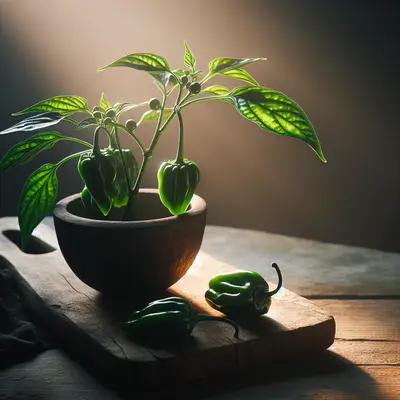
A fiery favorite that packs serious heat into a small package, delivering 2-5 times the punch of a jalapeño with incredible productivity throughout the growing season. These slender peppers are essential for authentic Mexican salsas and hot sauces, offering a clean, bright heat that doesn't overpower the fresh pepper flavor. One plant produces hundreds of peppers, making it a must-have for hot pepper enthusiasts.
Harvest
75-85d
Days to harvest
Sun
Full sun
Zones
4–11
USDA hardiness
Height
1-3 feet
Planting Timeline
Showing dates for Serrano 'Tampiqueno' in USDA Zone 7
All Zone 7 pepper →Zone Map
Click a state to update dates
Serrano 'Tampiqueno' · Zones 4–11
Growing Details
Complete Growing Guide
This prolific cultivar matures exceptionally fast at 75-85 days, allowing successive plantings every 3-4 weeks for continuous harvests in warm climates. Serrano 'Tampiqueno' thrives in full sun with consistently warm soil (70-85°F) and demands excellent drainage to prevent root rot, a common issue when moisture lingers. Unlike some serranos prone to excessive vegetative growth, this variety maintains a compact 1-3 foot habit without aggressive stretching, though staking supports the weight of hundreds of developing peppers. Watch for spider mites during hot, dry spells and powdery mildew in humid conditions. A practical advantage: harvest peppers at any stage from green to fully red, as they ripen continuously; pick regularly to encourage prolific flowering rather than allowing mature peppers to remain on the plant, which redirects energy away from new fruit production. This aggressive production pattern defines 'Tampiqueno' and rewards consistent harvesting throughout the season.
Light: Full sun (6 or more hours of direct sunlight a day). Soil: Clay, High Organic Matter, Loam (Silt), Sand. Soil pH: Acid (<6.0), Alkaline (>8.0), Neutral (6.0-8.0). Drainage: Good Drainage. Height: 1 ft. 0 in. - 3 ft. 8 in.. Spread: 0 ft. 6 in. - 1 ft. 0 in.. Spacing: 12 inches-3 feet. Growth rate: Medium. Maintenance: Low. Propagation: Seed. Regions: Coastal, Mountains, Piedmont.
Harvesting
Serrano 'Tampiqueno' peppers reach peak harvest readiness when they transition from green to a deep red color, though they can be picked at either stage depending on preference. Look for peppers that are firm yet slightly yielding to gentle pressure, typically 3-4 inches long, with a glossy, taut skin free of soft spots. This prolific cultivar rewards continuous harvesting throughout the season—picking regularly encourages more flowering and fruit production rather than waiting for a single flush. For optimal heat and flavor development, harvest red peppers after they've fully matured on the plant, as they'll develop greater depth in both Scoville heat and fresh pepper notes compared to their green counterparts.
Fruits are a non-pulpy berry and vary considerably across cultivars. Some are long, thin, bright red, and spicy; others are thick, large, and sweet-tasting; others still are small and in ornamental shapes and colors, grown as decoration.
Color: Black, Gold/Yellow, Green, Orange, Red/Burgundy. Type: Berry. Length: 1-3 inches. Width: < 1 inch.
Garden value: Edible, Good Dried, Showy
Harvest time: Summer
Edibility: Fruits edible, but spiciness is unpredictable in intensity.
Storage & Preservation
Fresh Serrano 'Tampiqueno' peppers store best at 45–50°F with 90–95% humidity in perforated plastic bags or breathable containers; avoid airtight packaging, which promotes mold. At room temperature, they'll keep about a week; refrigerated, expect 2–3 weeks before softening begins. For longer storage, freezing works well—slice or leave whole, spread on a tray to freeze individually, then bag. These peppers dry beautifully due to their thin walls; hang-dry in warm, well-ventilated conditions until completely brittle, or use a dehydrator at 135–145°F. For hot sauce, fermentation leverages their bright, clean heat perfectly—pack sliced peppers with salt in a jar and let sit 1–3 weeks before blending. Canning also suits them for salsas and pickles using standard water-bath methods. A helpful tip: their relatively thin flesh means they lose moisture quickly, so if storing fresh peppers, separate any with blemishes immediately to prevent rot from spreading to nearby fruit.
History & Origin
The Serrano 'Tampiquono' represents a regional selection within the broader Serrano pepper lineage native to the mountainous regions of northern Mexico. While specific breeder documentation and introduction dates remain elusive, this variety's name references Tampico, a major port city in Tamaulipas, Mexico, suggesting its development or popularization within that region's agricultural tradition. Like many Mexican chile varieties, the Serrano 'Tampiqueno' likely emerged through generations of farmer selection for traits valued in authentic Mexican cuisine—particularly high productivity and the bright, clean heat preferred for fresh salsas. The variety exemplifies the rich heritage of Mexican pepper breeding, though detailed historical records of its formal development are not widely documented in English-language horticultural literature.
Origin: Tropical North and South America
Advantages
- +Produces hundreds of peppers per plant throughout the entire growing season
- +Delivers 2-5 times more heat than jalapeños in a compact slender package
- +Clean, bright heat enhances salsas and hot sauces without overwhelming fresh flavor
- +Ready to harvest in just 75-85 days from transplant
- +Easy to grow with minimal experience required for successful cultivation
Considerations
- -Highly susceptible to bacterial leaf spot and anthracnose fungal diseases
- -Vulnerable to multiple pest infestations including aphids, thrips, and spider mites
- -Requires consistent watering and warm temperatures to prevent flower and fruit drop
Companion Plants
Basil and marigolds are the two most useful plants to put near Tampiqueno serranos. Basil may help confuse or repel aphids and thrips through volatile aromatic compounds — the same pests that vector cucumber mosaic virus into your pepper crop. French marigolds (Tagetes patula specifically) release thiophenes from their roots that suppress soil nematodes, and their flowers pull in predatory wasps that keep aphid colonies from building. Chives and parsley work on similar logic: strong aromatics that disrupt pest host-finding. Carrots fill space cleanly at 6–8 inches of root depth, well below the pepper root zone, so there's no real competition for water or nutrients.
Keep serranos away from fennel and brassicas. Fennel is broadly allelopathic and stunts most vegetables rooted within a couple feet of it — peppers included. Brassicas are heavy nitrogen feeders that will draw down soil fertility fast if planted too close, and if they're positioned on the south side of short serrano plants (which top out around 3 feet), they'll shade them out by midsummer. Black walnut produces juglone, a compound that's toxic to nightshades generally; if there's a walnut on the property, give it a wide berth — most sources put the safe distance at 50 feet or more from the drip line.
Plant Together
Basil
Repels aphids, spider mites, and thrips while potentially enhancing pepper flavor
Marigold
Deters nematodes, aphids, and whiteflies with natural compounds
Parsley
Attracts beneficial insects like hoverflies and parasitic wasps
Tomato
Similar growing requirements and can share support structures
Nasturtium
Acts as trap crop for aphids and cucumber beetles
Chives
Repels aphids and may improve pepper growth through root interactions
Oregano
Repels cucumber beetles and provides ground cover to retain soil moisture
Carrots
Deep roots improve soil aeration without competing for nutrients
Keep Apart
Black Walnut
Produces juglone toxin that severely stunts pepper growth and development
Fennel
Releases allelopathic compounds that inhibit pepper germination and growth
Brassicas
Heavy feeders that compete for nutrients and may stunt pepper development
Nutrition Facts
Per 100g serving. % Daily Value based on 2,000 calorie diet. Source: USDA FoodData Central (FDC #169395)
Pests & Disease Resistance
Resistance
Good overall disease resistance, tolerant of bacterial spot
Common Pests
Aphids, thrips, pepper maggot, spider mites
Diseases
Bacterial leaf spot, anthracnose, cucumber mosaic virus
Troubleshooting Serrano 'Tampiqueno'
What you'll see, why it happens, and what to do about it.
Sunken, dark, leathery patch on the bottom or side of the fruit — sometimes with gray secondary mold growing over it
Likely Causes
- Blossom end rot — localized calcium deficiency in the developing fruit
- Inconsistent watering causing water stress that blocks calcium uptake
- High ammonium nitrogen fertilizer pushing vegetative growth faster than calcium can move into fruit
What to Do
- 1.Water on a consistent schedule — 1 inch per week, no boom-and-bust cycles; mulch heavily to hold moisture between waterings
- 2.Get a soil test before adding calcium; if levels are genuinely low, side-dress with gypsum (calcium sulfate)
- 3.Back off high-nitrogen synthetic fertilizers once plants set fruit; switch to a lower-nitrogen, balanced feed
Small, water-soaked spots on leaves that turn brown with yellow halos, sometimes with lesions on the fruit surface too, appearing mid-season
Likely Causes
- Bacterial leaf spot (Xanthomonas campestris pv. vesicatoria) — spreads fast in warm, wet weather via splash
- Overhead irrigation wetting foliage repeatedly
What to Do
- 1.Switch to drip irrigation or water at the base; keep foliage dry
- 2.Remove and trash (do not compost) heavily infected leaves to slow spread
- 3.Rotate peppers and all other nightshades out of the bed for at least 2 full seasons — NC State Extension's organic gardening guidance calls out nightshade family rotation as a proven disease-cycle breaker
New leaves puckered, mottled yellow-green, and distorted; plants stunted with no obvious insect infestation visible to the naked eye
Likely Causes
- Cucumber mosaic virus (CMV) — transmitted by aphids, which can move the virus from plant to plant in seconds even at low population levels
- Thrips feeding, which causes similar distortion and can also vector tospoviruses
What to Do
- 1.Pull and bag infected plants immediately — there is no cure once a plant has CMV
- 2.Hit aphid and thrips pressure early with insecticidal soap or neem oil, focusing on new growth where colonies build first
- 3.Lay reflective silver mulch around transplants at planting time to disorient incoming aphids before populations establish
Frequently Asked Questions
How hot is Serrano 'Tampiqueno' compared to jalapeño?▼
Can you grow Serrano 'Tampiqueno' in containers?▼
When should I plant Serrano 'Tampiqueno' seeds?▼
How long does Serrano 'Tampiqueno' take to produce peppers?▼
Is Serrano 'Tampiqueno' good for beginners?▼
What's the difference between Serrano 'Tampiqueno' and regular serrano peppers?▼
Zone-by-Zone Planting Calendar
| Zone | Indoor Start | Transplant | Direct Sow | Harvest |
|---|---|---|---|---|
| Zone 3 | April – April | June – July | — | September – October |
| Zone 4 | March – April | June – June | — | August – October |
| Zone 5 | March – March | May – June | — | August – October |
| Zone 6 | March – March | May – June | — | August – October |
| Zone 7 | February – March | April – May | — | July – September |
| Zone 8 | February – February | April – May | — | July – September |
| Zone 9 | January – January | March – April | — | June – August |
| Zone 10 | January – January | February – March | — | May – July |
| Zone 1 | May – May | July – August | — | October – August |
| Zone 2 | April – May | June – July | — | September – September |
| Zone 11 | January – January | January – February | — | April – June |
| Zone 12 | January – January | January – February | — | April – June |
| Zone 13 | January – January | January – February | — | April – June |
Growing Guides from Wind River Greens
Sources & References
External authority sources used in compiling this guide.
See the Methodology page for how this data is sourced, what's AI-assisted, and known limitations.
More Peppers
Carolina Reaper
Sweet Pepper 'Carmen'
Ghost Pepper 'Bhut Jolokia'
Scotch Bonnet 'Scotch Bonnet Orange'
Chocolate Habanero
Sweet Italian Pepper 'Marconi Rosso'
Purple Beauty Bell Pepper
Mad Hatter