Rubenza
Cosmos bipinnatus
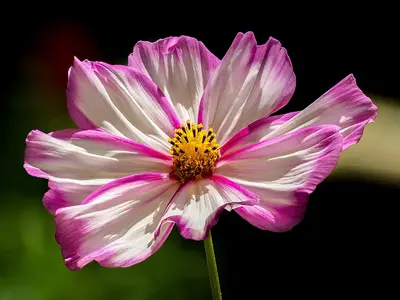
As blooms mature, petals fade from a deep cranberry to an antique rose with hints of amber. The medium-height plants are very productive, flowering early and continuing to bloom for several weeks if cut or deadheaded. 2 1/2-3 1/2" blooms. Fleuroselect Novelty 2008.
Harvest
75-90d
Days to harvest
Sun
Full sun to partial shade
Zones
2–11
USDA hardiness
Height
2-4 feet
Planting Timeline
Showing dates for Rubenza in USDA Zone 7
All Zone 7 flower →Zone Map
Click a state to update dates
Rubenza · Zones 2–11
Growing Details
Succession Planting
Direct sow every 3 weeks starting April 1 in zone 7, and keep going through early June — that gets you continuous bloom from mid-July through first frost. Stop sowing when daytime highs are consistently hitting 90°F; germination drops off and seedlings stall out. Cosmos doesn't need indoor starts, but if you want the earliest possible bloom, sow indoors in late February and transplant out after your last frost date.
Pinch seedlings at 6 inches tall to encourage branching — a single unpinched stem gives you one flush of flowers and then it's done. Pinched plants branch out and keep cutting for weeks longer. Once Rubenza is in full swing, deadhead or harvest for vases every 3-4 days; letting seed heads mature signals the plant to slow down, and it will drop new bud production faster than you'd expect.
Complete Growing Guide
As blooms mature, petals fade from a deep cranberry to an antique rose with hints of amber. The medium-height plants are very productive, flowering early and continuing to bloom for several weeks if cut or deadheaded. 2 1/2-3 1/2" blooms. Fleuroselect Novelty 2008. According to Johnny's Selected Seeds, Rubenza is 75 - 90 days to maturity, annual, open pollinated. Notable features: Use for Cut Flowers and Bouquets, Attracts Beneficial Insects.
Light: Full sun (6 or more hours of direct sunlight a day), Partial Shade (Direct sunlight only part of the day, 2-6 hours). Soil: Clay, Loam (Silt), Sand. Soil pH: Alkaline (>8.0), Neutral (6.0-8.0). Drainage: Good Drainage, Occasionally Dry. Height: 2 ft. 0 in. - 4 ft. 0 in.. Spread: 2 ft. 0 in. - 3 ft. 0 in.. Spacing: 12 inches-3 feet. Growth rate: Rapid. Maintenance: Low. Propagation: Seed. Regions: Coastal, Mountains, Piedmont.
Harvesting
Rubenza reaches harvest at 75 - 90 days from sowing per Johnny's Selected Seeds. Expect 2 1/2-3 1/2" at peak. As an annual, harvest continues until frost ends the season.
Type: Capsule.
Storage & Preservation
For fresh Rubenza flowers, place cut stems immediately in cool water at room temperature (65-70°F) with floral preservative. Keep away from direct sunlight and ripening fruit. Change water every 2-3 days; blooms last 7-10 days indoors. For preservation, air-dry stems in bundles upside down in a cool, dark, well-ventilated space for 2-3 weeks. Alternatively, press flowers between parchment paper under weights for 4-6 weeks for botanical crafts. Silica gel drying captures color best—bury blooms in silica for 3-5 days for a more vibrant finish suitable for arrangements and resin work.
History & Origin
Rubenza is open-pollinated, meaning seed saved from healthy plants will produce true-to-type offspring. Listed in the Johnny's Selected Seeds catalog.
Origin: Mexico and southwest North America
Advantages
- +Stunning color transition from cranberry to rose creates dynamic garden interest
- +Early flowering and long blooming season extends garden color for weeks
- +Medium height works well in borders without requiring staking or support
- +Large 2.5-3.5 inch blooms make excellent cut flowers for arrangements
- +Very productive plants yield abundant flowers with deadheading or cutting
Considerations
- -Cranberry tones may fade too quickly in intense heat or direct sun
- -Requires regular deadheading to maintain continuous blooming throughout season
- -Self-seeding can become invasive if spent flowers aren't removed promptly
Companion Plants
Marigolds (especially Tagetes patula) are the most practical pairing here — their root secretions deter soil nematodes, and their scent disrupts whiteflies that would otherwise move straight onto the cosmos. Alyssum is worth tucking in at the border too; its tiny flowers run for months and pull in parasitic wasps that keep aphid pressure down. Nasturtiums pull double duty as a trap crop, drawing aphids away from the cosmos before the problem scales up.
Skip black walnut entirely — it produces juglone, a chemical that leaches through the surrounding soil and stunts or kills many annuals, cosmos included. Sunflowers can seem like a natural pairing given the cottage-garden look, but they're allelopathic: they release compounds from their roots and decomposing leaves that suppress neighboring plants. If you already have sunflowers in a bed, give cosmos at least 3-4 feet of clearance from the patch.
Plant Together
Marigolds
Repel aphids, whiteflies, and nematodes while attracting beneficial insects
Alyssum
Attracts beneficial predatory insects like lacewings and parasitic wasps
Nasturtiums
Act as trap crops for aphids and cucumber beetles, drawing pests away
Lavender
Repels moths, fleas, and mosquitoes while attracting pollinators
Cosmos
Attract beneficial insects and provide complementary colors in flower beds
Catmint
Deters ants, aphids, and flea beetles while attracting bees
Zinnia
Attract butterflies and beneficial predators while providing continuous blooms
Parsley
Attracts beneficial insects like hoverflies and parasitic wasps
Keep Apart
Black Walnut
Produces juglone toxin that inhibits growth and can kill sensitive flowering plants
Eucalyptus
Releases allelopathic compounds that suppress growth of nearby plants
Sunflowers
Can shade out smaller flowers and release growth-inhibiting chemicals
Pests & Disease Resistance
Common Pests
Aphids, spider mites, whiteflies
Diseases
Powdery mildew, botrytis, fusarium wilt
Troubleshooting Rubenza
What you'll see, why it happens, and what to do about it.
White powdery coating on leaves and stems, usually showing up mid-summer when nights cool down and humidity rises
Likely Causes
- Powdery mildew (Erysiphe cichoracearum) — airborne fungal spores that thrive in warm days and cool, humid nights
- Crowded spacing under 12 inches that kills airflow between plants
What to Do
- 1.Cut out the worst-affected stems and trash them — don't compost
- 2.Spray remaining foliage with a diluted baking soda solution (1 tablespoon per gallon of water) every 7-10 days
- 3.If it keeps coming back year after year, thin to 18-inch spacing and avoid overhead watering
Clusters of soft-bodied insects on new growth tips, stems getting sticky, buds failing to open properly
Likely Causes
- Aphid infestation (commonly Myzus persicae or Aphis gossypii) — they zero in on tender new growth, especially on plants stressed by drought
- Absence of natural predators, often because no beneficial-insect habitat is nearby
What to Do
- 1.Knock them off with a firm stream of water from a hose — do this in the morning so foliage dries before evening
- 2.If the infestation is heavy, apply insecticidal soap directly to the colonies, coating the undersides of leaves
- 3.Plant alyssum or parsley within 3-5 feet to draw in parasitic wasps and lacewings that feed on aphids
Frequently Asked Questions
How long do Rubenza cut flowers last in a vase?▼
Is Rubenza a good flower for beginners?▼
Can you grow Rubenza flowers in containers?▼
When should I plant Rubenza seeds?▼
What makes Rubenza's color special?▼
How often should I cut or deadhead Rubenza flowers?▼
Zone-by-Zone Planting Calendar
| Zone | Indoor Start | Transplant | Direct Sow | Harvest |
|---|---|---|---|---|
| Zone 1 | May – June | July – August | July – September | — |
| Zone 2 | April – May | June – July | June – August | — |
| Zone 11 | January – January | January – February | January – March | — |
| Zone 12 | January – January | January – February | January – March | — |
| Zone 13 | January – January | January – February | January – March | — |
| Zone 3 | April – May | June – July | June – August | — |
| Zone 4 | March – April | June – June | June – July | — |
| Zone 5 | March – April | May – June | May – July | — |
| Zone 6 | March – April | May – June | May – July | — |
| Zone 7 | February – March | April – May | April – June | — |
| Zone 8 | February – March | April – May | April – June | — |
| Zone 9 | January – February | March – April | March – May | — |
| Zone 10 | January – January | February – March | February – April | — |
Growing Guides from Wind River Greens
Sources & References
External authority sources used in compiling this guide.
- BreederJohnny's Selected Seeds
See the Methodology page for how this data is sourced, what's AI-assisted, and known limitations.