Ruby Queen
Zea mays var. amylacea 'Ruby Queen'
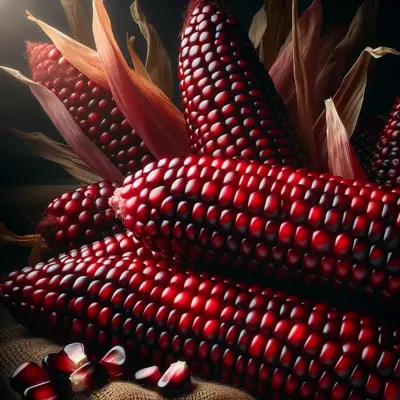
This stunning ornamental and culinary corn produces ears with deep ruby-red kernels that look like precious gems. While primarily grown for decoration and grinding into colorful cornmeal, the young ears can also be eaten fresh when harvested early. Ruby Queen adds dramatic color to fall displays while providing a unique ingredient for adventurous home cooks and bakers.
Harvest
100-110d
Days to harvest
Sun
Full sun
Zones
2–11
USDA hardiness
Height
5-8 feet
Planting Timeline
Showing dates for Ruby Queen in USDA Zone 7
All Zone 7 corn →Zone Map
Click a state to update dates
Ruby Queen · Zones 2–11
Growing Details
Succession Planting
Ruby Queen runs 100–110 days to harvest, which leaves room for two sowings in most climates if you plan ahead. Direct sow your first block as soon as soil temps reach 60°F, then put in a second block 3–4 weeks later — no later than early June in most zones — to stretch your harvest across two windows rather than one glut. Don't push past mid-June; corn that pollinates during daytime highs above 95°F often has poor kernel fill because the heat kills pollen before it reaches the silks.
Sow in blocks of at least 4 rows rather than a single long row — corn is wind-pollinated, and a square or rectangular block dramatically improves kernel fill. Space plants 10–12 inches apart within the row and keep rows 30–36 inches apart so you can actually walk the bed during harvest.
Complete Growing Guide
With a 100–110 day maturity, Ruby Queen requires earlier spring planting than standard dent varieties to ensure kernels fully color before frost; in cooler climates, start seeds indoors 2–3 weeks early. This flint corn thrives in full sun with well-draining soil and consistent moisture, particularly critical during kernel fill when ruby pigmentation develops most intensely. Ruby Queen's height (5–8 feet) demands sturdy support in windy locations and wider spacing than sweet corn to prevent lodging. Watch for corn earworm and fall armyworm, which show higher attraction to darker kernels; row covers over young plants offer effective organic protection. The cultivar resists common rust but prefers lower humidity to prevent fungal issues. For dual-purpose harvesting, mark ears intended for fresh eating and pick them at milk stage for optimal sweetness; those destined for grinding can mature fully on the stalk, reducing post-harvest processing time.
Light: Full sun (6 or more hours of direct sunlight a day). Soil: Clay, High Organic Matter, Loam (Silt). Soil pH: Acid (<6.0), Neutral (6.0-8.0). Drainage: Good Drainage. Height: 5 ft. 0 in. - 8 ft. 0 in.. Spread: 1 ft. 0 in. - 2 ft. 0 in.. Spacing: 12 inches-3 feet. Growth rate: Rapid. Maintenance: Medium. Propagation: Seed. Regions: Coastal, Mountains, Piedmont.
Harvesting
Harvest Ruby Queen ears when the husks turn from green to a papery brown and the silk darkens to rust or black, indicating kernel maturity. Gently peel back the husk to confirm the kernels have deepened to a rich ruby-red color and feel plump and firm rather than soft or dented. For fresh eating, pick ears when slightly immature and kernels still contain moisture, typically a few days before full maturity. For cornmeal grinding, wait until kernels are completely hard and dry on the cob, which develops their full nutty flavor. Ruby Queen produces a single ear per stalk in most growing conditions, so harvest once at peak maturity rather than expecting multiple pickings; timing this correctly prevents missing your window for optimal kernel development.
Color: Gold/Yellow. Type: Caryopsis. Length: > 3 inches. Width: 1-3 inches.
Garden value: Edible, Showy
Harvest time: Fall
Edibility: Edibile
Storage & Preservation
Store harvested Ruby Queen ears with husks on in a cool, dry location with good air circulation for final curing. Properly dried ears will keep for 6-12 months when stored in mesh bags or open containers away from moisture.
For ornamental use, remove husks after 1-2 weeks of drying and display ears in baskets or wreaths. The ruby kernels maintain their vibrant color for months when kept dry.
To preserve for culinary use, remove kernels from completely dried ears and store in airtight containers for up to 2 years. Grind small batches as needed since fresh-ground cornmeal has superior flavor. You can also freeze fresh kernels cut from young ears, though you'll lose the ornamental ruby color. The dried kernels can be ground into colorful cornmeal, used whole for hominy, or saved for planting next season.
History & Origin
Documentation on the specific origins of 'Ruby Queen' corn is limited in published breeding records. The variety appears within the broader tradition of ornamental corn cultivation, likely developed during the late twentieth century when seed companies and home gardeners increasingly focused on colorful kernel varieties for decorative and culinary purposes. Red and ruby-kerneled corns have deep roots in Indigenous agricultural systems and heirloom cultivation, though 'Ruby Queen' as a named cultivar represents a more recent commercialization of these color traits. The variety reflects selective breeding toward consistent ruby coloration and dual-purpose utility, though the specific breeder, year of introduction, and originating seed company remain undocumented in readily available sources.
Origin: Mexico
Advantages
- +Ruby Queen's deep red kernels create stunning fall decorative displays year-round.
- +Dual-purpose variety yields both ornamental ears and edible cornmeal ingredients.
- +Young ears taste sweet and tender when harvested early for fresh eating.
- +Easy 100-110 day growing period fits most temperate climate gardening seasons.
- +Ground Ruby Queen kernels produce unique nutty-flavored cornmeal for adventurous cooking.
Considerations
- -Multiple serious pests including earworm and borers require vigilant monitoring and control.
- -Vulnerable to common smut and northern corn leaf blight fungal infections.
- -Requires full sun and well-draining soil; underperforms in poor growing conditions.
Companion Plants
Beans — bush or pole — pull real weight here. They fix nitrogen through Rhizobium bacteria in their root nodules, and Ruby Queen, at 100–110 days to maturity, will draw that bed down if you don't replenish it. Winter squash completes the "Three Sisters" arrangement by sprawling under the corn canopy, blocking enough light to suppress weeds and slow soil moisture loss with its broad leaves. Nasturtiums at the edges act as a sacrificial trap crop, pulling aphids away from the corn; French marigolds (Tagetes patula) go a step further by producing root exudates that suppress soil nematode populations.
Tomatoes are a poor neighbor — both are heavy feeders chasing the same nitrogen, and grouping them makes proper rotation harder. NC State Extension's IPM guidance is direct: corn planted in the same spot year after year accumulates disease and pest pressure, and that problem compounds when you're also cycling another demanding crop through the same bed. Black walnut produces juglone, a root-zone toxin that can stunt or kill many vegetables; keep corn at least 50–60 feet from any walnut tree's drip line.
Plant Together
Bush Beans
Fix nitrogen in soil, benefiting corn's heavy nitrogen needs
Pole Beans
Can climb corn stalks for support while fixing nitrogen
Winter Squash
Ground cover reduces weeds and retains soil moisture
Nasturtiums
Trap crop for cucumber beetles and aphids
Marigolds
Repel corn earworms and other pest insects
Sunflowers
Attract beneficial insects and provide windbreak protection
Dill
Attracts beneficial insects that prey on corn pests
Cucumber
Benefits from corn's shade and doesn't compete for nutrients
Keep Apart
Black Walnut
Releases juglone toxin that inhibits corn growth
Tomatoes
Both are heavy feeders competing for same nutrients, attract similar pests
Brassicas
Stunted growth due to corn's allelopathic effects on cabbage family
Nutrition Facts
Per 100g serving. % Daily Value based on 2,000 calorie diet. Source: USDA FoodData Central (FDC #168538)
Pests & Disease Resistance
Resistance
Good natural resistance to most corn diseases, hardy variety
Common Pests
Birds, corn earworm, European corn borer, squirrels
Diseases
Common smut, northern corn leaf blight, rust
Troubleshooting Ruby Queen
What you'll see, why it happens, and what to do about it.
Silks and ear tips chewed or filled with frass, kernels partially eaten at harvest
Likely Causes
- Corn earworm (Helicoverpa zea) — larvae enter through the silk channel within days of silk emergence
- European corn borer (Ostrinia nubilalis) — secondary tunneling into the ear from the stalk
What to Do
- 1.Apply a few drops of mineral oil to each ear's silk right after silks turn brown — this suffocates newly hatched earworm larvae before they tunnel deep
- 2.Scout for European corn borer egg masses on the undersides of leaves starting around day 60; hand-remove or spray Bt (Bacillus thuringiensis) while larvae are still small
- 3.At harvest, just cut off the damaged tip — the rest of the ear is usually fine
Swollen, gray-black galls forming on ears, stalks, or tassels — galls burst open to release dark powdery spores
Likely Causes
- Common smut (Ustilago maydis) — a soil-borne fungus that infects through wounds or silk channels, thrives in hot, dry spells followed by rain
- Mechanical damage from cultivation or hail that opens entry points for the fungus
What to Do
- 1.Remove galls before they burst — once the spores spread, they persist in soil for years; bag and trash them, don't compost
- 2.Rotate this bed out of corn for at least 2–3 seasons; NC State Extension's IPM guidance notes that corn grown repeatedly in the same spot builds up disease pressure fast
- 3.No fungicide works once infection is established — avoiding plant injury and rotating are your only real controls
Long tan or brown lesions running parallel to leaf veins, appearing first on lower leaves around day 50–70
Likely Causes
- Northern corn leaf blight (Exserohilum turcicum) — airborne spores spread quickly in cool, wet weather, with the fungus favoring temperatures between 65–80°F
- Dense planting under 10 inches that restricts airflow between stalks
What to Do
- 1.Thin to at least 10–12 inches between plants to cut down on how long leaves stay wet after rain or irrigation
- 2.Strip the worst-affected lower leaves and throw them in the trash — don't leave them lying on the soil
- 3.Switch to drip or furrow irrigation if you're overhead-watering in the evening; keeping foliage dry overnight slows spore germination considerably
Ears partially eaten, husks torn open, plants knocked over — damage concentrated overnight or early morning
Likely Causes
- Squirrels or birds (crows especially) pulling husks back once ears fill out, typically 5–10 days before your harvest window
- Raccoons — they'll topple the entire stalk to reach a ripe ear
What to Do
- 1.Place a rubber band or small paper bag over each ear after the silks dry — low-tech but genuinely effective against birds and squirrels
- 2.For raccoons, a single strand of electric fence wire set about 8 inches off the ground around the patch works better than netting
- 3.Harvest ears as soon as milky stage is reached, roughly 18–22 days after silk emergence — ripe ears left standing are an advertisement
Frequently Asked Questions
How long does Ruby Queen corn take to grow?▼
Can you eat Ruby Queen corn fresh?▼
Is Ruby Queen corn good for beginners?▼
When should I plant Ruby Queen corn?▼
Can you grow Ruby Queen corn in containers?▼
How do you protect Ruby Queen corn from birds?▼
Zone-by-Zone Planting Calendar
| Zone | Indoor Start | Transplant | Direct Sow | Harvest |
|---|---|---|---|---|
| Zone 1 | — | — | July – August | November – August |
| Zone 2 | — | — | June – August | November – September |
| Zone 11 | — | — | January – March | June – July |
| Zone 12 | — | — | January – March | June – July |
| Zone 13 | — | — | January – March | June – July |
| Zone 3 | — | — | June – July | October – October |
| Zone 4 | — | — | June – July | October – October |
| Zone 5 | — | — | May – June | September – October |
| Zone 6 | — | — | May – June | September – November |
| Zone 7 | — | — | April – June | September – October |
| Zone 8 | — | — | April – May | August – October |
| Zone 9 | — | — | March – April | July – September |
| Zone 10 | — | — | February – April | July – August |
Growing Guides from Wind River Greens
Sources & References
External authority sources used in compiling this guide.
See the Methodology page for how this data is sourced, what's AI-assisted, and known limitations.