Early Wonder Tall Top Beet
Beta vulgaris
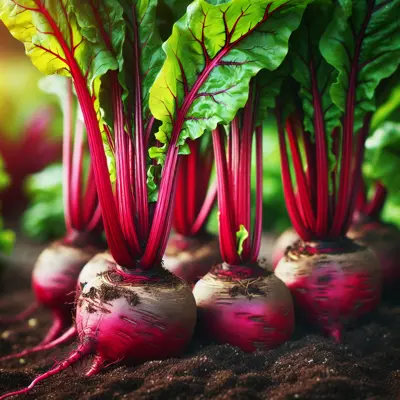
Early Wonder is harvested in bunches with large, vigorous tops attached to the young beets. Tall, bright, glossy green, red-veined tops and slightly flattened red roots. Excellent foliar disease resistance for reliably clean bunches.
Harvest
48-55d
Days to harvest
Sun
Full sun to partial shade
Zones
2–10
USDA hardiness
Height
12-18 inches
Planting Timeline
Showing dates for Early Wonder Tall Top Beet in USDA Zone 7
All Zone 7 root-vegetable →Zone Map
Click a state to update dates
Early Wonder Tall Top Beet · Zones 2–10
Growing Details
Succession Planting
In zone 7, direct sow every 14-18 days starting March 1 through early May, then pause once daytime highs are consistently hitting 85°F — beets don't die outright in the heat, but roots get woody and the greens turn bitter fast. Pick back up around August 15 for a fall run that carries through November. Early Wonder's 48-55 day maturity gives you a tight enough window for 2-3 clean spring successions and at least one solid fall planting.
For each sowing, put in only as many row-feet as you'll use in two weeks. Beets left in the ground past maturity turn pithy in a hurry, so staggering smaller batches beats sowing one long row and then trying to process 30 pounds of beets on the same afternoon.
Complete Growing Guide
Start your Early Wonder Tall Top beets by preparing a sunny to partially shaded bed with loose, well-draining soil. Work in 2-3 inches of compost or well-aged manure, as beets thrive in fertile ground but won't tolerate fresh manure which can cause forked roots. Aim for a soil pH between 6.0-7.0 for optimal nutrient uptake.
Direct sow seeds 2-4 weeks before your last spring frost when soil temperatures reach 45°F. Plant seeds ½ inch deep in rows spaced 12-18 inches apart. Each beet 'seed' is actually a cluster of 2-4 seeds, so expect multiple seedlings to emerge from each planting spot. Thin seedlings to 3-4 inches apart when they're 2 inches tall – don't skip this step as overcrowded beets will produce small, poorly formed roots.
For succession harvests, plant new rows every 2-3 weeks through midsummer. In zones 7-9, take advantage of beets' cold tolerance by planting a fall crop 10-12 weeks before hard frost for sweeter, more tender roots.
Fertilize lightly at planting with a balanced fertilizer like 10-10-10, then side-dress with compost when plants are 4 inches tall. Avoid high-nitrogen fertilizers which promote leaf growth at the expense of root development. Keep soil consistently moist but not waterlogged – inconsistent watering leads to woody, cracked roots.
The biggest mistake new growers make is harvesting too late. Early Wonder Tall Top reaches peak tenderness at 1-2 inches diameter. Another common error is disturbing the roots during cultivation; instead, hand-pull weeds near plants and use shallow hoeing between rows.
Maximize your harvest by treating this as a cut-and-come-again crop for greens. Begin harvesting outer leaves when plants are 4-6 inches tall, leaving the center growing point intact. This approach gives you weeks of fresh greens before you harvest the roots.
Harvesting
Harvest Early Wonder Tall Top beet roots when they reach 1-2 inches in diameter, typically 48-55 days from sowing. Gently brush soil away from the top of the root to check size – they should feel firm and the shoulder should be smooth and deep red. Roots larger than 3 inches become woody and lose their sweet, tender quality.
Harvest in the morning when plants are fully hydrated for the best texture and flavor. Grasp the leaves close to the crown and pull straight up with a slight twisting motion. If the soil is hard, loosen it first with a fork inserted 6 inches away from the plant.
For the greens, begin harvesting when leaves are 4-6 inches tall by cutting outer leaves with scissors, leaving the center crown intact. Young leaves under 4 inches are perfect for salads, while larger leaves are ideal for cooking. You can continue harvesting greens for several weeks before taking the final root harvest, making this variety exceptionally productive for its space.
Storage & Preservation
Fresh beet roots store best with tops removed, leaving 1 inch of stem to prevent bleeding. Store unwashed roots in perforated plastic bags in the refrigerator for 2-3 weeks. The greens should be used within 3-4 days and store separately in the crisper drawer.
For longer preservation, Early Wonder Tall Top roots excel when pickled – their sweet flavor balances beautifully with vinegar and spices. Slice or cube roots, blanch for 3-4 minutes, then pack in sterilized jars with your pickling solution. They also freeze well when blanched and diced, maintaining their color and most of their texture for 8-10 months.
The greens can be preserved by blanching for 2 minutes, then freezing in portions. Alternatively, dehydrate young leaves at 125°F until crisp for a nutrient-dense powder that adds earthy sweetness to soups and smoothies.
History & Origin
Early Wonder Tall Top beet emerged in the 1920s American seed trade as a response to gardeners' demand for a dual-purpose variety that maximized harvest potential. Developed during the era when victory gardens emphasized efficiency and nutrition, this variety was specifically selected for its ability to provide both substantial root crops and abundant leafy greens from a single planting.
The variety represents the classic American approach to heirloom breeding – selecting for practical characteristics that served Depression-era families who needed maximum food production from limited garden space. Unlike many European beet varieties that focused solely on root production, Early Wonder Tall Top was bred to thrive in diverse American growing conditions while providing the protein-rich greens that complemented the sweet, earthy roots.
This variety gained popularity through seed catalogs of the 1930s and 1940s, where it was marketed to both commercial market gardeners and home gardeners. Its reliability and dual-harvest nature made it a staple in American gardens for decades, cementing its place as a true American heirloom variety that reflects the practical gardening wisdom of the early 20th century.
Advantages
- +Dual harvest capability provides both tender roots and abundant leafy greens from single planting
- +Fast maturity at 48-55 days allows multiple succession plantings per season
- +Exceptional cold tolerance permits early spring and late fall plantings when other crops fail
- +Minimal white zoning in roots creates attractive, uniformly colored slices for culinary use
- +Cut-and-come-again harvesting of greens extends productive period for weeks
- +Flattened root shape makes harvesting easier in heavy or clay soils compared to long varieties
- +Good tolerance to leaf spot diseases reduces need for preventive spraying
Considerations
- -Roots become woody and lose sweetness quickly if harvest is delayed beyond 3-inch diameter
- -Susceptible to leaf miners which create unsightly tunnels in the edible greens
- -Requires consistent thinning as seed clusters produce multiple plants that crowd each other
- -Greens can become bitter in hot weather above 80°F, limiting summer production
- -Root quality suffers in heavy clay soils despite flattened shape adaptation
Companion Plants
Onions and garlic are the companions worth planting close — their sulfur compounds confuse aphids that would otherwise colonize beet tops, and at 4-6 inches tall they won't shade out your beet greens. Lettuce and spinach make practical row-fillers because they share beet's preference for consistent 1-inch weekly moisture and pull out before the beets need the full 3-4 inch spacing. Around here in the southeast, radishes sown at the bed edge double as a 25-day trap crop that draws flea beetles away from young beet seedlings. Skip pole beans — they fix nitrogen at a rate that pushes Beta vulgaris toward excessive top growth at the expense of root development, and they'll want the same vertical real estate if you're trellising.
Plant Together
Lettuce
Shallow roots don't compete with beet taproots, provides living mulch
Onions
Repel beet leaf miners and aphids, different root depths reduce competition
Garlic
Deters aphids and flea beetles that commonly attack beet greens
Carrots
Similar growing requirements, carrots break up soil for beet root development
Radishes
Quick harvest frees space for beet expansion, breaks up compacted soil
Swiss Chard
Same plant family with similar care needs, maximizes space efficiency
Bush Beans
Fix nitrogen in soil benefiting heavy-feeding beets, don't compete for root space
Spinach
Cool-season companion with similar water needs, harvests before beets mature
Keep Apart
Pole Beans
Vigorous growth and climbing habit can shade out beet plants reducing yield
Field Mustard
Attracts same pests as beets and can harbor diseases like clubroot
Charlock
Competes aggressively for nutrients and can stunt beet root development
Nutrition Facts
Per 100g serving. % Daily Value based on 2,000 calorie diet. Source: USDA FoodData Central (FDC #2685576)
Pests & Disease Resistance
Resistance
Good tolerance to leaf spot diseases
Common Pests
Leaf miners, aphids, flea beetles
Diseases
Cercospora leaf spot, downy mildew, damping off
Troubleshooting Early Wonder Tall Top Beet
What you'll see, why it happens, and what to do about it.
Seedlings collapse at soil level within days of germination — stems pinched and blackened at the base, roots brown and slimy
Likely Causes
- Damping off — caused by soilborne fungi (Pythium spp., Rhizoctonia solani) thriving in cold, wet, poorly drained soil
- Overwatering or sowing too deep in heavy clay
What to Do
- 1.Pull and discard affected seedlings immediately; don't leave them in the bed
- 2.Let the top half-inch of soil dry between waterings — beet seeds don't need to stay constantly wet
- 3.Work in compost before sowing to improve drainage, and avoid sowing when soil temps are below 50°F
Circular tan or gray spots with reddish-purple borders on the leaves, appearing mid-season
Likely Causes
- Cercospora leaf spot (Cercospora beticola) — the most common foliar disease on beets in the Southeast, spreads fastest in warm, humid weather above 75°F
- Overhead irrigation or rain splashing spores from soil or infected debris onto leaves
What to Do
- 1.Remove and trash spotted leaves as soon as you see them — do not compost
- 2.Switch to drip irrigation or water at the base to keep foliage dry
- 3.Rotate beets and chard (both Beta vulgaris) out of the same bed for at least 2 seasons, since Cercospora beticola overwinters in crop debris
Pale yellow angular patches on upper leaf surfaces with grayish-purple fuzzy growth on the undersides
Likely Causes
- Downy mildew (Peronospora farinosa f. sp. betae) — favors cool nights below 60°F combined with high humidity, common in early spring and fall plantings
What to Do
- 1.Thin stands to 3-4 inch spacing to open up airflow — crowded rows are where this takes hold
- 2.Avoid wetting foliage in the evening; if you're hand-watering, do it in the morning so leaves dry before nightfall
- 3.Pull severely affected plants; the remaining crop usually outgrows light infections once temperatures climb above 70°F
Tiny, irregular holes peppered across young leaves shortly after germination, plus pale winding trails inside some leaves
Likely Causes
- Flea beetles (Phyllotreta spp.) — they overwinter in soil and leaf litter and hit seedlings hard in early spring, punching the small round holes
- Leaf miners (Pegomya hyoscyami) — larvae tunnel inside the leaf tissue, leaving the pale serpentine trails that are distinct from flea beetle damage
What to Do
- 1.Cover the bed with row cover immediately after sowing and keep it on through the first 3-4 weeks — Early Wonder germinates in 7-14 days and that early window is when both pests do their worst
- 2.For leaf miners, pinch off and trash any leaf showing a pale tunnel before the larvae finish their cycle; don't compost them
- 3.A light diatomaceous earth application around the base of seedlings discourages flea beetles without affecting the developing roots
Frequently Asked Questions
How long does Early Wonder Tall Top beet take to grow?▼
Can you grow Early Wonder Tall Top beets in containers?▼
What do Early Wonder Tall Top beets taste like?▼
When should I plant Early Wonder Tall Top beets?▼
Is Early Wonder Tall Top beet good for beginners?▼
Can you eat Early Wonder Tall Top beet greens raw?▼
Zone-by-Zone Planting Calendar
| Zone | Indoor Start | Transplant | Direct Sow | Harvest |
|---|---|---|---|---|
| Zone 1 | — | — | June – July | July – September |
| Zone 2 | — | — | May – July | July – September |
| Zone 11 | — | — | January – February | February – December |
| Zone 12 | — | — | January – February | February – December |
| Zone 13 | — | — | January – February | February – December |
| Zone 3 | — | — | May – June | June – October |
| Zone 4 | — | — | April – June | June – October |
| Zone 5 | — | — | April – May | June – November |
| Zone 6 | — | — | April – May | May – November |
| Zone 7 | — | — | March – May | May – November |
| Zone 8 | — | — | March – April | April – December |
| Zone 9 | — | — | February – March | March – December |
| Zone 10 | — | — | January – March | March – December |
Growing Guides from Wind River Greens
Sources & References
External authority sources used in compiling this guide.
See the Methodology page for how this data is sourced, what's AI-assisted, and known limitations.