Scarlet Queen Turnip
Brassica rapa
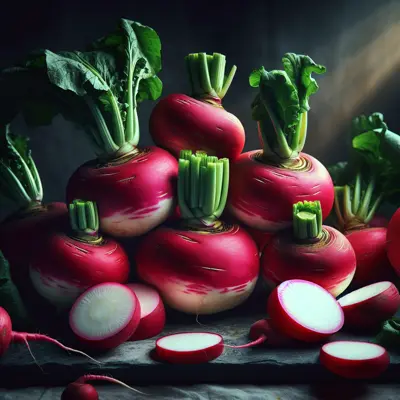
Scarlet Queen is a heirloom turnip variety prized for its stunning deep red to crimson skin that stands out in the garden and kitchen. Maturing in just 37 days, this quick-growing root vegetable produces tender, globe-shaped roots with crisp white flesh. Unlike many turnips, Scarlet Queen delivers a distinctly sweet, mild flavor without bitter notes, making it excellent for both raw consumption in salads and cooked preparations. The vibrant skin color provides visual appeal while the tender texture remains consistent even when harvested at larger sizes. An easy-to-grow heirloom suitable for gardeners of all skill levels.
Harvest
37d
Days to harvest
Sun
Full sun to partial shade
Zones
5–9
USDA hardiness
Height
3 feet
Planting Timeline
Showing dates for Scarlet Queen Turnip in USDA Zone 7
All Zone 7 root-vegetable →Zone Map
Click a state to update dates
Scarlet Queen Turnip · Zones 5–9
Growing Details
Succession Planting
Scarlet Queen hits harvest in 37 days, which makes it a natural fit for tight successions. Direct sow every 14–21 days starting around March 1 in zone 7 and run through early May for the spring window. Resume in late August for a fall run, sowing through September — turnips tolerate light frost and the roots gain some sweetness after a cold snap. Shut down spring plantings once daytime highs are consistently at or above 80°F; beyond that, the roots go pithy and bolt risk climbs quickly.
Complete Growing Guide
Start preparing your soil in early spring by working in 2-3 inches of compost or well-aged manure to a depth of 8-10 inches. Scarlet Queen turnips thrive in loose, well-draining soil with a pH between 6.0-7.0. Test your soil pH and add lime if needed, as acidic soil can encourage clubroot disease.
Direct seed Scarlet Queen turnips 2-3 weeks before your last spring frost date, when soil temperatures reach 45-50°F. In zones 7-9, you can also plant in late August for a fall harvest. Create shallow furrows ¼ to ½ inch deep and space seeds ½ inch apart. Cover lightly with fine soil and keep consistently moist until germination occurs in 4-7 days.
Thin seedlings when they reach 2 inches tall, leaving 3-4 inches between plants. Don't skip this step – overcrowded turnips will produce all tops and small, woody roots. Save the thinned greens for salads as they're tender and nutritious.
Fertilize at planting with a balanced fertilizer like 10-10-10, then side-dress with nitrogen when plants are 4-6 inches tall. Avoid over-fertilizing with nitrogen late in the season, as this promotes leaf growth at the expense of root development.
Maintain consistent moisture throughout the growing season with 1 inch of water weekly. Mulch around plants with straw or shredded leaves to retain moisture and suppress weeds. Inconsistent watering causes splitting and tough, fibrous roots.
Watch for flea beetles in early growth stages – they can devastate young seedlings overnight. Use row covers immediately after planting and remove once plants reach 6 inches tall. For root maggots, avoid planting in areas where other brassicas grew the previous year, and consider beneficial nematodes as a soil treatment.
Harvest begins at 45 days for baby turnips, but Scarlet Queen's sweet flavor fully develops by 55-60 days when roots reach 2-3 inches across.
Harvesting
Harvest Scarlet Queen turnips when roots reach 2-3 inches in diameter, typically 55-60 days after sowing. The shoulders will be bright scarlet red and clearly visible above the soil surface – this vibrant color is your primary visual cue for readiness. Gently brush soil away from the top to check size and color development.
Perform a gentle twist test by grasping the greens near the base and giving a slight turn. Ready turnips will lift easily from loose soil with minimal resistance. Harvest in the morning when roots are fully hydrated and crisp. Pull the entire plant by grasping the leaves close to the crown and lifting straight up with steady pressure.
Avoid letting roots exceed 4 inches in diameter, as they become less tender and develop a stronger flavor. Unlike storage turnips, Scarlet Queen is bred for fresh eating and maintains its sweet, mild taste even at full size. The roots should feel firm and heavy for their size, with taut, unblemished skin. Harvest all turnips before hard frost, though light frosts actually improve their sweetness.
Storage & Preservation
Remove greens immediately after harvest, leaving 1 inch of stem to prevent moisture loss. Store unwashed roots in perforated plastic bags in the refrigerator crisper drawer at 32-35°F with high humidity. Properly stored Scarlet Queen turnips maintain quality for 2-3 weeks.
For longer storage, layer roots in barely damp sand or peat moss in a root cellar or unheated basement maintaining 32-40°F temperatures. They'll keep for 2-4 months under these conditions.
Blanch diced turnips in boiling water for 2-3 minutes, then freeze in portion-sized bags for up to 8 months. Scarlet Queen's crisp texture makes it excellent for quick pickling – slice thin and pack in vinegar brine with spices. The beautiful red color creates stunning pickled vegetables. For fermentation, cube turnips and add to mixed vegetable kimchi or sauerkraut for added crunch and color.
History & Origin
Scarlet Queen turnip represents a relatively recent development in turnip breeding, emerging in the late 20th century as plant breeders focused on creating varieties with enhanced visual appeal and improved eating quality. This hybrid variety was specifically developed to address common complaints about traditional turnips – namely their tendency to become woody and bitter as they mature.
The variety was bred primarily for the fresh market and home garden trade, combining the visual appeal of bright red-skinned turnips with the tender, sweet flesh characteristics more commonly found in Japanese turnip varieties. Plant breeders incorporated genetics from both European storage turnips for color and Asian varieties for texture and flavor.
Scarlet Queen's development coincided with the growing interest in colorful, dual-purpose vegetables during the 1980s and 1990s. The breeding goals emphasized consistent sweetness, extended harvest window, and resistance to common brassica diseases like clubroot. This variety helped revive interest in turnips among American gardeners who had dismissed them as old-fashioned or bitter, introducing a new generation to this nutritious root vegetable through its appealing appearance and mild flavor profile.
Advantages
- +Maintains tender, non-woody texture even when fully mature at 3-4 inches
- +Sweet, mild flavor without the bitter aftertaste common in many turnip varieties
- +Striking bright red color adds visual appeal to gardens and dinner plates
- +Extended harvest window from baby turnips at 45 days to full-size at 60 days
- +Excellent dual-purpose variety with edible, nutritious greens
- +Good clubroot and turnip mosaic virus resistance reduces disease pressure
- +Reliable germination and fast growth make it beginner-friendly
Considerations
- -Hybrid variety means you cannot save seeds for next year's planting
- -More expensive than open-pollinated turnip varieties
- -Red color can fade during cooking, especially when boiled
- -Shorter storage life compared to traditional winter storage turnips
- -Susceptible to flea beetle damage in early growth stages
Companion Plants
Radishes planted 6 inches away act as a trap crop for flea beetles — the beetles hit the radishes first, buying your Scarlet Queen turnips time to push past the vulnerable seedling stage. Garlic and chives deter aphids through volatile sulfur compounds, and both stay shallow enough to avoid competing in the root zone where turnips are doing their actual work at 3–4 inch spacing. Lettuce and spinach fill the same light band without much friction. Keep sunflowers well clear — they release allelopathic compounds that suppress brassica germination — and skip mustard entirely, since it shares clubroot (Plasmodiophora brassicae) susceptibility and stacks pest pressure rather than spreading it.
Plant Together
Radish
Helps break up soil for turnip root development and deters flea beetles
Nasturtium
Acts as trap crop for aphids and flea beetles that commonly attack turnips
Mint
Repels flea beetles and cabbage worms that damage turnip leaves
Garlic
Deters root maggots and aphids while improving soil health
Lettuce
Shallow roots don't compete with turnips and provides living mulch
Spinach
Compatible growing requirements and helps maximize garden space utilization
Peas
Fix nitrogen in soil benefiting turnip growth and have different harvest timing
Chives
Repels aphids and root flies while improving turnip flavor
Keep Apart
Sunflower
Allelopathic compounds inhibit germination and growth of brassica family plants
Mustard
Attracts same pests like flea beetles and competes for similar soil nutrients
Hedge Mustard
Hosts clubroot disease that can devastate turnip crops
Nutrition Facts
Per 100g serving. % Daily Value based on 2,000 calorie diet. Source: USDA FoodData Central (FDC #170465)
Pests & Disease Resistance
Resistance
Good resistance to clubroot and turnip mosaic virus
Common Pests
Flea beetles, aphids, root maggots, cabbage worms
Diseases
Clubroot, black rot, downy mildew
Troubleshooting Scarlet Queen Turnip
What you'll see, why it happens, and what to do about it.
Small, ragged holes punched through leaves on seedlings, often within the first 2 weeks after germination
Likely Causes
- Flea beetles (Phyllotreta spp.) — tiny, jumping beetles that feed aggressively on young brassica foliage
- Seedlings under heat stress are slower to outgrow the damage
What to Do
- 1.Cover the bed with row cover immediately at sowing — flea beetles find plants by sight and smell, and exclusion is the most reliable fix
- 2.If plants are already under attack, dust with kaolin clay or spinosad; reapply after rain
- 3.Get seeds in the ground early enough that plants are past the 4-leaf stage before populations peak in warm weather
Roots are stunted or deformed — swollen, club-shaped, or fused — with yellowing foliage above ground
Likely Causes
- Clubroot (Plasmodiophora brassicae) — a soil-borne pathogen that thrives in acidic, wet soils below pH 6.0
- Infected transplants or contaminated tools brought into a clean bed
What to Do
- 1.Test soil pH and lime to at least 6.5–7.0; Plasmodiophora brassicae activity drops sharply above pH 7.0
- 2.Pull and bag infected plants — do not compost them; spores survive in soil for 20+ years
- 3.Rotate out of all brassicas (cabbage, kale, radish, turnip) for a minimum of 4 years in affected beds
V-shaped yellow lesions at leaf margins, leaves eventually turning brown and papery; sometimes a dark slime visible inside cut stems
Likely Causes
- Black rot (Xanthomonas campestris pv. campestris) — a bacterial disease spread by rain splash, contaminated seed, and infected plant debris
- Overhead irrigation that keeps foliage wet for extended periods
What to Do
- 1.Switch to drip irrigation or water at the base; black rot spreads fastest when leaves stay wet
- 2.Strip and trash affected leaves as soon as the marginal yellowing appears — don't wait for it to spread
- 3.Source fresh, certified disease-free seed each season; the bacterium can be seed-borne
Frequently Asked Questions
How long does Scarlet Queen turnip take to grow?▼
Can you grow Scarlet Queen turnips in containers?▼
What does Scarlet Queen turnip taste like?▼
When should I plant Scarlet Queen turnips?▼
Are Scarlet Queen turnip greens edible?▼
Is Scarlet Queen turnip good for beginners?▼
Zone-by-Zone Planting Calendar
| Zone | Indoor Start | Transplant | Direct Sow | Harvest |
|---|---|---|---|---|
| Zone 1 | — | — | June – July | July – September |
| Zone 2 | — | — | May – July | June – September |
| Zone 11 | — | — | January – February | January – December |
| Zone 12 | — | — | January – February | January – December |
| Zone 13 | — | — | January – February | January – December |
| Zone 3 | — | — | May – June | June – October |
| Zone 4 | — | — | April – June | June – October |
| Zone 5 | — | — | April – May | May – November |
| Zone 6 | — | — | April – May | May – November |
| Zone 7 | — | — | March – May | April – November |
| Zone 8 | — | — | March – April | April – December |
| Zone 9 | — | — | February – March | March – December |
| Zone 10 | — | — | January – March | February – December |
Growing Guides from Wind River Greens
Sources & References
External authority sources used in compiling this guide.
See the Methodology page for how this data is sourced, what's AI-assisted, and known limitations.