Elegant Salmon
Clarkia unguiculata
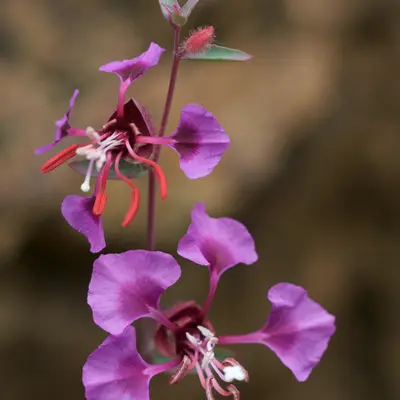
Beautiful salmon blooms strung along purple-red stems. Flowers bloom from the lower portion of the stem and continue to open up the stem. Mostly double, semidouble, and single blooms. Easy to harvest, as the hard (almost woody) stems are nearly free of foliage. Basal-branching plants. Native to the Western US. Also known as elegant clarkia and mountain garland.
Harvest
75-85d
Days to harvest
Sun
Full sun to partial shade
Zones
1–11
USDA hardiness
Height
2-3 feet
Planting Timeline
Showing dates for Elegant Salmon in USDA Zone 7
All Zone 7 flower →Zone Map
Click a state to update dates
Elegant Salmon · Zones 1–11
Growing Details
Succession Planting
Direct sow every 3 weeks starting April 1 through June 1 in zone 7 — that's two or three rounds before the heat makes it pointless. Clarkia blooms around 75-85 days from seed, so a June 1 sowing is already a gamble; you might get flowers in late August, but the plants are more likely to stall out once daytime highs push past 85°F. Stop at mid-May and let the last planting carry you into early summer.
For the earliest bloom, start indoors in late February and transplant out in early April once nighttime lows are reliably above 40°F. Clarkia doesn't love being moved — use cell trays and disturb the roots as little as possible. For a fall attempt, direct sow again in early September. The plants won't reach 2-3 feet, but they'll bloom fine in cooler weather and sometimes push through a light frost without complaint.
Complete Growing Guide
Light: Full sun (6 or more hours of direct sunlight a day), Partial Shade (Direct sunlight only part of the day, 2-6 hours). Soil: Sand. Drainage: Good Drainage. Spacing: Less than 12 inches. Growth rate: Rapid. Maintenance: Low. Propagation: Seed.
Harvesting
Elongated, cylindrical pods, usually 4-grooved or 8-grooved, holding many tiny, cubical seeds.
Type: Capsule.
Storage & Preservation
Store fresh Elegant Salmon stems in a cool location (60-65°F) with high humidity—a florist's cooler is ideal, though the bottom shelf of a refrigerator works well for home growers. Remove lower foliage before storing to prevent bacterial growth. These blooms typically last 7-10 days in a vase with fresh water and floral preservative. For preservation, try air-drying bundles upside down in a warm, dark, well-ventilated space for 2-3 weeks, creating long-lasting dried arrangements. Alternatively, press individual flowers between paper for keepsakes, or preserve them in silica gel for vibrant color retention.
History & Origin
Origin: Western North America, Southern South America
Advantages
- +Attracts: Bees, Moths, Pollinators
- +Fast-growing
- +Low maintenance
Companion Plants
Marigolds and alyssum carry the most weight here. Marigolds — Tagetes patula specifically — deter aphids and thrips through scent compounds in their foliage, and since Clarkia's soft blooms attract both pests, a row at the bed edge is cheap insurance. Alyssum brings in parasitic wasps from the Braconidae and Ichneumonidae families that prey on caterpillar larvae and soft-bodied insects. At 6-8 inches tall, it stays low enough that it won't compete for the 4-6 hours of sun Elegant Salmon needs to bloom well.
Cosmos and zinnias make good neighbors for a different reason: they pull pollinators into the general area, which keeps the whole cutting bed more active. In our zone 7 Georgia garden, that pollinator traffic matters most in April and May before the heat shuts things down. Nasturtiums are worth tucking in at the corners — they act as a trap crop for aphids, drawing the pressure onto themselves rather than your Clarkia — and you can eat the flowers, which doesn't hurt anything.
Give black walnut (Juglans nigra) a wide berth. Its roots release juglone, a compound that interferes with respiration in sensitive plants, and Clarkia isn't going to shrug it off. Sunflowers are a subtler problem — they produce allelopathic compounds through their roots and decomposing leaf litter, and their height will shade a 2-3 foot Clarkia planting faster than you'd expect. Plant sunflowers at least 6-8 feet away, or put them on the north side of the bed so the shadow falls in the right direction.
Plant Together
Marigolds
Repel aphids, whiteflies, and nematodes while attracting beneficial insects
Alyssum
Attracts beneficial insects like lacewings and provides ground cover to retain moisture
Nasturtiums
Act as trap crops for aphids and cucumber beetles, drawing pests away
Lavender
Repels moths, fleas, and mosquitoes while attracting pollinators
Catmint
Deters ants, aphids, and squash bugs while attracting beneficial pollinators
Cosmos
Attracts beneficial insects and provides complementary colors without competing for nutrients
Parsley
Attracts beneficial insects like hoverflies and parasitic wasps that control pests
Zinnia
Attracts butterflies and beneficial insects while providing long-lasting blooms
Keep Apart
Black Walnut
Releases juglone toxin that inhibits growth and can kill many flowering plants
Sunflowers
Allelopathic properties inhibit growth of nearby plants and compete heavily for nutrients
Eucalyptus
Produces allelopathic compounds that suppress growth of most other plants
Troubleshooting Elegant Salmon
What you'll see, why it happens, and what to do about it.
Seedlings damping off at the soil line within the first 10-14 days of germination — stems pinch thin and collapse
Likely Causes
- Pythium or Rhizoctonia fungal rot, encouraged by overwatering and poor drainage
- Sowing too densely, which traps moisture and cuts airflow between stems
What to Do
- 1.Water only when the top inch of soil is dry; Clarkia hates wet feet at any stage
- 2.Thin seedlings to at least 3 inches apart as soon as the first true leaves appear
- 3.If starting indoors, use a sterile seed-starting mix and bottom-water rather than overhead watering
Buds forming but failing to open, or flowers dropping before fully developing in late spring
Likely Causes
- Heat stress — Clarkia unguiculata stops blooming reliably once daytime temps exceed 85°F
- Planting too late in the season, leaving no cool window for the bloom cycle to complete
What to Do
- 1.In zone 7, direct sow by mid-April at the latest so plants reach bloom before June heat sets in
- 2.Apply 2-3 inches of straw mulch to keep the root zone cooler and extend the bloom window by a week or two
- 3.If this keeps happening, shift to an indoor sow in late February and transplant out in early April
Leaves developing pale, stippled patches with fine webbing on the undersides, especially during dry spells
Likely Causes
- Two-spotted spider mite (Tetranychus urticae) — thrives in hot, dry conditions and reproduces fast
- Dusty foliage from dry soil, which mites prefer over healthy, well-watered plants
What to Do
- 1.Knock mites off with a strong spray of water from a hose, hitting the undersides of leaves
- 2.Apply insecticidal soap (follow label dilution, usually 2-3 tsp per quart of water) every 5-7 days until populations drop
- 3.Water consistently — stressed, dry plants get hit harder and recover slower
Stems and lower leaves showing gray, powdery coating by midsummer, especially in humid stretches
Likely Causes
- Powdery mildew (Erysiphe cichoracearum or a close relative) — common on Clarkia as plants age out in warm, humid conditions
- Overcrowding that cuts airflow, combined with warm days and cool nights
What to Do
- 1.Space plants at the full 12-18 inch recommendation from the start — this is where most gardeners cut corners
- 2.At first sign, spray with a diluted baking soda solution (1 tablespoon per gallon of water) or a potassium bicarbonate product
- 3.By the time mildew is heavy, the plants are past peak anyway — pull them, direct sow something else for fall, and compost the stems away from the bed
Frequently Asked Questions
How long do Elegant Salmon flowers last in a vase?▼
Is Elegant Salmon clarkia good for beginners?▼
Can you grow Elegant Salmon in containers?▼
When should I plant Elegant Salmon seeds?▼
What does Elegant Salmon clarkia look like?▼
How many days from planting to harvest for Elegant Salmon?▼
Zone-by-Zone Planting Calendar
| Zone | Indoor Start | Transplant | Direct Sow | Harvest |
|---|---|---|---|---|
| Zone 1 | May – June | July – August | July – September | — |
| Zone 2 | April – May | June – July | June – August | — |
| Zone 11 | January – January | January – February | January – March | — |
| Zone 12 | January – January | January – February | January – March | — |
| Zone 13 | January – January | January – February | January – March | — |
| Zone 3 | April – May | June – July | June – August | — |
| Zone 4 | March – April | June – June | June – July | — |
| Zone 5 | March – April | May – June | May – July | — |
| Zone 6 | March – April | May – June | May – July | — |
| Zone 7 | February – March | April – May | April – June | — |
| Zone 8 | February – March | April – May | April – June | — |
| Zone 9 | January – February | March – April | March – May | — |
| Zone 10 | January – January | February – March | February – April | — |
Growing Guides from Wind River Greens
Sources & References
External authority sources used in compiling this guide.
- BreederJohnny's Selected Seeds
See the Methodology page for how this data is sourced, what's AI-assisted, and known limitations.