Antique Pink
Matthiola incana
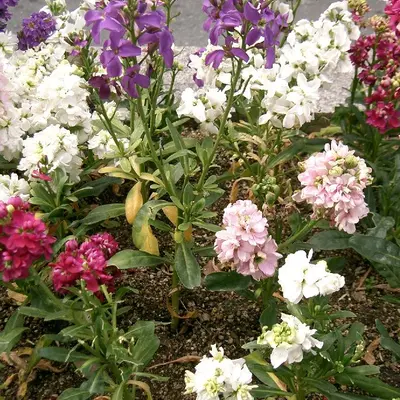
Tightly spaced florets on thick, strong, straight stems. Single-stem or column type stock for one-cut harvest. Blooms have chartreuse green centers with pale pink edges. Plants produce about 55% double-flowering plants. Overall, very similar to the Iron series in performance. NOTE: This variety produces one flowering stem per plant. Pinching is not advisable as it will terminate flowering. Edible Flowers: The peppery, clove-like flavor of the flowers lends itself well to use as a garnish on salads, desserts, and drinks.
Harvest
90-105d
Days to harvest
Sun
Full sun to partial shade
Zones
6–10
USDA hardiness
Height
1-3 feet
Planting Timeline
Showing dates for Antique Pink in USDA Zone 7
All Zone 7 flower →Zone Map
Click a state to update dates
Antique Pink · Zones 6–10
Growing Details
Succession Planting
Stocks aren't a set-it-and-forget-it cut flower — each plant gives you one main spike, so if you want a continuous cut, you need staggered sowings. Start the first batch indoors in February, transplant in April, then sow a second round in late March to go out in early May. Stop there: once daytime highs push consistently past 75°F, stocks set bud poorly and will bolt to a scraggly secondary flush that's not worth the bed space. Two rounds is usually all you get before summer closes the window.
Complete Growing Guide
Tightly spaced florets on thick, strong, straight stems. Single-stem or column type stock for one-cut harvest. Blooms have chartreuse green centers with pale pink edges. Plants produce about 55% double-flowering plants. Overall, very similar to the Iron series in performance. NOTE: This variety produces one flowering stem per plant. Pinching is not advisable as it will terminate flowering. Edible Flowers: The peppery, clove-like flavor of the flowers lends itself well to use as a garnish on salads, desserts, and drinks. According to Johnny's Selected Seeds, Antique Pink is 90 - 105 days to maturity, annual, open pollinated. Notable features: Use for Cut Flowers and Bouquets, Edible Flowers, Fragrant.
Light: Full sun (6 or more hours of direct sunlight a day), Partial Shade (Direct sunlight only part of the day, 2-6 hours). Soil: Clay, High Organic Matter, Loam (Silt), Sand. Soil pH: Alkaline (>8.0), Neutral (6.0-8.0). Drainage: Good Drainage, Moist. Height: 1 ft. 0 in. - 3 ft. 0 in.. Spread: 0 ft. 9 in. - 1 ft. 6 in.. Spacing: Less than 12 inches, 12 inches-3 feet. Growth rate: Rapid. Maintenance: Low. Propagation: Seed. Regions: Coastal, Mountains.
Harvesting
Antique Pink reaches harvest at 90 - 105 days from sowing per Johnny's Selected Seeds. As an annual, harvest continues until frost ends the season.
Seeds will ripen in August and September.
Harvest time: Fall
Storage & Preservation
For fresh storage, keep cut Antique Pink stems in a cool location away from direct sunlight, ideally in a refrigerator at 35-40°F with high humidity (90%+). Vase life is typically 7-10 days when properly hydrated with fresh flower food. For preservation: (1) Air-dry by bundling stems upside-down in a dark, ventilated space for 2-3 weeks to retain color and shape; (2) Glycerin treatment preserves stems for extended display by replacing water with glycerin solution; (3) Freeze-dry flowers to maintain delicate structure and pale pink coloring for long-term keepsake arrangements.
History & Origin
Antique Pink is open-pollinated, meaning seed saved from healthy plants will produce true-to-type offspring. Listed in the Johnny's Selected Seeds catalog.
Origin: The Coast of Europe from Spain to Greece.
Advantages
- +Thick, strong stems ideal for professional floral arrangements and cut flowers
- +Tightly spaced florets create full, visually striking flower spikes
- +Approximately 55% double-flowering plants provide desirable full blooms
- +Single-stem harvest simplifies production and reduces labor complexity
- +Edible flowers offer unique peppery, clove-like flavor for culinary garnish
Considerations
- -Single stem per plant means no regrowth after harvest reduces yield
- -Pinching terminates flowering making plant management inflexible and limiting
- -90-105 day timeline requires longer production period than some alternatives
- -Only 55% double-flowering rate means half plants may disappoint aesthetically
Companion Plants
Lavender and catmint are the most useful neighbors here — both prefer lean, well-drained soil and won't compete hard for water, and their volatile oils confuse the aphids that spread mosaic viruses into stocks. Marigolds pull similar duty against thrips and whitefly at the border. Sweet alyssum works well at 6-8 inches tall, drawing in parasitic wasps without shading out the stocks. Black walnut is a hard no — juglone, the allelopathic compound it releases through root exudate and leaf litter, is directly toxic to Matthiola; keep the two separated by a full garden's width, not just a few feet.
Plant Together
Lavender
Repels pests like aphids and spider mites while attracting beneficial pollinators
Marigolds
Natural pest deterrent that repels nematodes and aphids
Sweet Alyssum
Attracts beneficial insects like lacewings and provides ground cover
Catmint
Deters aphids, ants, and rodents while attracting pollinators
Nasturtiums
Acts as trap crop for aphids and adds beneficial insects
Salvia
Attracts pollinators and repels harmful insects with aromatic foliage
Yarrow
Improves soil health and attracts predatory insects that control pests
Cosmos
Attracts beneficial insects and provides complementary bloom timing
Keep Apart
Black Walnut
Produces juglone toxin that inhibits growth and can kill sensitive plants
Eucalyptus
Allelopathic compounds in leaves and roots suppress nearby plant growth
Sunflowers
Allelopathic effects can stunt growth of nearby flowering plants
Troubleshooting Antique Pink
What you'll see, why it happens, and what to do about it.
Stems rotting at the soil line, seedlings collapsing suddenly in the first 2-3 weeks after transplant
Likely Causes
- Damping off (Pythium or Rhizoctonia spp.) — triggered by overwatering and poor drainage
- Planting too deep or heavy mulch piled against the stem
What to Do
- 1.Pull the collapsed plants and improve drainage immediately — amend with perlite or coarse sand if the bed stays wet
- 2.Water only at the base and let the top inch of soil dry between waterings
- 3.Start seeds in a sterile seed-starting mix, not garden soil, and keep a fan running for airflow
Flower spikes absent or sparse by day 95, with thick green foliage but no buds forming
Likely Causes
- Vernalization skipped — Matthiola incana needs several weeks below 50°F to trigger bloom set
- Excess nitrogen pushing vegetative growth at the expense of flowering
What to Do
- 1.Start seeds indoors in February so young plants experience natural cold nights before spring transplant — don't rush them into warm conditions
- 2.Cut out high-nitrogen fertilizer once plants are established; side-dress with bone meal or a low-nitrogen bloom formula instead
- 3.Next season, try cold stratification: refrigerate moistened seeds at 40°F for 5-7 days before sowing
Frequently Asked Questions
How long do Antique Pink cut flowers last?▼
Is Antique Pink a good choice for beginner flower growers?▼
Can you grow Antique Pink flowers in containers?▼
What does Antique Pink taste like and how is it used in cooking?▼
When should I plant Antique Pink and how long until harvest?▼
Why should I not pinch Antique Pink plants?▼
Zone-by-Zone Planting Calendar
| Zone | Indoor Start | Transplant | Direct Sow | Harvest |
|---|---|---|---|---|
| Zone 3 | April – May | June – July | June – August | — |
| Zone 4 | March – April | June – June | June – July | — |
| Zone 5 | March – April | May – June | May – July | — |
| Zone 6 | March – April | May – June | May – July | — |
| Zone 7 | February – March | April – May | April – June | — |
| Zone 8 | February – March | April – May | April – June | — |
| Zone 9 | January – February | March – April | March – May | — |
| Zone 10 | January – January | February – March | February – April | — |
| Zone 1 | May – June | July – August | July – September | — |
| Zone 2 | April – May | June – July | June – August | — |
| Zone 11 | January – January | January – February | January – March | — |
| Zone 12 | January – January | January – February | January – March | — |
| Zone 13 | January – January | January – February | January – March | — |
Growing Guides from Wind River Greens
Sources & References
External authority sources used in compiling this guide.
- BreederJohnny's Selected Seeds
See the Methodology page for how this data is sourced, what's AI-assisted, and known limitations.