Alfalfa Microgreens
Medicago sativa
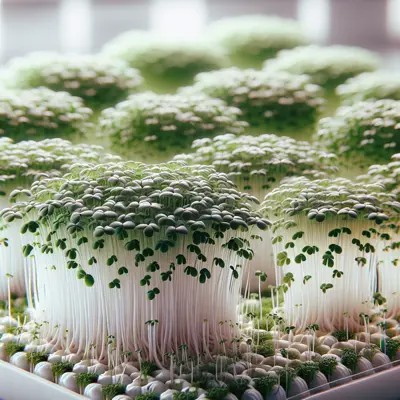
Commonly used to add flavor and texture to salads and sandwiches. One tablespoon of seed yields approx. 2-3 cups of sprouts. All of Johnny's high-germination sprouting seeds have tested negative for the presence of E. coli 0157 and Salmonella.
Harvest
6-10d
Days to harvest
Sun
Bright indirect light
Zones
2–9
USDA hardiness
Height
2 feet
Planting Timeline
Showing dates for Alfalfa Microgreens in USDA Zone 7
All Zone 7 microgreen →Zone Map
Click a state to update dates
Alfalfa Microgreens · Zones 2–9
Growing Details
Succession Planting
Alfalfa microgreens go from seed to harvest in 6–10 days, so succession is really just tray rotation. Start a new 10×20 tray every 3–4 days to keep a steady supply without a glut. There's no off-season — sow year-round indoors and adjust your grow light timer to maintain that 12–14 hour window through the short days of December and January. If you're supplying a CSA or market stand, four trays staggered at 3-day intervals is usually enough to stay ahead of a modest weekly pull.
Complete Growing Guide
You'll find alfalfa microgreens incredibly rewarding to grow, especially if you're new to microgreen cultivation. Start by soaking your alfalfa seeds in cool water for 4-8 hours — this simple step dramatically improves germination rates from around 70% to over 90%. After soaking, rinse the seeds thoroughly in a fine mesh strainer until the water runs clear.
Choose your growing medium carefully. Coconut coir works exceptionally well for alfalfa because it retains moisture without becoming waterlogged. Hemp mats and paper towels are also excellent options. Avoid potting soil, which can harbor harmful bacteria that cause damping off. Spread your pre-soaked seeds evenly across your moist growing medium — aim for dense coverage without seeds overlapping.
Cover your seeded trays with another tray or dark cloth for the first 2-3 days. This blackout period encourages strong stem development and prevents leggy growth. Keep your growing area at 65-75°F during this phase. Once you see the first green leaves emerging (usually day 3), remove the cover and introduce light.
Provide 12-14 hours of bright indirect light daily. If using grow lights, position them 6-12 inches above the trays. Direct sunlight will scorch the delicate leaves and cause bitter flavors. Water by misting lightly or bottom-watering to prevent disturbing the shallow root system.
The biggest mistake beginners make is overwatering. Alfalfa needs consistent moisture but not soggy conditions. If you notice white fuzzy growth at the base of stems, you're likely overwatering — this leads to damping off disease. Ensure good air circulation with a small fan on low speed.
Maximize your yield by maintaining consistent moisture and harvesting at the right time. Dense seeding produces fuller trays, but leave tiny gaps between seeds to prevent mold issues in humid conditions.
Harvesting
Harvest your alfalfa microgreens when they reach 1-2 inches tall with their first set of true leaves fully opened, typically 6-8 days after sowing. The stems should be crisp and pale green to white, while the leaves display a vibrant green color without any yellowing edges.
Perform the 'stand test' — gently lift a small section of microgreens. They should stand upright and feel firm, not wilted or mushy. Harvest in the morning when the plants are fully hydrated and at their crispest.
Use clean, sharp scissors or a knife to cut the stems about ¼ inch above the growing medium. Cut in small sections rather than trying to harvest entire trays at once — this prevents the remaining microgreens from drying out. Avoid pulling or tugging, which can disturb neighboring plants and introduce growing medium into your harvest.
Harvest only what you'll use within 2-3 days for peak flavor and nutrition. The delicate nature of alfalfa microgreens means they deteriorate quickly once cut.
Storage & Preservation
Store freshly harvested alfalfa microgreens in the refrigerator immediately after cutting. Place them in a breathable container lined with paper towels to absorb excess moisture — plastic clamshells with ventilation holes work perfectly. They'll maintain peak quality for 5-7 days at 35-40°F.
Never wash alfalfa microgreens before storing, as excess moisture accelerates decay. Instead, rinse gently just before use. For longer storage, you can freeze alfalfa microgreens for smoothies, though they'll lose their crisp texture.
Dehydrating is another excellent preservation method — spread clean microgreens on dehydrator trays at 95°F for 8-12 hours until completely crisp. Store dried microgreens in airtight containers for up to 6 months. They make an excellent powder for seasoning when ground in a spice grinder. Avoid canning or fermenting alfalfa microgreens, as their delicate structure breaks down completely with these methods.
History & Origin
Alfalfa microgreens trace their origins to the broader alfalfa plant (Medicago sativa), which has been cultivated for over 2,500 years. Ancient Persians first domesticated alfalfa around 500 BCE, calling it 'aspast' meaning 'horse fodder.' The Greeks later named it 'Medike' after the Medes people of ancient Persia.
The microgreen revolution began in the 1980s when California chefs started experimenting with baby vegetables and young greens. Alfalfa was among the first microgreens to gain popularity because of its reliable germination and gentle flavor that appealed to mainstream palates.
Alfalfa seeds were already familiar to health food enthusiasts who had been sprouting them since the 1960s health movement. The transition from sprouts to microgreens occurred when growers discovered that allowing alfalfa to develop its first true leaves created better texture and visual appeal for culinary applications.
Today, alfalfa microgreens serve as the 'gateway' variety for many new microgreen growers due to their forgiving nature and quick growth cycle, maintaining their status as one of the most dependable varieties in commercial and home production.
Advantages
- +Exceptionally fast germination, often sprouting within 24-48 hours of sowing
- +Extremely forgiving for beginners with consistent results even with minor care mistakes
- +Requires minimal equipment investment compared to other microgreen varieties
- +Produces multiple flushes if cut above the growing point, extending harvest
- +Natural resistance to most common microgreen diseases when grown in proper conditions
- +Mild flavor appeals to children and picky eaters, making it highly marketable
- +Grows successfully in temperatures ranging from 60-78°F, accommodating various growing environments
Considerations
- -Extremely delicate stems that bruise easily during handling and transport
- -Short shelf life of only 5-7 days even under optimal storage conditions
- -Susceptible to damping off if air circulation is inadequate
- -Fine, hair-like roots can be mistaken for mold by inexperienced growers
- -Lower profit margins due to lightweight harvest compared to denser microgreens like pea shoots
Companion Plants
Alfalfa microgreens grow in trays, not in-ground, so companion planting works differently here — it's about what shares your shelf or greenhouse space, not your bed. Basil, radish, lettuce, and spinach all tolerate similar humidity levels and won't off-gas anything that bothers delicate Medicago seedlings; they're fine neighbors at close range. Fennel and onions release sulfur-based volatile compounds that can stress young seedlings in an enclosed space, so give them a few feet of separation. Black walnut is only a concern if your grow space is in or adjacent to a structure where walnut debris or root exudate can get in — juglone is genuinely toxic to alfalfa at any stage, but it's not a risk most indoor growers will ever face.
Plant Together
Basil
Repels aphids and thrips while improving air circulation around microgreens
Chives
Natural pest deterrent that repels aphids and other soft-bodied insects
Marigolds
Strong pest-repelling properties against aphids, whiteflies, and fungus gnats
Lettuce
Similar growing conditions and compatible spacing for succession planting
Spinach
Compatible cool-weather crop with similar water and light requirements
Radish
Fast-growing companion that helps break up soil and deters root pests
Nasturtiums
Trap crop for aphids and cucumber beetles, protecting alfalfa microgreens
Dill
Attracts beneficial insects like parasitic wasps that control pest populations
Keep Apart
Black Walnut
Produces juglone toxin that inhibits growth and causes wilting in legumes
Onions
Can inhibit nitrogen fixation in legumes and stunt their growth
Fennel
Allelopathic properties inhibit germination and growth of most other plants
Sunflowers
Allelopathic compounds in roots and leaves suppress growth of nearby plants
Nutrition Facts
Per 100g serving. % Daily Value based on 2,000 calorie diet. Source: USDA FoodData Central (FDC #167782)
Pests & Disease Resistance
Resistance
Generally good disease resistance
Common Pests
Aphids, thrips in greenhouse conditions
Diseases
Damping off from overwatering, bacterial soft rot
Troubleshooting Alfalfa Microgreens
What you'll see, why it happens, and what to do about it.
Seedlings collapse at the base and fall over around day 3–5, often in patches
Likely Causes
- Damping off (Pythium or Rhizoctonia spp.) — fungal pathogens that thrive in wet, poorly ventilated trays
- Overwatering: keeping the growing medium soggy rather than moist
What to Do
- 1.Bottom-water only — pour water into the tray beneath and let the medium wick it up; don't mist the canopy
- 2.Run a small fan on low nearby to keep air moving across the tray surface
- 3.Toss the affected tray; damping off spreads fast and there's no saving a half-collapsed flat
Seeds germinate but stems are pale, spindly, and reaching hard in one direction by day 4–5
Likely Causes
- Insufficient light — grow lights positioned too far above the tray, or natural light coming from a single low window
- Light duration under 12 hours per day
What to Do
- 1.Move grow lights to within 2–4 inches of the canopy, or use a timer to hit 12–14 hours of light per day
- 2.Rotate the tray 180° every 24 hours if you're relying on a window
- 3.Don't try to salvage leggy alfalfa sprouts for a full harvest — start a fresh tray with corrected light placement
Stems and roots turn mushy and smell off around day 6–8, even without obvious overwatering
Likely Causes
- Bacterial soft rot (Erwinia or Pseudomonas spp.) — common in humid, warm greenhouse or indoor conditions
- Seeding too densely, which traps moisture inside the canopy and creates the wet microclimate bacteria need
What to Do
- 1.Stick to 1/2 oz seed per 10×20 tray — overcrowding is the main driver of recurring soft rot
- 2.Sanitize trays between uses with a dilute bleach solution (1 tablespoon bleach per gallon of water), then rinse and dry completely before reseeding
- 3.Keep ambient temperature below 75°F during germination if bacterial rot keeps coming back
Frequently Asked Questions
How long do alfalfa microgreens take to grow?▼
Are alfalfa microgreens good for beginners?▼
Can you regrow alfalfa microgreens after cutting?▼
What do alfalfa microgreens taste like?▼
Do alfalfa microgreens need soil to grow?▼
Why are my alfalfa microgreens turning yellow?▼
Zone-by-Zone Planting Calendar
| Zone | Indoor Start | Transplant | Direct Sow | Harvest |
|---|---|---|---|---|
| Zone 3 | January – December | — | — | January – December |
| Zone 4 | January – December | — | — | January – December |
| Zone 5 | January – December | — | — | January – December |
| Zone 6 | January – December | — | — | January – December |
| Zone 7 | January – December | — | — | January – December |
| Zone 8 | January – December | — | — | January – December |
| Zone 9 | January – December | — | — | January – December |
| Zone 10 | January – December | — | — | January – December |
| Zone 1 | January – December | — | — | January – December |
| Zone 2 | January – December | — | — | January – December |
| Zone 11 | January – December | — | — | January – December |
| Zone 12 | January – December | — | — | January – December |
| Zone 13 | January – December | — | — | January – December |
Growing Guides from Wind River Greens
Sources & References
External authority sources used in compiling this guide.
See the Methodology page for how this data is sourced, what's AI-assisted, and known limitations.