Apollo Orange
Asclepias curassavica
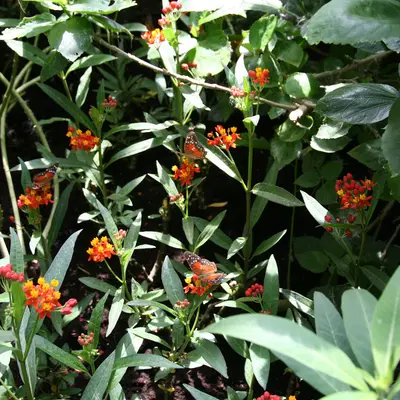
Tall, vigorous plants do best in warm, relatively dry conditions. Vivid orange blooms with attractive, slender foliage. Best used for cut flowers. Asclepias curassavica is attractive to butterflies and pollinators but we recommend planting a native species for best supporting butterflies. Also known as milkweed, butterfly weed, blood flower, and sunset flower. Tender perennial in Zones 7-10.
Harvest
90-100d
Days to harvest
Sun
Full sun
Zones
8–11
USDA hardiness
Height
2-3 feet
Planting Timeline
Showing dates for Apollo Orange in USDA Zone 7
All Zone 7 native-wildflower →Zone Map
Click a state to update dates
Apollo Orange · Zones 8–11
Growing Details
Complete Growing Guide
Light: Full sun (6 or more hours of direct sunlight a day). Soil: High Organic Matter, Loam (Silt), Sand. Soil pH: Acid (<6.0), Neutral (6.0-8.0). Drainage: Good Drainage. Height: 2 ft. 0 in. - 3 ft. 0 in.. Spread: 1 ft. 0 in. - 2 ft. 0 in.. Spacing: 12 inches-3 feet. Growth rate: Medium. Maintenance: Low. Propagation: Division, Seed. Regions: Coastal.
Harvesting
The fruits are dry and inflated with an erect follicle and many hair-tufted seeds. They are often used in dried arrangements.
Color: Brown/Copper. Type: Follicle. Length: > 3 inches. Width: < 1 inch.
Garden value: Showy
Harvest time: Fall, Summer
Storage & Preservation
Fresh-cut Apollo Orange stems last 7-10 days in a vase with clean water and floral preservative. Change water every 2-3 days and re-cut stems at an angle to maximize water uptake. For longer enjoyment, dry flowers for everlasting arrangements: hang small bundles upside down in a warm, dry, dark location for 2-3 weeks until papery to the touch. Dried Apollo Orange retains its orange color well and adds textural interest to dried arrangements for months.
Pressed flowers work beautifully in botanical crafts and herbals. Place individual flowers or flower clusters between newspaper or parchment paper, layer them in a heavy book, and allow 3-4 weeks for complete drying. Preserve seeds by allowing pods to fully mature on the plant, then collecting and storing seeds in a cool, dry place in paper envelopes for up to 2-3 years of viability.
History & Origin
Apollo Orange is open-pollinated, meaning seed saved from healthy plants will produce true-to-type offspring. Listed in the Johnny's Selected Seeds catalog.
Origin: Mexico to Tropical America
Advantages
- +Attracts: Bees, Hummingbirds, Moths, Pollinators
- +Low maintenance
Considerations
- -Toxic (Bark, Flowers, Fruits, Leaves, Roots, Seeds, Stems): Low severity
- -Causes contact dermatitis
Companion Plants
The native prairie and meadow plants in Apollo Orange's companion list share its preference for lean, well-drained soil and full sun — and that shared tolerance is the main reason they work. Purple Coneflower (Echinacea purpurea), Black-eyed Susan (Rudbeckia hirta), and Yarrow (Achillea millefolium) all bloom across a long season, which keeps generalist pollinators cycling through the planting. Those same insects — native bees, syrphid flies, parasitic wasps — are the ones that keep oleander aphid pressure manageable on your milkweed without any intervention from you. Goldenrod picks up that work in late summer when Apollo Orange is still flowering. Wild Lupine is worth mentioning separately: it fixes atmospheric nitrogen through root nodules, which feeds neighboring plants without pushing Apollo Orange toward the lush, soft new growth that aphids find most attractive.
The harmful companions are all aggressive spreaders that win the space competition fast. Crown Vetch (Coronilla varia) and Canada Thistle (Cirsium arvense) are both listed as invasive in many states and will crowd out milkweed within 2–3 seasons if left unchecked. Tall Fescue produces allelopathic compounds that suppress forb seedling germination — you'll have a hard time getting Apollo Orange to establish from seed in a fescue-heavy area. Tree of Heaven (Ailanthus altissima) does something similar through root exudates and decomposing leaf litter. Any of these four will cost you more in pulling and replanting than they're worth to have nearby.
Plant Together
Purple Coneflower
Attracts beneficial pollinators and creates complementary native wildflower display
Black-eyed Susan
Similar growing conditions and bloom times, attracts butterflies and native bees
Wild Bergamot
Natural pest deterrent with aromatic oils, attracts beneficial insects
Native Bunch Grasses
Provides natural mulching and erosion control without competing for nutrients
Yarrow
Deep roots bring nutrients to surface, attracts predatory insects that control pests
Goldenrod
Late season nectar source, supports beneficial insects throughout growing season
Wild Lupine
Nitrogen-fixing legume improves soil fertility for surrounding wildflowers
Serviceberry
Provides partial shade and windbreak, attracts diverse pollinators
Keep Apart
Crown Vetch
Aggressive spreader that can outcompete and smother native wildflowers
Canada Thistle
Invasive perennial weed that competes heavily for water and nutrients
Tall Fescue
Allelopathic grass that releases chemicals inhibiting wildflower germination and growth
Tree of Heaven
Produces allelopathic compounds that suppress native plant growth and establishment
Troubleshooting Apollo Orange
What you'll see, why it happens, and what to do about it.
Leaves and stems covered in dense clusters of small orange or yellow insects, with sticky residue on foliage
Likely Causes
- Oleander aphid (Aphis nerii) — a specialist aphid that colonizes milkweed almost exclusively and reproduces fast in warm weather
- Absence of predatory insects, especially in newly established or isolated plantings
What to Do
- 1.Knock aphids off with a firm spray of water from a hose — do this in the morning so foliage dries before evening
- 2.Tolerate light infestations; ladybug larvae and parasitic wasps (Lysiphlebus testaceipes) will show up within a week or two if you don't spray
- 3.If the colony is severe and monarch caterpillars are present, spot-treat only aphid-heavy stems with insecticidal soap, keeping it off any caterpillars or chrysalises
Stems wilting and collapsing at the base, or plant failing to establish after transplant with yellowing lower leaves
Likely Causes
- Root rot from overwatering or poorly drained soil — Asclepias curassavica is genuinely drought-tolerant once established and does not want wet feet
- Transplant shock combined with heavy clay soil that holds water after rain
What to Do
- 1.Cut back on watering immediately; established plants can go 10–14 days between waterings in average summer conditions
- 2.If the planting site stays wet after rain, amend with coarse sand or fine gravel, or move the plant to a raised area with better drainage
- 3.At transplant time, don't bury the stem deeper than it sat in the pot — milkweed crowns rot quickly when packed with damp soil
Frequently Asked Questions
How long does Apollo Orange take to flower from seed?▼
Is Apollo Orange a perennial or annual?▼
Can you grow Apollo Orange in pots?▼
Why are my Apollo Orange plants dying after planting?▼
Is Apollo Orange good for cutting and arranging?▼
Will Apollo Orange attract monarch butterflies?▼
Zone-by-Zone Planting Calendar
| Zone | Indoor Start | Transplant | Direct Sow | Harvest |
|---|---|---|---|---|
| Zone 3 | — | June – August | May – July | — |
| Zone 4 | — | June – July | April – June | — |
| Zone 5 | — | May – July | April – June | — |
| Zone 6 | — | May – July | April – June | — |
| Zone 7 | — | May – June | March – May | — |
| Zone 8 | — | April – June | March – May | — |
| Zone 9 | — | March – May | February – April | — |
| Zone 10 | — | March – April | January – March | — |
| Zone 11 | — | February – March | January – February | — |
Growing Guides from Wind River Greens
Sources & References
External authority sources used in compiling this guide.
- ExtensionNC State Extension
- BreederJohnny's Selected Seeds
See the Methodology page for how this data is sourced, what's AI-assisted, and known limitations.