White Lisbon Bunching Onion
Allium fistulosum 'White Lisbon'
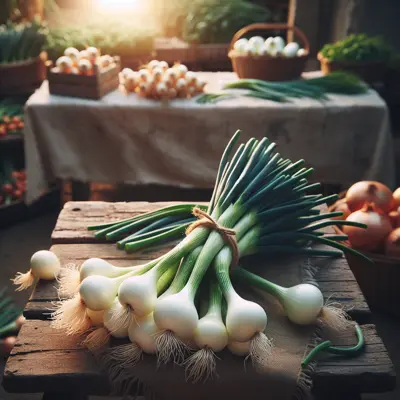
The classic European bunching onion prized for its crisp white stems and mild onion flavor. Perfect for continuous harvesting throughout the growing season, these versatile scallions can be harvested young for tender greens or left to mature for thicker stems. A kitchen garden essential that's incredibly easy to grow.
Harvest
60-120d
Days to harvest
Sun
Full sun to partial shade
Zones
4–9
USDA hardiness
Height
1-3 feet
Planting Timeline
Showing dates for White Lisbon Bunching Onion in USDA Zone 7
All Zone 7 allium →Zone Map
Click a state to update dates
White Lisbon Bunching Onion · Zones 4–9
Growing Details
Succession Planting
Direct sow White Lisbon every 14–21 days once soil temperatures reach 50°F in spring — in zone 7 that's typically late February through early May. Stop before daytime highs lock in above 85°F, or new seedlings will stall out rather than establish. Pick back up with a fall run starting in late August, sowing through September for harvests that stretch into November. At 60–120 days to harvest, staggering your sowings means you're pulling a few bunches at a time instead of facing 50 mature onions on the same Tuesday.
Complete Growing Guide
White Lisbon bunching onions thrive in cool-season conditions and perform best when planted in early spring or late summer for fall harvest, as they tend to bolt quickly during extended heat and long daylight hours. These cultivars prefer consistently moist, well-draining soil rich in organic matter and need at least six hours of direct sunlight daily. Unlike storage onions, White Lisbons are particularly susceptible to thrips and onion maggots, especially in wet conditions, so ensure good air circulation and avoid overhead watering. They're prone to premature bolting and stem elongation ("stretching") if temperatures spike above 75°F, so providing afternoon shade in hot climates extends the harvest window. The practical advantage of this variety is its ability to regrow after cutting—harvest outer leaves when 6-8 inches tall, leaving the growing center intact for repeated yields throughout the season without replanting.
Light: Full sun (6 or more hours of direct sunlight a day), Partial Shade (Direct sunlight only part of the day, 2-6 hours). Soil: High Organic Matter, Loam (Silt), Sand. Drainage: Good Drainage. Height: 1 ft. 0 in. - 3 ft. 0 in.. Spread: 0 ft. 6 in. - 2 ft. 0 in.. Spacing: Less than 12 inches. Growth rate: Medium. Maintenance: Low. Propagation: Division. Regions: Coastal, Mountains, Piedmont.
Harvesting
White Lisbon bunching onions reach peak harvest when their white stems measure roughly ½ to ¾ inches in diameter and the green tops display vibrant color without yellowing. The stems should feel firm yet tender when gently squeezed. These onions excel at continuous harvesting—simply pinch or cut outer stems at soil level every few weeks throughout the season, allowing inner growth to continue, or harvest the entire plant when stems reach 6-8 inches tall. For best flavor and texture, harvest in early morning after dew dries but before intense afternoon heat, as this timing ensures maximum crispness and mild sweetness in both the white stems and tender greens.
The capsule splits longitudinally and contains small round black seeds.
Type: Capsule.
Storage & Preservation
Fresh White Lisbon bunching onions store best in the refrigerator wrapped loosely in damp paper towels inside a plastic bag, maintaining quality for 7-10 days. Keep roots attached until use to extend freshness, and trim just before cooking. Unlike storage onions, these are meant for fresh consumption rather than long-term keeping.
For preservation, chopping and freezing works excellently—clean, chop both white and green portions, spread on baking sheets to freeze individually, then transfer to freezer bags. Frozen scallions maintain flavor for 6 months and can go directly into cooked dishes. Dehydrating the green tops creates excellent onion powder when ground, while the white portions pickle beautifully in rice vinegar for Asian-inspired condiments. Quick-blanching whole stems for 30 seconds before freezing preserves color and texture better than freezing raw.
History & Origin
The White Lisbon Bunching Onion traces its lineage to European bunching onion traditions, particularly those developed in Portugal and the Mediterranean region, though specific breeding records and introduction dates remain poorly documented in readily available sources. This variety belongs to Allium fistulosum, a species cultivated for millennia in Asian and European gardens as a non-bulbing onion. The "White Lisbon" designation suggests Portuguese heritage, likely popularized through European seed catalogs during the 19th or early 20th century, though formal breeding program documentation is scarce. The variety became established in Western kitchen gardens as a reliable, continuously harvestable scallion, perpetuated through open-pollination and seed saving by home gardeners and commercial seed companies rather than through formally credited breeding efforts.
Origin: Northern Hemisphere, North America and Eurasia
Advantages
- +Mild, delicate flavor makes White Lisbon perfect for fresh eating and salads
- +Continuous harvesting throughout season provides extended supply of tender scallions
- +Quick maturity in 60-120 days allows multiple succession plantings annually
- +Crisp white stems are visually attractive and prized by professional chefs
- +Extremely easy to grow, ideal for beginner gardeners and children
Considerations
- -Vulnerable to multiple fungal diseases including downy mildew and purple blotch
- -Multiple pest pressures from onion thrips, aphids, and leafminers require management
- -Delicate stems may not store as long as thicker bunching onion varieties
- -Susceptible to bolting in hot weather, reducing harvest window and quality
Companion Plants
Carrots and bunching onions are one of the more reliable pairings in the garden — their root depths don't compete much (onions stay shallow at 6–12 inches), and the onion scent genuinely disrupts carrot fly (Psila rosae) host-finding. Lettuce and brassicas like broccoli benefit for similar reasons: the sulfur volatiles Allium fistulosum releases at the soil surface throw off aphid navigation. Beans and peas are a different story — allium root exudates actively suppress legume nitrogen fixation, and you'll see stunted plants within a few weeks of close planting. Give asparagus the same courtesy and keep it on the other side of the bed.
Plant Together
Carrots
Onions repel carrot flies while carrots help break up soil for onion root development
Tomatoes
Onions deter aphids, spider mites, and hornworms from tomato plants
Lettuce
Onions repel aphids and rabbits that commonly attack lettuce crops
Cabbage
Onions deter cabbage worms, cabbage loopers, and flea beetles
Broccoli
Onions repel cabbage moths and aphids that damage brassica family plants
Peppers
Onions help deter aphids and may reduce fungal diseases around pepper plants
Strawberries
Onions repel slugs, aphids, and spider mites that commonly damage strawberry plants
Roses
Onions deter aphids, thrips, and may help prevent black spot fungal disease
Keep Apart
Beans
Onions can inhibit nitrogen fixation and stunt growth of legume plants
Peas
Allelopathic compounds from onions interfere with pea root development and growth
Asparagus
Onions can stunt asparagus growth and reduce spear production over time
Nutrition Facts
Per 100g serving. % Daily Value based on 2,000 calorie diet. Source: USDA FoodData Central (FDC #170000)
Pests & Disease Resistance
Resistance
Good general disease resistance
Common Pests
Onion thrips, aphids, leafminers
Diseases
Downy mildew, purple blotch, rust
Troubleshooting White Lisbon Bunching Onion
What you'll see, why it happens, and what to do about it.
Silvery streaking or stippling on leaf surfaces, leaves twisting or looking papery at the tips
Likely Causes
- Onion thrips (Thrips tabaci) — tiny, nearly invisible insects that rasp the leaf tissue and suck the cell contents
- Hot, dry spells that stress the plant and favor thrips population explosions
What to Do
- 1.Blast the foliage with a strong jet of water to knock thrips off — do it in the morning so leaves dry before evening
- 2.Spray with insecticidal soap or spinosad, making sure to coat the inner leaf folds where thrips hide
- 3.Keep plants consistently watered at 1 inch per week; drought-stressed bunching onions are noticeably more susceptible
Grayish-purple fuzzy growth on the outer leaf surface, with yellow patches on the upper side — showing up in cool, wet stretches
Likely Causes
- Downy mildew (Peronospora destructor) — a water mold that thrives when temps sit between 50–60°F and humidity stays high
- Dense planting below 1-inch spacing that traps moisture and blocks airflow
What to Do
- 1.Pull and trash infected leaves — don't compost them
- 2.Thin plants to at least 1–2 inches apart to get air moving through the row
- 3.Switch to morning irrigation or drip if downy mildew keeps coming back; evening overhead watering is the main thing feeding it
Frequently Asked Questions
How long does White Lisbon bunching onion take to grow?▼
Can you grow White Lisbon bunching onions in containers?▼
What's the difference between White Lisbon and regular green onions from the store?▼
When should I plant White Lisbon bunching onions?▼
Are White Lisbon bunching onions good for beginners?▼
Do White Lisbon onions need full sun?▼
Zone-by-Zone Planting Calendar
| Zone | Indoor Start | Transplant | Direct Sow | Harvest |
|---|---|---|---|---|
| Zone 3 | — | — | May – June | August – October |
| Zone 4 | — | — | April – June | July – October |
| Zone 5 | — | — | April – May | July – November |
| Zone 6 | — | — | April – May | July – November |
| Zone 7 | — | — | March – May | June – November |
| Zone 8 | — | — | March – April | June – December |
| Zone 9 | — | — | February – March | May – December |
| Zone 10 | — | — | January – March | April – December |
| Zone 1 | — | — | June – July | September – September |
| Zone 2 | — | — | May – July | August – September |
| Zone 11 | — | — | January – February | March – December |
| Zone 12 | — | — | January – February | March – December |
| Zone 13 | — | — | January – February | March – December |
Growing Guides from Wind River Greens
Sources & References
External authority sources used in compiling this guide.
See the Methodology page for how this data is sourced, what's AI-assisted, and known limitations.