Silver King
Zea mays 'Silver King'
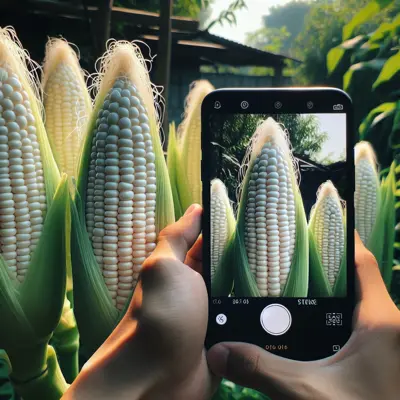
A stunning white sweet corn that produces large, tender ears filled with plump, milky-white kernels bursting with classic corn sweetness. This reliable heirloom variety has been a garden favorite since the 1950s, delivering consistent harvests of beautiful ears that are perfect for fresh eating, freezing, or canning. Silver King's vigorous stalks and excellent ear fill make it an ideal choice for gardeners wanting dependable white corn with old-fashioned flavor.
Harvest
85-90d
Days to harvest
Sun
Full sun
Zones
2–11
USDA hardiness
Height
5-8 feet
Planting Timeline
Showing dates for Silver King in USDA Zone 7
All Zone 7 corn →Zone Map
Click a state to update dates
Silver King · Zones 2–11
Growing Details
Succession Planting
Direct sow Silver King every 14–18 days from late April through mid-June in zone 7, stopping before daytime highs are consistently above 90°F — pollination drops off badly in extreme heat, and you'll end up with poorly filled ears. Each block should be at least 4 rows wide (not a single long row) to ensure adequate wind pollination. A late-April sowing and a mid-June sowing gives you two distinct harvest windows roughly 2–3 weeks apart, which is about all the spread you'll realistically get before summer shuts things down.
Don't push a third sowing past June 15 in the Southeast. Silver King's 85–90-day maturity means a late-June planting would be tasseling in peak August heat, and ear quality suffers badly. An April sowing timed right will outperform a stressed late-season one without much contest.
Complete Growing Guide
Silver King's 85–90 day maturity makes it ideal for mid-summer planting in shorter-season climates, allowing a full harvest before hard frost—sow after soil reaches 60°F for reliable germination. This heirloom prefers full sun and well-draining, nitrogen-rich soil; consistent moisture during silking prevents incomplete ear fill, a common frustration with this variety if stressed. The tall 5–8 foot stalks benefit from staking in windy locations to prevent lodging. Silver King shows moderate susceptibility to corn borers and earworms, so monitor silk entry points closely and consider bagging ears with pantyhose during mid-pollination. A practical advantage: plant in blocks of at least three rows rather than single rows to ensure complete pollination, which maximizes the plump kernel development Silver King is known for, and water deeply at the base during flowering to sustain the milky sweetness gardeners expect.
Light: Full sun (6 or more hours of direct sunlight a day). Soil: Clay, High Organic Matter, Loam (Silt). Soil pH: Acid (<6.0), Neutral (6.0-8.0). Drainage: Good Drainage. Height: 5 ft. 0 in. - 8 ft. 0 in.. Spread: 1 ft. 0 in. - 2 ft. 0 in.. Spacing: 12 inches-3 feet. Growth rate: Rapid. Maintenance: Medium. Propagation: Seed. Regions: Coastal, Mountains, Piedmont.
Harvesting
Harvest Silver King when the husks turn pale green and the silk darkens to brown, indicating peak milk stage maturity. Gently peel back a small section of husk to confirm the kernels are plump and milky-white rather than pale or starchy. The ears should feel full and firm to gentle pressure along the cob. Silver King produces ears sequentially rather than all at once, so plan for continuous harvesting over two to three weeks by checking plants every two to three days. For optimal sweetness, pick ears in early morning when sugar content peaks, twisting or snapping them cleanly from the stalk at a slight downward angle to avoid damaging the plant.
Color: Gold/Yellow. Type: Caryopsis. Length: > 3 inches. Width: 1-3 inches.
Garden value: Edible, Showy
Harvest time: Fall
Edibility: Edibile
Storage & Preservation
Fresh Silver King corn deteriorates rapidly as sugars convert to starch. For immediate use within 1-2 days, store unhusked ears in the refrigerator at 32-35°F with high humidity – wrap in damp paper towels and place in perforated plastic bags. For longer storage, husk and blanch whole ears in boiling water for 7-9 minutes depending on ear size, then plunge into ice water. Cut kernels from cobs and freeze in portion-sized containers for up to 12 months. Silver King's firm kernels also excel for pressure canning – process pint jars of cut kernels at 11 pounds pressure for 55 minutes. The variety's excellent kernel retention makes it ideal for whole-ear freezing after blanching, maintaining texture better than many modern hybrids when thawed.
History & Origin
Silver King emerged as a popular heirloom variety during the mid-twentieth century, though detailed documentation of its specific breeder and origin year remains limited in accessible sources. The variety represents a lineage of white sweet corn selections developed during the early-to-mid 1900s when American seed companies and gardeners actively pursued improved cultivars with superior kernel quality and sweetness. Its introduction around the 1950s coincided with the golden age of heirloom vegetable preservation, when many regionally adapted varieties were standardized and distributed through seed catalogs. Silver King's popularity suggests it either descended from earlier white corn breeding programs or emerged as a direct selection within the established heritage corn market, becoming a fixture in American home gardens through seed saving and commercial distribution networks.
Origin: Mexico
Advantages
- +Classic milky-white kernels with exceptional sweetness and tender texture
- +Reliable heirloom variety produces consistently full, large ears since 1950s
- +Vigorous stalks with excellent ear fill reduce gardening disappointment
- +Medium maturity at 85-90 days fits most growing seasons well
- +Versatile for fresh eating, freezing, and canning applications
Considerations
- -Susceptible to multiple pest species including corn earworm and borers
- -Vulnerable to three significant diseases: rust, leaf blight, and smut
- -Requires good soil fertility and consistent moisture for best results
Companion Plants
The Three Sisters combination — corn with beans and squash — works for real structural reasons. Beans fix atmospheric nitrogen and feed Silver King's heavy nutrient demand without a mid-season side-dress. Squash spreads its broad leaves at ground level, shading out weeds and slowing soil moisture loss, which matters considerably given corn's high water needs. In zone 7 Georgia summers, that moisture retention under a squash canopy can mean the difference between filled-out ears and tip-back on a dry stretch.
French marigolds (Tagetes patula) pull their weight by disrupting aphid pressure near the corn block — not magic, just a numbers game that reduces the colonies that secondary pests feed on. Keep tomatoes out of adjacent beds: beyond competing for the same nutrient-heavy soil, they share corn earworm (Helicoverpa zea) as a common pest, and planting both close together concentrates moth activity in one area. Fennel doesn't play well with most vegetables; it releases allelopathic compounds that suppress root development in neighboring crops, so give it its own isolated corner or skip it entirely.
Plant Together
Beans
Fix nitrogen in soil that corn needs, corn provides natural trellis support
Squash
Ground cover suppresses weeds, retains soil moisture, part of Three Sisters planting
Marigolds
Repel corn earworm, aphids, and nematodes with natural compounds
Nasturtiums
Trap crop for aphids and cucumber beetles, attract beneficial predatory insects
Dill
Attracts beneficial wasps and ladybugs that control corn borers and aphids
Sunflowers
Attract beneficial insects and birds, provide windbreak protection
Basil
Repels thrips and aphids, may enhance corn growth through root interactions
Parsley
Attracts beneficial insects like hoverflies that prey on corn pests
Keep Apart
Tomatoes
Both heavy nitrogen feeders creating competition, corn can shade tomatoes excessively
Black Walnut
Releases juglone toxin that inhibits corn germination and stunts growth
Fennel
Allelopathic compounds inhibit corn growth and development
Nutrition Facts
Per 100g serving. % Daily Value based on 2,000 calorie diet. Source: USDA FoodData Central (FDC #168538)
Pests & Disease Resistance
Resistance
Good general disease tolerance, resistant to Stewart's wilt
Common Pests
Corn earworm, European corn borer, corn rootworm, cutworms
Diseases
Common rust, northern corn leaf blight, smut
Troubleshooting Silver King
What you'll see, why it happens, and what to do about it.
Tassels and upper leaves covered in orange-red powdery pustules mid-season
Likely Causes
- Common rust (Puccinia sorghi) — spores spread by wind, thrives in humid conditions with temperatures between 60–77°F
- Dense planting blocking airflow between stalks
What to Do
- 1.Pull and trash the worst-affected leaves — don't compost them
- 2.Space Silver King at the wider end of its range (12 inches in-row, blocks at least 3 feet wide) to improve airflow
- 3.Next season, rotate corn out of that bed for at least 2 years; NC State Extension recommends rotating by crop family as one of the most reliable disease-management tools available to home gardeners
Ear tips and silks webbed or chewed, with frass visible inside the husk at harvest
Likely Causes
- Corn earworm (Helicoverpa zea) — moths lay eggs directly on fresh silks, and larvae tunnel straight toward the ear tip
- European corn borer (Ostrinia nubilalis) — larvae enter from the side of the ear as well as the tip
What to Do
- 1.Apply a few drops of mineral oil with a dropper directly to the silks 3–5 days after silks first emerge — this suffocates newly hatched larvae before they reach the ear
- 2.Check ears every 2–3 days once silks appear and harvest Silver King promptly at 85–90 days; the longer ears sit on the stalk, the deeper larval damage runs
- 3.Bt (Bacillus thuringiensis) sprayed on silks every 2–3 days during silk emergence is another low-toxicity option if earworm pressure has been heavy in past seasons
Frequently Asked Questions
How long does Silver King corn take to grow?▼
Can you grow Silver King corn in containers?▼
Is Silver King corn good for beginners?▼
What does Silver King corn taste like?▼
When should I plant Silver King corn?▼
Silver King vs Stowell's Evergreen corn - what's the difference?▼
Zone-by-Zone Planting Calendar
| Zone | Indoor Start | Transplant | Direct Sow | Harvest |
|---|---|---|---|---|
| Zone 3 | — | — | June – July | September – October |
| Zone 4 | — | — | June – July | September – October |
| Zone 5 | — | — | May – June | September – October |
| Zone 6 | — | — | May – June | August – October |
| Zone 7 | — | — | April – June | August – September |
| Zone 8 | — | — | April – May | July – September |
| Zone 9 | — | — | March – April | June – August |
| Zone 10 | — | — | February – April | June – July |
| Zone 1 | — | — | July – August | October – August |
| Zone 2 | — | — | June – August | October – September |
| Zone 11 | — | — | January – March | May – June |
| Zone 12 | — | — | January – March | May – June |
| Zone 13 | — | — | January – March | May – June |
Growing Guides from Wind River Greens
Sources & References
External authority sources used in compiling this guide.
See the Methodology page for how this data is sourced, what's AI-assisted, and known limitations.