Mizuna Microgreens
Brassica rapa var. japonica
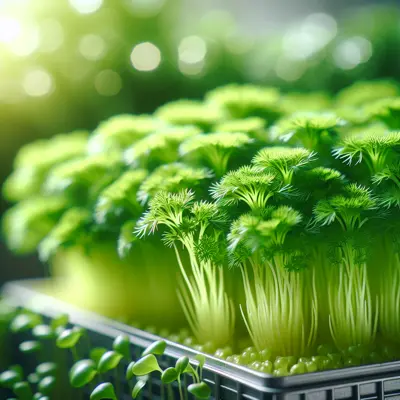
Mizuna microgreens are delicate, feathery seedlings with fine, fern-like foliage that ranges from bright to pale green depending on light exposure. Ready to harvest in 7-14 days, these tender shoots offer a mild peppery bite with subtle mustard undertones and a slightly sweet finish. Their distinctive appearance and complex flavor make them ideal for garnishing salads, Asian dishes, and contemporary plating. Grown on soilless media under indirect light, mizuna microgreens require minimal maintenance and are resistant to pest problems, making them an excellent choice for indoor cultivation.
Harvest
7-14d
Days to harvest
Sun
Indirect light
Zones
5–11
USDA hardiness
Height
3 feet
Planting Timeline
Showing dates for Mizuna Microgreens in USDA Zone 7
All Zone 7 microgreen →Zone Map
Click a state to update dates
Mizuna Microgreens · Zones 5–11
Growing Details
Succession Planting
Mizuna microgreens go from seed to harvest in 7–14 days, so a continuous supply takes almost no planning — sow a fresh tray every 5–7 days and you'll rarely see a gap. There's no season to manage here. This is a year-round indoor crop in any zone, and outdoor temps don't factor in as long as your growing space stays between 60–75°F.
If you're growing for weekly household use or a CSA box, two or three trays at staggered intervals is usually the right volume. Don't get ahead of yourself with five trays at once — mizuna microgreens decline quickly past day 14, turning leggy and sharp-bitter in a hurry.
Complete Growing Guide
Growing mizuna microgreens is one of the most rewarding experiences for new microgreen growers, offering quick results with minimal fuss. Start by soaking your mizuna seeds for 4-8 hours in room temperature water—this softens the seed coat and ensures even germination within 2-3 days instead of the usual 4-5.
For your growing medium, use coconut coir, peat-based mixes, or hemp mats rather than traditional potting soil. These provide excellent drainage while retaining just enough moisture for the shallow root systems. Fill your growing tray to about 1/2 inch depth, creating a level surface that prevents water pooling.
Broadcast seeds evenly across the surface at a density of about 1 tablespoon per 10x20 inch tray—mizuna needs slightly more space than other microgreens to develop its characteristic feathery leaves. Lightly press seeds into the medium and cover with a thin layer of growing medium or use a blackout dome for the first 2-3 days to encourage strong stem development.
Misting is critical during the first week. Use a fine spray bottle 2-3 times daily, keeping the surface consistently moist but never waterlogged. Once cotyledons appear (usually day 3-4), switch to bottom watering by adding water to your collection tray—this prevents damping-off disease that mizuna is susceptible to when leaves stay wet.
Provide 12-16 hours of indirect light or LED grow lights positioned 12-18 inches above the trays. Mizuna microgreens stretch toward light sources, so rotate trays daily for even growth. Maintain temperatures between 65-75°F for optimal growth—cooler temperatures slow germination while heat above 80°F can cause bitter flavors.
Avoid overwatering, which causes the fuzzy white mold that beginners often mistake for root hairs. Ensure good air circulation with a small fan if growing in enclosed spaces. The biggest mistake new growers make is harvesting too early—wait until true leaves just begin forming for the best flavor balance between mild pepper and subtle sweetness.
To maximize yields, succession plant new trays every 4-5 days. Mizuna doesn't regrow well after cutting, unlike some microgreens, so focus on continuous new plantings rather than trying to get multiple harvests from one tray.
Harvesting
Harvest mizuna microgreens when they reach 1-2 inches tall with fully developed cotyledons and the first true leaves just beginning to emerge, typically 10-14 days from seeding. The leaves should display their characteristic serrated, feathery edges and maintain a vibrant green color with no yellowing at the tips.
The visual sweet spot occurs when cotyledons are fully expanded but before true leaves dominate—at this stage, you'll get mizuna's signature mild peppery flavor without the stronger mustard bite that develops in mature plants. Perform a taste test by sampling a few microgreens; they should have a crisp texture with a gentle spicy finish.
Harvest in the morning when plants are fully hydrated and crisp. Use clean, sharp scissors or a harvest knife to cut about 1/2 inch above the growing medium, avoiding the root zone to prevent contamination. Cut in small sections rather than trying to harvest entire trays at once, which can damage nearby plants. Rinse gently in cool water only if necessary—properly grown mizuna microgreens should be clean enough to eat without washing, which helps preserve their delicate texture and extends shelf life.
Storage & Preservation
Fresh mizuna microgreens stay crisp for 5-7 days when stored properly in the refrigerator at 35-40°F with 95% humidity. Place harvested greens in perforated plastic bags or containers lined with barely damp paper towels—too much moisture causes rapid deterioration, while too little leads to wilting within 24 hours.
For immediate use within 2-3 days, store in the refrigerator crisper drawer in breathable containers. Avoid airtight storage, which traps ethylene gas and accelerates decay.
Mizuna microgreens freeze poorly due to their high water content and delicate cell structure, becoming mushy when thawed. Instead, preserve them through gentle dehydration at 95°F for 6-8 hours to create crispy garnishes with concentrated flavor. The dried microgreens work well mixed into herb salts or seasoning blends.
For extending fresh use, consider succession planting rather than preservation—with their 10-14 day growing cycle, you can have fresh harvests available continuously rather than dealing with storage challenges.
History & Origin
Mizuna (Brassica rapa var. nipposinica) originates from the Kansai region of Japan, where it has been cultivated since the Heian period (794-1185). The name 'mizuna' translates to 'water vegetable,' reflecting its traditional cultivation in the flooded rice paddies of Kyoto during winter months when the fields were otherwise unused.
Japanese farmers developed mizuna as a hardy winter green that could withstand light frosts while providing fresh vegetables during the cold season. The plant's deeply serrated leaves and mild flavor made it a staple in traditional Japanese cuisine, particularly in hot pot dishes and pickled preparations.
Mizuna remained largely unknown outside Japan until the 1980s, when specialty seed companies began importing varieties for Western markets. The microgreen cultivation of mizuna is an even more recent development, emerging in the 1990s as chefs discovered that the young cotyledons retained the plant's signature mild peppery flavor while offering exceptional visual appeal.
Today, mizuna microgreens represent a perfect fusion of ancient Japanese agricultural wisdom and modern controlled-environment growing techniques, allowing year-round production of this historically seasonal crop.
Advantages
- +Extremely fast germination in just 2-3 days with proper seed soaking
- +Virtually pest-free when grown indoors, unlike many other microgreen varieties
- +Distinctive feathery, serrated leaves create exceptional visual appeal as garnish
- +Mild peppery flavor appeals to those who find other mustard greens too strong
- +Tolerates slight temperature fluctuations better than most Asian microgreens
- +Excellent shelf life of 5-7 days when properly stored
- +High germination rates of 85-90% even with standard quality seeds
Considerations
- -More susceptible to damping-off disease than hardier microgreens like radish or pea
- -Cannot be regrown after harvest, requiring continuous succession planting
- -Seeds require soaking time, adding an extra step compared to direct-sow varieties
- -More expensive seeds compared to common microgreens like broccoli or alfalfa
- -Delicate leaves bruise easily during harvesting and handling
Companion Plants
Mizuna microgreens are grown in trays indoors, so traditional in-ground companion planting doesn't apply the same way — but shelf neighbors still matter. Lettuce and arugula are the most practical pairing: they share the same light requirements (indirect or grow-light positioned 2–4 inches above the tray), a similar watering cadence, and roughly the same harvest window. You can run them side by side without adjusting a thing. Radish microgreens germinate in 2–3 days and finish fast, so staggering a radish tray with mizuna on the same rack keeps cuts coming without either crop sitting under lights past its prime.
Fennel is worth keeping off the shelf entirely. Even as a microgreen, fennel releases allelopathic compounds — specifically the volatile anethole — that suppress germination and drag down growth in neighboring brassicas. If you're also starting tomato seedlings indoors, give them their own zone: tomato starts need a drier ambient environment than the consistently damp trays mizuna requires, and running both in the same enclosed space usually means one of them is getting the wrong conditions.
Plant Together
Chives
Repels aphids and flea beetles that commonly attack brassicas
Dill
Attracts beneficial insects and can improve flavor of nearby greens
Lettuce
Compatible growing conditions and similar harvest timing for microgreens
Radish
Fast-growing companion that can be harvested alongside mizuna microgreens
Cilantro
Similar light and moisture requirements, compatible for mixed microgreen trays
Arugula
Both are brassicas with similar growing needs and complementary flavors
Pea Shoots
Compatible growth rates and can add nitrogen to growing medium
Nasturtium
Acts as trap crop for flea beetles and aphids that target brassicas
Keep Apart
Fennel
Produces allelopathic compounds that inhibit growth of brassicas
Strawberry
May compete for nutrients and has different moisture requirements
Tomato
Can stunt growth of brassica family plants through root competition
Nutrition Facts
Per 100g serving. % Daily Value based on 2,000 calorie diet. Source: USDA FoodData Central (FDC #167782)
Pests & Disease Resistance
Resistance
Generally disease-free when grown as microgreens
Common Pests
Minimal pest issues indoors, occasional aphids
Diseases
Damping-off if overwatered, mold in poor ventilation
Troubleshooting Mizuna Microgreens
What you'll see, why it happens, and what to do about it.
Seedlings collapsing at the soil line, stems pinching thin and going dark around day 4–6
Likely Causes
- Damping-off (Pythium or Rhizoctonia spp.) — fungal pathogens that thrive in waterlogged growing medium
- Overwatering combined with poor drainage in the tray
What to Do
- 1.Cut back watering immediately — bottom-water only, and let the medium surface dry slightly between sessions
- 2.Add a small fan on low to keep air moving across the tray; stagnant humidity is what lets damping-off take hold
- 3.Toss the affected tray — there's no saving a damping-off batch — and sanitize with a 10% bleach solution before reseeding
White fuzzy growth on the growing medium surface or stems, visible by day 5–8
Likely Causes
- Surface mold (commonly Mucor or Botrytis spp.) from excess moisture and zero airflow
- Seeds sown too densely, trapping humidity at the medium surface
What to Do
- 1.Run a fan across the tray for at least a few hours a day — Botrytis and Mucor both stall out when air moves
- 2.Pull back your seeding density on the next tray; broadcasting too thick turns the canopy into a humidity tent
- 3.If mold is only on the medium and hasn't reached the stems, mist lightly with a dilute 3% hydrogen peroxide solution and step up airflow
Frequently Asked Questions
How long do mizuna microgreens take to grow?▼
Do mizuna microgreens need to be soaked before planting?▼
What do mizuna microgreens taste like?▼
Can you regrow mizuna microgreens after cutting?▼
Why are my mizuna microgreens getting moldy?▼
Are mizuna microgreens good for beginners?▼
Zone-by-Zone Planting Calendar
| Zone | Indoor Start | Transplant | Direct Sow | Harvest |
|---|---|---|---|---|
| Zone 1 | January – December | — | — | January – December |
| Zone 2 | January – December | — | — | January – December |
| Zone 11 | January – December | — | — | January – December |
| Zone 12 | January – December | — | — | January – December |
| Zone 13 | January – December | — | — | January – December |
| Zone 3 | January – December | — | — | January – December |
| Zone 4 | January – December | — | — | January – December |
| Zone 5 | January – December | — | — | January – December |
| Zone 6 | January – December | — | — | January – December |
| Zone 7 | January – December | — | — | January – December |
| Zone 8 | January – December | — | — | January – December |
| Zone 9 | January – December | — | — | January – December |
| Zone 10 | January – December | — | — | January – December |
Growing Guides from Wind River Greens
Sources & References
External authority sources used in compiling this guide.
See the Methodology page for how this data is sourced, what's AI-assisted, and known limitations.