Lime Light Spray Millet
Setaria italica
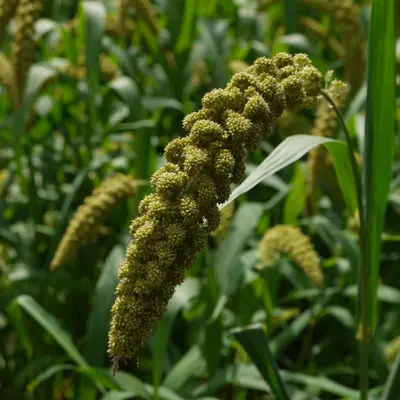
The vibrant lime color is enough to make this variety a keeper but it is also fantastically uniform in height, bloom size and bloom time. The stand is lush and self-supporting, remaining upright.
Harvest
70-80d
Days to harvest
Sun
Full sun
Zones
11–11
USDA hardiness
Height
5 feet
Planting Timeline
Showing dates for Lime Light Spray Millet in USDA Zone 7
All Zone 7 grass →Zone Map
Click a state to update dates
Lime Light Spray Millet · Zones 11–11
Growing Details
Complete Growing Guide
Growing Lime Light Spray Millet (Setaria italica) grass. Light: Full sun. Hardy in USDA zones 1 to 11. Days to maturity: 70. Difficulty: Moderate.
Harvesting
Lime Light Spray Millet reaches harvest at 70 - 80 days from sowing per Johnny's Selected Seeds. As an annual, harvest continues until frost ends the season.
This is an ornamental variety — not grown for harvest. Enjoy in the garden landscape.
Storage & Preservation
Lime Light Spray Millet is primarily grown as an ornamental grass for fresh cut arrangements and dried displays. For fresh flowers, place stems in a vase with water in a cool location away from direct heat, changing water every 2-3 days for 1-2 weeks of freshness. Store dried stems in a cool, dry place (50-60°F, 30-40% humidity) away from direct sunlight to preserve the vibrant lime color. Preservation methods include: (1) Air drying by hanging bunches upside down in a warm, well-ventilated space for 2-3 weeks; (2) Silica gel drying for accelerated preservation while maintaining color intensity; (3) Pressing stems between paper in a cool, dark location for botanical arrangements.
History & Origin
Lime Light Spray Millet is open-pollinated, meaning seed saved from healthy plants will produce true-to-type offspring. Listed in the Johnny's Selected Seeds catalog.
Foxtail millet, scientific name Setaria italica, is an annual grass grown for human food. It is the second-most widely planted species of millet and the most grown millet species in Asia. The oldest evidence of foxtail millet cultivation was found along the ancient course of the Yellow River in Cishan, China, carbon dated to be from around 8,000 years before present.
Advantages
- +Wide hardiness — grows in USDA zones 1-11
Considerations
- -Moderate difficulty — some growing experience helpful
Companion Plants
Marigolds and nasturtiums pull their weight here by producing compounds that deter aphids and draw in predatory insects — nothing exotic, just fewer soft-bodied pests working the stand. Cowpeas and clover fix atmospheric nitrogen at the root level, which matters for a grass that's putting on 5 feet of growth in a single season; you get a nutrient bump without opening a fertilizer bag. The grasses to keep out — Johnson grass, wild oats, and quackgrass — are a different problem entirely: they compete root-to-root for water and nutrients, and all three are notoriously hard to clear once they get established inside a millet planting.
Plant Together
Marigolds
Repel aphids, grasshoppers, and other pests that damage millet
Nasturtiums
Act as trap crops for aphids and cucumber beetles, protecting millet
Clover
Fixes nitrogen in soil, improving nutrient availability for millet
Sunflowers
Provide wind protection and attract beneficial insects like lacewings
Buckwheat
Attracts pollinators and beneficial insects while suppressing weeds
Cowpeas
Fix nitrogen and improve soil structure without competing for space
Amaranth
Similar growing requirements and attracts beneficial predatory insects
Sweet Alyssum
Attracts parasitic wasps that control aphids and other millet pests
Keep Apart
Johnson grass
Aggressive competitor for nutrients and water, can harbor similar pests
Wild oats
Competes directly for resources and may harbor grain diseases
Quackgrass
Allelopathic effects inhibit millet germination and growth
Troubleshooting Lime Light Spray Millet
What you'll see, why it happens, and what to do about it.
Seedlings emerge sparsely or not at all after sowing
Likely Causes
- Soil temperature below 65°F — millet germinates poorly in cold soil
- Seed sown too deep (deeper than 1/2 inch smothers the seedling)
What to Do
- 1.Wait until soil temps are consistently 65–70°F before direct sowing; use a cheap soil thermometer
- 2.Re-sow at 1/4 to 1/2 inch depth, pressing soil firmly over the seed to ensure good contact
Stalks lodging (falling over) before or during head formation
Likely Causes
- Overcrowding — plants compete for light and grow tall and weak instead of thick-stemmed
- Heavy nitrogen application early in the season, which pushes lush top growth faster than the stalk can support it
What to Do
- 1.Thin plants to at least 6 inches apart; a dense planting of 5-foot grass will always want to tip
- 2.Hold back nitrogen-heavy fertilizers after the first 4 weeks; side-dress with compost at planting instead
- 3.If you're already in trouble, drive bamboo stakes and run a single line of twine along the row at about 3 feet
Orange or reddish-brown pustules on leaves, usually appearing mid-season
Likely Causes
- Rust (Puccinia species) — a fungal disease that spreads fast in warm, humid conditions with poor airflow
- Planting too densely, which traps moisture on leaf surfaces overnight
What to Do
- 1.Strip and bag (don't compost) affected leaves as soon as you spot the pustules
- 2.Thin the stand — a crowded planting of 5-foot stalks holds humidity like a greenhouse at the base
- 3.Switch to drip irrigation or water at ground level in the morning; cut out overhead watering entirely
Seed heads stripped clean before you can harvest
Likely Causes
- Sparrows, finches, and blackbirds are strongly drawn to millet seed heads and will work them hard in the 7–10 days before full maturity
What to Do
- 1.Cover maturing heads with fine mesh netting or individual paper bags secured with a rubber band once seeds begin to fill out
- 2.Harvest early — cut heads when roughly 75% of seeds are mature rather than waiting for 100%; they'll finish drying off the stalk
Frequently Asked Questions
How long does Lime Light Spray Millet last in a cut arrangement?▼
Is Lime Light Spray Millet good for beginners?▼
Can you grow Lime Light Spray Millet in containers?▼
When should I plant Lime Light Spray Millet?▼
What makes Lime Light Spray Millet stand out as an ornamental?▼
How does Lime Light Spray Millet compare to other ornamental grasses?▼
Zone-by-Zone Planting Calendar
| Zone | Indoor Start | Transplant | Direct Sow | Harvest |
|---|---|---|---|---|
| Zone 3 | — | June – August | May – July | — |
| Zone 4 | — | June – July | April – June | — |
| Zone 5 | — | May – July | April – June | — |
| Zone 6 | — | May – July | April – June | — |
| Zone 7 | — | May – June | March – May | — |
| Zone 8 | — | April – June | March – May | — |
| Zone 9 | — | March – May | February – April | — |
| Zone 10 | — | March – April | January – March | — |
| Zone 11 | — | February – March | January – February | — |
Growing Guides from Wind River Greens
Sources & References
External authority sources used in compiling this guide.
- BreederJohnny's Selected Seeds
See the Methodology page for how this data is sourced, what's AI-assisted, and known limitations.