Bellezia
Diplotaxis tenuifolia
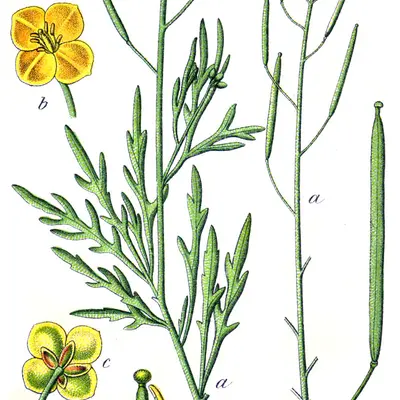
Leaves of Bellezia are darker green and more deeply lobed than Sylvetta, with a similar pungent flavor. In addition, the plant is more upright allowing for easier harvest. Organic seed is also available. Utility Patent granted.Edible Flowers: Harvest the yellow flowers as they appear. Sprinkle them over salads or add to vegetable stir-fries. Flavor is spicy and nutty. Popular choice for brightening up salad mixes.
Harvest
35d
Days to harvest
Sun
Full sun to partial shade
Zones
5–9
USDA hardiness
Height
6-24 inches
Planting Timeline
Showing dates for Bellezia in USDA Zone 7
All Zone 7 lettuce →Zone Map
Click a state to update dates
Bellezia · Zones 5–9
Growing Details
Succession Planting
In zone 7, direct sow Bellezia every 14 days starting around March 1 and keep going through early May. Once daytime highs are consistently above 80°F, germination gets spotty and plants bolt fast — the flavor turns sharp and sulfurous in heat, so there's no point pushing through summer. Start again in late August and sow through September; you can harvest into November without much trouble.
Each sowing gives you a harvest window of roughly 35 days before flowering begins. Cutting at the baby-leaf stage — 3 to 4 inches tall — gets you 2 to 3 passes per planting before quality drops. About 3 to 4 feet of row per sowing is enough for most households; stagger by 2 weeks and you won't end up with more arugula than you can use at once.
Complete Growing Guide
Leaves of Bellezia are darker green and more deeply lobed than Sylvetta, with a similar pungent flavor. In addition, the plant is more upright allowing for easier harvest. Organic seed is also available. Utility Patent granted.Edible Flowers: Harvest the yellow flowers as they appear. Sprinkle them over salads or add to vegetable stir-fries. Flavor is spicy and nutty. Popular choice for brightening up salad mixes. According to Johnny's Selected Seeds, Bellezia is 35 baby; 51 full size to maturity, annual, open pollinated. Disease resistance includes Downy Mildew. Notable features: Cold Tolerant, Hydroponic Performer.
Light: Dappled Sunlight (Shade through upper canopy all day), Full sun (6 or more hours of direct sunlight a day). Soil: Clay, Loam (Silt), Sand, Shallow Rocky. Soil pH: Acid (<6.0), Alkaline (>8.0), Neutral (6.0-8.0). Drainage: Good Drainage, Moist, Occasionally Dry. Height: 0 ft. 6 in. - 2 ft. 0 in.. Spread: 1 ft. 0 in. - 2 ft. 0 in.. Spacing: 12 inches-3 feet. Growth rate: Rapid. Maintenance: Low. Propagation: Seed. Regions: Coastal, Mountains, Piedmont.
Harvesting
Bellezia reaches harvest at 35 baby; 51 full size from sowing per Johnny's Selected Seeds. As an annual, harvest continues until frost ends the season.
The capsule splits into 2 halves when mature
Color: Brown/Copper. Type: Capsule. Length: < 1 inch. Width: < 1 inch.
Edibility: Can be used both raw and cooked
Storage & Preservation
Harvest Bellezia at 35 days when leaves are tender and before flowering. Store freshly cut greens in a breathable container lined with damp paper towels, kept at 32–40°F with 95% humidity; they'll keep for 5–7 days. For longer preservation, blanch briefly in boiling water for 2–3 minutes, cool immediately in ice water, then freeze in airtight bags for up to eight months. Fermentation works well with this peppery variety—finely chop leaves, massage with 2–3% salt by weight, and pack into jars under brine for 3–5 days at room temperature, then refrigerate. Drying is less common for tender greens but possible; spread thinly on screens in a warm, dark space. Bellezia's mustard-like bite actually intensifies slightly during fermentation, making it an excellent candidate for this preservation method if you enjoy bold, tangy flavors.
History & Origin
Bellezia is open-pollinated, meaning seed saved from healthy plants will produce true-to-type offspring. Listed in the Johnny's Selected Seeds catalog.
Origin: Europe, western Asia and northern Africa
Advantages
- +Darker green, deeply lobed leaves offer more visual appeal than Sylvetta
- +Upright growth habit makes harvesting significantly easier and faster
- +Pungent, spicy-nutty flavor works well in salads and stir-fries
- +Yellow edible flowers add unique color and flavor dimension
Considerations
- -Fast-growing variety tends to bolt quickly in warm weather
- -Peppery intensity may be too strong for mild palate preferences
- -Deeply lobed leaves trap soil and require careful washing
Companion Plants
Radishes and chives earn consistent placement near Bellezia. Radishes left to bolt pull aphids off the arugula — they act as a sacrificial trap crop that largely manages itself. Chives stay compact enough at 12 inches that they fit between rows without shading the low Diplotaxis canopy, and their sulfur compounds are thought to disorient aphids before they settle in. French marigolds (Tagetes patula specifically, not the tall African types) are worth tucking at bed edges — their root secretions suppress certain soil nematodes, and the flowers draw in predatory wasps that also pick off cabbage worm eggs.
Fennel is genuinely incompatible here. Its roots release allelopathic compounds that stunt a wide range of neighbors, and arugula is not an exception to that. Broccoli is a more practical conflict than a chemical one — it's a heavy feeder in the same brassica family, competes at the same root depth, and shares disease pressure including downy mildew, which Bellezia carries only intermediate resistance to.
Plant Together
Basil
Repels aphids and whiteflies while potentially improving lettuce flavor
Chives
Deters aphids and other pests with strong scent compounds
Marigold
Repels nematodes and aphids while attracting beneficial insects
Carrots
Different root depths allow efficient space use without competition
Radishes
Quick harvest breaks soil for lettuce roots and deters flea beetles
Garlic
Strong sulfur compounds repel aphids and slugs
Nasturtium
Acts as trap crop for aphids and cucumber beetles
Parsley
Attracts beneficial insects and has similar water requirements
Keep Apart
Fennel
Produces allelopathic compounds that inhibit lettuce germination and growth
Broccoli
Competes for similar nutrients and space, may shade delicate lettuce
Sunflower
Releases allelopathic chemicals and creates too much shade for lettuce
Nutrition Facts
Per 100g serving. % Daily Value based on 2,000 calorie diet. Source: USDA FoodData Central (FDC #2346388)
Pests & Disease Resistance
Resistance
Downy Mildew (Intermediate)
Common Pests
Flea beetles, aphids, cabbage worms
Diseases
Downy mildew (intermediate resistance in Bellezia), leaf spot, powdery mildew
Troubleshooting Bellezia
What you'll see, why it happens, and what to do about it.
Seedlings collapse at soil level within the first 7–10 days after direct sowing — stems look pinched or water-soaked at the base
Likely Causes
- Damping off — a fungal complex (commonly Pythium or Rhizoctonia solani) that thrives in cool, wet, poorly drained soil
- Overwatering or compacted soil that stays waterlogged after germination
What to Do
- 1.Pull the dead seedlings and check remaining soil moisture — if it's staying soggy, ease off watering and improve drainage before resowing
- 2.Don't direct sow into cold soil; wait until soil temps are at least 50°F, which reduces Pythium pressure significantly
- 3.If damping off has hit a bed before, mix a thin layer of coarse sand or perlite into the top inch of soil to improve surface drainage around the stem
Tiny, irregular holes punched across leaves — most visible on young growth — starting a week or two after germination
Likely Causes
- Flea beetles (Phyllotreta spp.) — small, jumping, black or bronze beetles that are worst in warm, dry spells
- Young direct-sown seedlings are most vulnerable before they reach 4 inches tall
What to Do
- 1.Cover rows with floating row cover (Agribon-15 or similar) immediately after sowing — flea beetles locate plants by smell and sight, and exclusion outperforms sprays
- 2.Once plants clear 6 inches and are growing fast, flea beetle damage is mostly cosmetic; you can pull the cover at that point
- 3.If you skip row cover, kaolin clay (Surround WP) applied every 5–7 days during peak beetle pressure deters feeding without harming beneficial insects
Frequently Asked Questions
How long does Bellezia arugula take to grow from seed to harvest?▼
What's the difference between Bellezia and Sylvetta arugula?▼
Can you grow Bellezia arugula in containers?▼
What does Bellezia arugula taste like?▼
Is Bellezia arugula good for beginners?▼
When should I plant Bellezia arugula, and can I grow it year-round?▼
Zone-by-Zone Planting Calendar
| Zone | Indoor Start | Transplant | Direct Sow | Harvest |
|---|---|---|---|---|
| Zone 1 | — | — | June – July | July – September |
| Zone 2 | — | — | May – July | June – September |
| Zone 11 | — | — | January – February | January – December |
| Zone 12 | — | — | January – February | January – December |
| Zone 13 | — | — | January – February | January – December |
| Zone 3 | — | — | May – June | June – October |
| Zone 4 | — | — | April – June | May – October |
| Zone 5 | — | — | April – May | May – November |
| Zone 6 | — | — | April – May | May – November |
| Zone 7 | — | — | March – May | April – November |
| Zone 8 | — | — | March – April | April – December |
| Zone 9 | — | — | February – March | March – December |
| Zone 10 | — | — | January – March | February – December |
Growing Guides from Wind River Greens
Sources & References
External authority sources used in compiling this guide.
- BreederJohnny's Selected Seeds
- USDAUSDA FoodData Central
See the Methodology page for how this data is sourced, what's AI-assisted, and known limitations.