Pac Choi, Red Choi
Brassica rapa var. chinensis
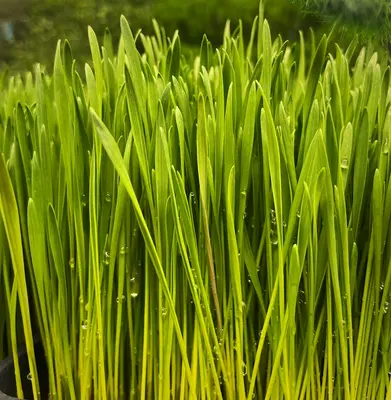
Wikimedia Commons via Brassica
Leaves are mostly red with some green. Mild pac choi flavor. Based on our yield trial, we recommend seeding 10.5 gm per tray at approx. 3 flats per oz. of seed. Avg. days to maturity was 13 days when harvested at the first true leaf (as opposed to cotyledon) stage.
Harvest
10-15d
Days to harvest
Sun
Full sun to part shade
Zones
5–9
USDA hardiness
Height
3 feet
Planting Timeline
Showing dates for Pac Choi, Red Choi in USDA Zone 7
All Zone 7 microgreen →Zone Map
Click a state to update dates
Pac Choi, Red Choi · Zones 5–9
Growing Details
Succession Planting
Red Choi microgreens are ready to cut in 10–15 days, so succession is just a matter of staggering trays. Start a new one every 5–7 days and you'll have a continuous harvest with no gap. There's no heat threshold to manage the way there is with full-size pac choi — at the microgreen stage you're cutting long before the plant has any shot at bolting. Under grow lights, year-round production is entirely workable, so the schedule is essentially whenever you want to eat them.
Complete Growing Guide
Leaves are mostly red with some green. Mild pac choi flavor. Based on our yield trial, we recommend seeding 10.5 gm per tray at approx. 3 flats per oz. of seed. Avg. days to maturity was 13 days when harvested at the first true leaf (as opposed to cotyledon) stage. According to Johnny's Selected Seeds, Pac Choi, Red Choi is 10 - 15 days to maturity, open pollinated. Notable features: Organic Seeds, Plants, and Supplies, Hydroponic Performer.
Light: Full sun (6 or more hours of direct sunlight a day), Partial Shade (Direct sunlight only part of the day, 2-6 hours). Soil: Clay, Loam (Silt), Sand. Soil pH: Acid (<6.0), Neutral (6.0-8.0). Drainage: Good Drainage, Moist. Height: 0 ft. 10 in. - 2 ft. 0 in. Spread: 1 ft. 0 in. - 2 ft. 0 in. Spacing: 12 inches-3 feet. Growth rate: Medium. Maintenance: Medium. Propagation: Seed, Stem Cutting. Regions: Coastal, Mountains, Piedmont.
Harvesting
Pac Choi, Red Choi reaches harvest at 10 - 15 days from sowing per Johnny's Selected Seeds. Expect 5 g at peak.
The fruits dry and split when ripe.
Color: Brown/Copper, Green. Type: Siliqua. Length: > 3 inches.
Garden value: Edible
Harvest time: Fall, Summer
Bloom time: Spring, Summer
Edibility: The foliage is edible raw or cooked but when cooked can emit an unpleasant odor.
Storage & Preservation
Red choi microgreens are most flavorful when used immediately after harvest. Store freshly cut greens in a breathable container—a perforated plastic clamshell or paper-lined box works well—at 32–40°F with 90–95% humidity. Keep them away from ethylene-producing fruits. Properly stored, they'll stay crisp and vibrant for 5–7 days, though quality peaks within 2–3 days of harvest.
For longer preservation, freezing is your best option: blanch the greens briefly in boiling water for 2–3 minutes, cool immediately in ice water, drain thoroughly, and freeze in airtight containers or vacuum-sealed bags for up to three months. Drying is less rewarding with these tender greens but possible—air-dry on screens at 95–105°F until completely brittle, then store in sealed jars.
Red choi's peppery, slightly sweet flavor compounds intensify after a light frost or cold storage, so chilling harvested greens overnight can enhance taste before use.
History & Origin
Pac Choi, Red Choi is open-pollinated, meaning seed saved from healthy plants will produce true-to-type offspring. Listed in the Johnny's Selected Seeds catalog.
Brassica is a genus of plants in the cabbage and mustard family (Brassicaceae). The members of the genus are informally known as cruciferous vegetables, cabbages, mustard plants, or simply brassicas. Crops from this genus are sometimes called cole crops—derived from the Latin caulis, denoting the stem or stalk of a plant.
Advantages
- +Striking red and green coloring adds visual appeal to microgreen mixes
- +Fast 10-15 day maturity enables quick crop rotation and harvests
- +Mild pac choi flavor provides familiar taste without overwhelming intensity
- +Easy difficulty rating makes it suitable for beginner growers
Considerations
- -Brassica family susceptibility to fungal diseases in humid conditions
- -Red variety may require careful light management to maintain color intensity
- -Relatively short shelf life compared to other hardy microgreens
Companion Plants
Red Choi microgreens share tray space well with other fast-cycling greens like arugula and spinach — similar water needs, a comparable 10–15 day window, and neither one crowds the other out before you're cutting. Radish is a good fit in a mixed-tray setup too: it germinates in 3–4 days and can be harvested a day or two ahead of the choi without disturbing anything. Chives and cilantro work if you're running a mixed herb-and-green tray, though both are slower off the mark and may look uneven next to Red Choi at harvest.
Fennel is the problem child here — it produces anethole compounds that inhibit germination and early root development in brassicas, and in the compressed environment of a tray that chemical effect is more concentrated than it'd be in open ground. Mustard greens cause a different kind of trouble: they're allelopathic to other brassicas specifically, and Red Choi can stall out in the first few days before you have any visible clue why.
Plant Together
Lettuce
Similar growing conditions and harvest timing, efficient space usage
Radish
Fast-growing companion that helps break up soil and deters flea beetles
Spinach
Compatible cool-season crop with similar water and light requirements
Arugula
Similar growing conditions and harvest schedule for mixed salad production
Cilantro
Attracts beneficial insects and has similar cool-season growing requirements
Chives
Natural pest deterrent that repels aphids without competing for space
Marigold
Repels aphids, whiteflies, and cabbage worms that commonly attack brassicas
Dill
Attracts beneficial insects like parasitic wasps that control cabbage pests
Keep Apart
Fennel
Inhibits growth of most plants including brassicas through allelopathic compounds
Mustard Greens
Can attract same pests like flea beetles and may cross-pollinate if flowering
Strawberry
Different water requirements and may harbor slugs that damage tender microgreens
Nutrition Facts
Per 100g serving. % Daily Value based on 2,000 calorie diet. Source: USDA FoodData Central (FDC #167782)
Troubleshooting Pac Choi, Red Choi
What you'll see, why it happens, and what to do about it.
Seedlings are leggy and pale — stems stretching toward the light, cotyledons washed out — by day 5 or 6
Likely Causes
- Insufficient light intensity — grow lights too far above the tray, or a windowsill that gets fewer than 12 hours of decent light
- Temperature too high (above 75°F), which accelerates stem elongation before the plant can build any structure
What to Do
- 1.Drop your grow light to 2–3 inches above the tray surface; Red Choi microgreens need strong, close light to stay compact
- 2.Move trays to a cooler spot — 60–70°F is the sweet zone for dense, upright growth
- 3.If you're near harvest (day 10+), just cut and use them; legginess doesn't affect flavor much
Fuzzy white or gray growth at the base of stems, right at the soil line, appearing around day 7–10
Likely Causes
- Damping-off from Pythium or Rhizoctonia — both thrive when trays are overwatered and airflow is poor
- Seeding too densely, which keeps the canopy wet and cuts off air circulation at the surface
What to Do
- 1.Bottom-water only — pour water into a tray beneath the seeding tray and let the medium wick it up; never mist the canopy once germination is done
- 2.Run a small fan nearby on low to keep air moving across the tray surface
- 3.If it's already spreading, harvest whatever looks clean immediately and pitch the rest — Pythium moves fast in a warm, wet tray
Frequently Asked Questions
How long does Red Choi microgreen take to harvest?▼
Is Red Choi a good microgreen for beginners?▼
What does Red Choi microgreen taste like?▼
What are the recommended seeding rates for Red Choi microgreens?▼
How should I sow Red Choi microgreen seeds?▼
What light conditions do Red Choi microgreens need?▼
Zone-by-Zone Planting Calendar
| Zone | Indoor Start | Transplant | Direct Sow | Harvest |
|---|---|---|---|---|
| Zone 3 | January – December | — | — | January – December |
| Zone 4 | January – December | — | — | January – December |
| Zone 5 | January – December | — | — | January – December |
| Zone 6 | January – December | — | — | January – December |
| Zone 7 | January – December | — | — | January – December |
| Zone 8 | January – December | — | — | January – December |
| Zone 9 | January – December | — | — | January – December |
| Zone 10 | January – December | — | — | January – December |
| Zone 1 | January – December | — | — | January – December |
| Zone 2 | January – December | — | — | January – December |
| Zone 11 | January – December | — | — | January – December |
| Zone 12 | January – December | — | — | January – December |
| Zone 13 | January – December | — | — | January – December |
Growing Guides from Wind River Greens
Sources & References
External authority sources used in compiling this guide.
- BreederJohnny's Selected Seeds
- USDAUSDA FoodData Central
See the Methodology page for how this data is sourced, what's AI-assisted, and known limitations.