Rosa Bianca
Solanum melongena
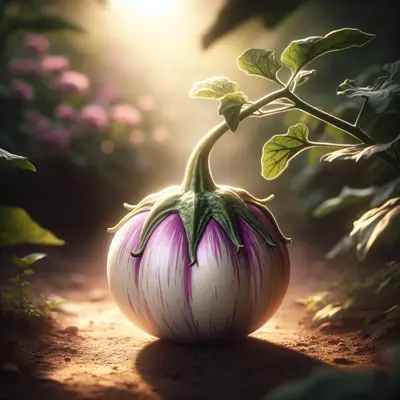
Round fruit streaked with white and violet. Plump and variably ribbed, measuring about 4-6" long by 5-7" diameter. Mild, creamy taste. This traditional Italian variety is best adapted to regions with warm nights. Expect low yields in cool areas. Green calyx.
Harvest
73d
Days to harvest
Sun
Full sun
Zones
9–12
USDA hardiness
Height
2-4 feet
Planting Timeline
Showing dates for Rosa Bianca in USDA Zone 7
All Zone 7 eggplant →Zone Map
Click a state to update dates
Rosa Bianca · Zones 9–12
Growing Details
Succession Planting
Rosa Bianca keeps setting fruit all season as long as temperatures stay between 70°F and 85°F and you keep harvesting — one or two plants per household is usually enough. Put your energy into a single well-timed transplant (soil above 60°F, nights reliably above 50°F) rather than staggering starts.
Complete Growing Guide
Round fruit streaked with white and violet. Plump and variably ribbed, measuring about 4-6" long by 5-7" diameter. Mild, creamy taste. This traditional Italian variety is best adapted to regions with warm nights. Expect low yields in cool areas. Green calyx. According to Johnny's Selected Seeds, Rosa Bianca is 73 days to maturity, annual, open pollinated. Notable features: Organic Seeds, Plants, and Supplies, Heirloom.
Light: Full sun (6 or more hours of direct sunlight a day). Soil: Loam (Silt), Sand. Soil pH: Acid (<6.0). Drainage: Good Drainage, Moist. Height: 2 ft. 0 in. - 4 ft. 0 in. Spread: 1 ft. 0 in. - 3 ft. 0 in. Spacing: 3 feet-6 feet. Growth rate: Medium. Maintenance: Medium. Propagation: Seed.
Harvesting
Rosa Bianca reaches harvest at 73 days from sowing per Johnny's Selected Seeds. Expect 4-6" at peak. As an annual, harvest continues until frost ends the season.
The fruit is a berry that is egg-shaped, smooth and has glossy skin. The fruit may measure 4 to 8 inches long. It ranges in color from green to white, to purple-black when immature and when it should be eaten. As the fruit matures it gets stringy and bitter. Fruit contains numerous small, flat, pale yellow to brown seeds.
Color: Black, Gold/Yellow, Green, Purple/Lavender, White. Type: Berry. Length: > 3 inches.
Garden value: Edible, Showy
Harvest time: Fall, Summer
Edibility: The immature fruit is edible and best used in food preparation. As the fruit matures, it becomes stringy and bitter. The fruits are usually cooked and served as a vegetable. They may be prepared and eaten by frying, steaming, grilling, roasting, or stewing. They may also be stir-fried, pickled, stuffed, and fried with a light breading.
Storage & Preservation
Fresh Rosa Bianca eggplants store best at room temperature for 3-5 days, developing optimal flavor as they rest. For longer storage, refrigerate in the crisper drawer wrapped in paper towels for up to one week, though quality declines after day five. Never store below 50°F, as cold damage causes brown spots and off-flavors.
For preservation, Rosa Bianca's mild, sweet flesh excels when grilled and frozen in portions, or roasted and pureed for future use in baba ganoush or caponata. Slice and salt for 30 minutes before cooking to remove excess moisture. This variety also pickles beautifully when cut into strips and preserved in olive oil with herbs. Avoid water-bath canning due to eggplant's low acidity, but pressure canning works well for prepared dishes. Dehydrating Rosa Bianca creates excellent 'eggplant jerky' or chips when sliced thin and seasoned before drying.
History & Origin
Rosa Bianca is open-pollinated, meaning seed saved from healthy plants will produce true-to-type offspring. Listed in the Johnny's Selected Seeds catalog.
Origin: China South-Central, Laos, Malaya, Myanmar, Thailand, Vietnam
Advantages
- +Exceptionally mild and creamy flavor with zero bitterness unlike other varieties
- +Beautiful white and violet striped appearance adds ornamental appeal to gardens
- +Moderate 73-day maturity allows reasonable harvest timeline in most growing seasons
- +Round plump shape with variable ribbing creates visually distinctive Italian heirloom produce
Considerations
- -Requires warm nights to thrive; produces disappointingly low yields in cool climates
- -Susceptible to three serious wilts: verticillium, fusarium, and bacterial wilt diseases
- -Vulnerable to multiple pest pressures including flea beetles, aphids, spider mites, thrips
- -Green calyx adds harvesting complexity compared to smoother-topped eggplant varieties
Companion Plants
Basil and Rosa Bianca share nearly identical heat and water requirements, so the two fit in the same bed without fighting over resources — that practical overlap matters more than any disputed pest-repellent effect. Marigolds (Tagetes spp.) earn their spot through chemistry: their roots exude alpha-terthienyl, a compound that suppresses soil nematodes that would otherwise stress eggplant roots by late summer. Nasturtiums act as a aphid trap crop — the insects pile onto them instead of your eggplant, and you can pull or sacrifice the nasturtium without losing fruit. Fennel is the one to leave out entirely; it's broadly allelopathic and reliably stunts most vegetables planted within a few feet, and geraniums can harbor the same Verticillium strains that take down eggplant.
Plant Together
Basil
Repels aphids, spider mites, and thrips while potentially improving eggplant flavor
Tomatoes
Share similar growing conditions and can deter each other's specific pests
Peppers
Compatible nightshade family members that share similar care requirements
Marigolds
Repel nematodes, aphids, and whiteflies while attracting beneficial insects
Oregano
Deters spider mites, aphids, and cabbage moths with strong aromatic oils
Hot Peppers
Natural pest deterrent that repels flea beetles and hornworms
Nasturtiums
Act as trap crop for aphids and cucumber beetles while repelling squash bugs
Catnip
Repels flea beetles, ants, and mosquitoes more effectively than DEET
Keep Apart
Black Walnut
Produces juglone toxin that severely stunts or kills eggplant growth
Fennel
Allelopathic properties inhibit growth and can stunt eggplant development
Geraniums
May attract hornworms and compete for similar soil nutrients
Nutrition Facts
Per 100g serving. % Daily Value based on 2,000 calorie diet. Source: USDA FoodData Central (FDC #169228)
Pests & Disease Resistance
Resistance
Moderate disease resistance typical of heirlooms
Common Pests
Flea beetles, aphids, spider mites, thrips
Diseases
Verticillium wilt, fusarium wilt, bacterial wilt, phomopsis blight
Troubleshooting Rosa Bianca
What you'll see, why it happens, and what to do about it.
Plant wilts during the day and doesn't recover overnight — leaves stay droopy even after watering
Likely Causes
- Verticillium wilt (Verticillium dahliae) or Fusarium wilt (Fusarium oxysporum) — soil-borne fungi that colonize the vascular system
- Bacterial wilt (Ralstonia solanacearum) — once it's in your soil, it stays there indefinitely per NC State Extension
What to Do
- 1.Pull the plant, roots and all, and trash it — don't compost it
- 2.Rotate nightshades (eggplant, tomatoes, peppers, potatoes) out of that bed for at least 3 years; if you suspect Ralstonia solanacearum, rotation alone won't clear it — consider container growing with fresh potting mix kept off the native soil
- 3.Follow with a legume cover crop like cowpeas or field beans; NC State Extension notes legume roots fix nitrogen and help break soilborne disease cycles
Tiny, irregular holes punched through leaves on young transplants within the first 2–3 weeks in the ground
Likely Causes
- Flea beetles (Epitrix spp.) — they overwinter nearby and hit transplants hard in spring before plants size up
- Transplants set out too early into cool soil, which stresses plants and slows them past the vulnerable window
What to Do
- 1.Cover transplants immediately with row cover and seal the edges — keep it on until plants are 12 inches tall and established
- 2.Delay transplanting until soil is reliably above 60°F; a stressed, slow-growing plant sits in the flea beetle window longer
- 3.If pressure is severe, NC State Extension's IPM guidance supports a foliar insecticide at the early transplant stage — consult the current NC Agricultural Chemicals Manual for labeled rates
Dark, sunken, leathery spot on the blossom end of the fruit — sometimes with mold on the rotted area
Likely Causes
- Blossom-end rot — calcium deficiency in the developing fruit, typically triggered by uneven soil moisture rather than a true lack of calcium in the soil
- Overfertilization with high-nitrogen fertilizers, which drives rapid vegetative growth and disrupts calcium uptake
- Soil pH outside the 6.5–6.8 range, which limits calcium availability regardless of what's actually in the soil
What to Do
- 1.Mulch 3 to 4 inches deep with straw and water consistently — NC State Extension identifies uneven moisture as the primary driver, so this is where to start
- 2.Soil-test before next season and lime to hit pH 6.5–6.8; don't guess on pH
- 3.Back off high-nitrogen fertilizers once plants are flowering; side-dress with compost instead
Frequently Asked Questions
How long does Rosa Bianca eggplant take to grow?▼
Can you grow Rosa Bianca eggplant in containers?▼
What does Rosa Bianca eggplant taste like?▼
Is Rosa Bianca eggplant good for beginners?▼
When should I plant Rosa Bianca eggplant?▼
Rosa Bianca vs regular eggplant - what's the difference?▼
Zone-by-Zone Planting Calendar
| Zone | Indoor Start | Transplant | Direct Sow | Harvest |
|---|---|---|---|---|
| Zone 1 | May – May | July – August | — | September – August |
| Zone 2 | April – May | June – July | — | September – September |
| Zone 11 | January – January | January – February | — | April – June |
| Zone 12 | January – January | January – February | — | April – June |
| Zone 13 | January – January | January – February | — | April – June |
| Zone 3 | April – April | June – July | — | September – October |
| Zone 4 | March – April | June – June | — | August – October |
| Zone 5 | March – March | May – June | — | August – October |
| Zone 6 | March – March | May – June | — | August – October |
| Zone 7 | February – March | April – May | — | July – September |
| Zone 8 | February – February | April – May | — | July – September |
| Zone 9 | January – January | March – April | — | June – August |
| Zone 10 | January – January | February – March | — | May – July |
Growing Guides from Wind River Greens
Sources & References
External authority sources used in compiling this guide.
- BreederJohnny's Selected Seeds
- USDAUSDA FoodData Central
See the Methodology page for how this data is sourced, what's AI-assisted, and known limitations.