Bloody Mary
Tropaeolum minus
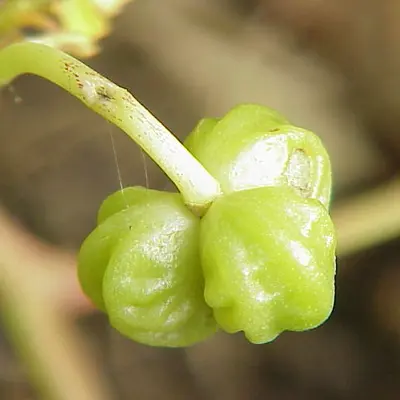
Dramatic 2" flowers in shades of dark red, coral red, cream, and unique bicolors. This mix is generally compact, but contains both mounding and trailing types. Foliage ranges from dark blue-green to medium-green. 2019 Fleuroselect Novelty winner.
Harvest
55-65d
Days to harvest
Sun
Full sun
Zones
2–11
USDA hardiness
Height
1-10 feet
Planting Timeline
Showing dates for Bloody Mary in USDA Zone 7
All Zone 7 flower →Zone Map
Click a state to update dates
Bloody Mary · Zones 2–11
Growing Details
Succession Planting
Direct sow every 3 weeks starting April 1 through June 15 in zone 7. Germination runs 7-14 days when soil is at 55-65°F — don't rush seeds into cold ground or you'll get erratic, patchy sprouting. Once daytime highs hold above 90°F, new sowings stall and bloom poorly, so June 15 is a real cutoff.
For a fall flush, sow again in late August once nights drop back below 75°F. Plants started then will push blooms into October or until first frost — and in north Georgia that window is often only 6-8 weeks, so waiting past early September isn't worth the gamble.
Complete Growing Guide
Dramatic 2" flowers in shades of dark red, coral red, cream, and unique bicolors. This mix is generally compact, but contains both mounding and trailing types. Foliage ranges from dark blue-green to medium-green. 2019 Fleuroselect Novelty winner. According to Johnny's Selected Seeds, Bloody Mary is 55 - 65 days to maturity, annual, open pollinated. Notable features: Grows Well in Containers, Edible Flowers.
Light: Full sun (6 or more hours of direct sunlight a day). Soil: Clay, Loam (Silt). Soil pH: Acid (<6.0), Neutral (6.0-8.0). Drainage: Good Drainage, Moist, Occasionally Dry. Height: 1 ft. 0 in. - 10 ft. 0 in.. Spread: 1 ft. 0 in. - 3 ft. 0 in.. Spacing: Less than 12 inches, 12 inches-3 feet. Growth rate: Rapid. Maintenance: Low. Propagation: Seed, Stem Cutting. Regions: Coastal, Mountains, Piedmont.
Harvesting
Bloody Mary reaches harvest at 55 - 65 days from sowing per Johnny's Selected Seeds. Expect 2" at peak. As an annual, harvest continues until frost ends the season.
Edibility: The leaves, flowers and buds, pods, and seeds are edible.
Storage & Preservation
Bloody Mary flowers are ornamental and not meant for consumption or storage. For display purposes, cut flowers should be placed in fresh, cool water (65-72°F) immediately after cutting, kept in a cool location away from direct sunlight and ripening fruit. Change water every 2-3 days and trim stems at an angle. Fresh cut arrangements typically last 7-10 days. To extend vase life, use floral preservative in the water and remove lower foliage. For longer preservation, flowers can be air-dried by hanging upside-down in a dry, dark, well-ventilated space for 2-3 weeks, or pressed between book pages for flat preservation and crafting purposes.
History & Origin
Bloody Mary is open-pollinated, meaning seed saved from healthy plants will produce true-to-type offspring. Listed in the Johnny's Selected Seeds catalog.
Origin: Southern America and Mexico Southeast
Advantages
- +Dramatic dark red and coral flowers create stunning visual impact in containers
- +Award-winning 2019 Fleuroselect Novelty demonstrates proven breeding excellence and market recognition
- +Mix contains both mounding and trailing types for versatile garden design options
- +Dark blue-green foliage provides rich contrast to vibrant bicolor flower displays
- +Easy difficulty level makes it ideal for beginner and casual gardeners
Considerations
- -Compact habit may require frequent deadheading to maintain continuous blooming throughout season
- -Mix of mounding and trailing types complicates uniform spacing and landscape planning
- -Bicolor genetics can produce unpredictable flower color variation within same seed packet
Companion Plants
French marigolds (Tagetes patula) are the most useful neighbor here — their root secretions deter aphids and whiteflies that will hit Tropaeolum just as hard, and in our zone 7 Georgia garden they share the same warm-season window almost exactly. Basil and alyssum both draw in predatory wasps (Braconidae and Chalcididae) that chew through aphid populations before you even notice a buildup. Give Bloody Mary a wide berth from fennel (Foeniculum vulgare), whose root exudates stunt most nearby annuals, and from any black walnut (Juglans nigra) — the juglone that leaches from walnut roots will set Tropaeolum back hard or kill it outright.
Plant Together
Marigolds
Repel nematodes, aphids, and whiteflies while attracting beneficial insects
Nasturtiums
Act as trap crops for aphids and cucumber beetles, repel squash bugs
Basil
Repels aphids, spider mites, and thrips while attracting pollinators
Petunias
Repel aphids, tomato hornworms, and squash bugs
Alyssum
Attracts beneficial insects like hoverflies and parasitic wasps
Calendula
Attracts beneficial insects and repels aphids and whiteflies
Zinnia
Attracts butterflies, bees, and beneficial predatory insects
Lavender
Repels moths, fleas, and mosquitoes while attracting pollinators
Keep Apart
Black Walnut
Produces juglone toxin that inhibits growth of most flowering plants
Eucalyptus
Releases allelopathic compounds that suppress nearby plant growth
Fennel
Inhibits growth of most garden plants through allelopathic root secretions
Troubleshooting Bloody Mary
What you'll see, why it happens, and what to do about it.
Leaves showing pale yellow stippling, sometimes with fine webbing on the undersides during hot, dry stretches
Likely Causes
- Spider mites (Tetranychus urticae) — thrive in hot, dry conditions above 85°F
- Dusty, stressed plants with poor air circulation
What to Do
- 1.Blast the undersides of leaves with a strong stream of water every 2-3 days to knock mites off
- 2.Apply insecticidal soap or neem oil in the early morning when temps are below 90°F
- 3.Keep plants well-watered — mites exploit drought stress fast
Soft, irregular holes chewed in leaves overnight, with a silvery slime trail nearby
Likely Causes
- Slugs (Deroceras reticulatum or similar) — especially active after rain or irrigation in spring
What to Do
- 1.Set out shallow dishes of beer at soil level in the evening and dump them each morning
- 2.Scatter iron phosphate bait (Sluggo) around the base of plants — safe around pets and birds
- 3.Pull back any thick mulch sitting right against the stems; slugs hide there during the day
Leaves and stems covered in a white powdery coating, usually starting mid-summer
Likely Causes
- Powdery mildew (Erysiphe spp.) — common on Tropaeolum as days shorten and humidity swings
- Overcrowded planting blocking airflow between plants spaced closer than 12 inches
What to Do
- 1.Remove and trash (don't compost) the worst-affected leaves
- 2.Spray with a diluted baking soda solution (1 tablespoon baking soda + 1 teaspoon dish soap per gallon of water) every 7 days
- 3.At season's end, pull the whole plant — Erysiphe spores overwinter in left-behind debris
Wilting despite moist soil, with stems at the soil line looking pinched, dark, or rotted
Likely Causes
- Root rot from Pythium spp. or Phytophthora spp. — triggered by waterlogged or poorly draining soil
- Planting too deep or heavy clay soil holding water around the crown
What to Do
- 1.Dig up the plant and check the roots — if they're brown and mushy past the crown, the plant won't recover; pull it and move on
- 2.Work 2-3 inches of compost into the bed before replanting to open up drainage
- 3.In heavy clay, plant on a slightly mounded row so water sheds away from the crown rather than pooling at it
Frequently Asked Questions
How long does Bloody Mary flower bloom?▼
Is Bloody Mary a good flower for beginners?▼
Can you grow Bloody Mary in containers?▼
When should I plant Bloody Mary flowers?▼
What makes Bloody Mary flowers unique?▼
How much sun does Bloody Mary need?▼
Zone-by-Zone Planting Calendar
| Zone | Indoor Start | Transplant | Direct Sow | Harvest |
|---|---|---|---|---|
| Zone 3 | April – May | June – July | June – August | — |
| Zone 4 | March – April | June – June | June – July | — |
| Zone 5 | March – April | May – June | May – July | — |
| Zone 6 | March – April | May – June | May – July | — |
| Zone 7 | February – March | April – May | April – June | — |
| Zone 8 | February – March | April – May | April – June | — |
| Zone 9 | January – February | March – April | March – May | — |
| Zone 10 | January – January | February – March | February – April | — |
| Zone 1 | May – June | July – August | July – September | — |
| Zone 2 | April – May | June – July | June – August | — |
| Zone 11 | January – January | January – February | January – March | — |
| Zone 12 | January – January | January – February | January – March | — |
| Zone 13 | January – January | January – February | January – March | — |
Growing Guides from Wind River Greens
Sources & References
External authority sources used in compiling this guide.
- BreederJohnny's Selected Seeds
See the Methodology page for how this data is sourced, what's AI-assisted, and known limitations.