Hickory (Shellbark)
Carya laciniosa
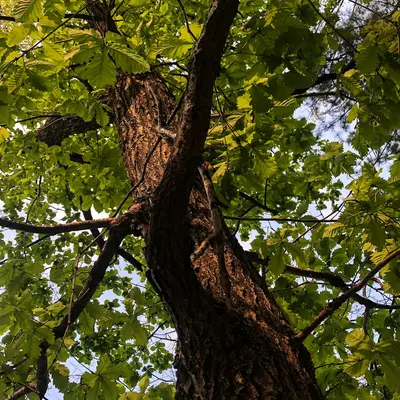
The king of hickory nuts, Shellbark hickory produces the largest and sweetest nuts in the hickory family, with meat that rivals pecans in flavor and quality. These impressive native trees are prized by foragers and nut enthusiasts for their thick-shelled nuts that crack open to reveal plump, rich kernels with exceptional flavor. While slow to establish, mature Shellbark hickories become magnificent shade trees that provide decades of premium nut harvests.
Harvest
180-210d
Days to harvest
Sun
Full sun to partial shade
Zones
5–8
USDA hardiness
Height
40-100 feet
Planting Timeline
Showing dates for Hickory (Shellbark) in USDA Zone 7
All Zone 7 nut-tree →Zone Map
Click a state to update dates
Hickory (Shellbark) · Zones 5–8
Growing Details
Complete Growing Guide
Light: Full sun (6 or more hours of direct sunlight a day), Partial Shade (Direct sunlight only part of the day, 2-6 hours). Soil: High Organic Matter. Soil pH: Acid (<6.0), Alkaline (>8.0), Neutral (6.0-8.0). Drainage: Moist, Occasionally Wet. Height: 40 ft. 0 in. - 100 ft. 0 in.. Spread: 40 ft. 0 in. - 60 ft. 0 in.. Spacing: more than 60 feet. Growth rate: Slow. Maintenance: Medium. Propagation: Seed, Stem Cutting. Regions: Mountains, Piedmont.
Harvesting
The thick husk is green when young and becomes brown with maturity and is split into 4 sections. The nut is egg-shaped and tan in color and matures in the fall.
Color: Cream/Tan. Type: Nut. Length: 1-3 inches. Width: 1-3 inches.
Garden value: Edible
Harvest time: Fall
Edibility: Nuts are sweet and edible.
Storage & Preservation
Shellbark hickory nuts store best in cool, dry conditions between 32–50°F with moderate humidity (around 65–70%) in mesh bags or breathable containers that allow air circulation and prevent moisture buildup. Whole nuts in the shell remain fresh for up to eight months under these conditions, though the kernels deteriorate faster once cracked. For longer preservation, shell the nuts and freeze the meats in airtight containers for up to two years, or dry them in a low oven (200°F) until brittle for shelf-stable storage lasting several months. Some growers also successfully candy or roast the kernels for confections and baked goods. Unlike black walnuts, shellbark nuts don't require lengthy curing, though brief air-drying after harvest improves kernel quality and makes shelling easier. Store separately from strong-smelling foods, as the rich, buttery kernels readily absorb odors.
History & Origin
Origin: Canada, central to eastern U.S.A., NC
Advantages
- +Attracts: Moths, Pollinators, Small Mammals
- +Edible: Nuts are sweet and edible.
Companion Plants
Native understory plants are your best companions here. Wild Ginger (Asarum canadense) and Bloodroot (Sanguinaria canadensis) both thrive in the dappled shade a mature shellbark casts, filling ground that would otherwise just grow weeds — and neither one is pulling hard from the same deep moisture reserves a tree this size depends on. Spicebush (Lindera benzoin) and Serviceberry (Amelanchier spp.) work well at the drip-line edge, tolerating partial shade and drawing in birds that help knock back fall webworm populations before they defoliate whole branches.
Black Walnut (Juglans nigra) is the one to keep well away — not because the two trees fight directly, but because both species produce juglone as a root exudate, and concentrating that in one planting area suppresses the establishment of nearly everything else you'd want growing nearby. Apple competes for the same sustained moisture shellbark needs, and Pine acidifies the soil toward the lower edge of the 6.0-7.5 pH range shellbark prefers, which slows nutrient uptake over time.
Plant Together
Wild Ginger
Thrives in hickory's shade and helps suppress weeds while tolerating allelopathic compounds
Spicebush
Native understory shrub that complements hickory's ecosystem and attracts beneficial insects
Wild Columbine
Shade-tolerant native that grows well under hickory canopy and attracts pollinators
Bloodroot
Early spring ephemeral that utilizes space before hickory leafs out fully
Wild Bergamot
Native plant that attracts beneficial insects and tolerates partial shade from hickory
Elderberry
Compatible native shrub that provides wildlife habitat and doesn't compete heavily with hickory roots
Wild Leek
Spring ephemeral that grows well in hickory's understory before full canopy development
Serviceberry
Native understory tree that complements hickory in forest edge plantings
Keep Apart
Black Walnut
Produces juglone which is toxic to hickory and inhibits growth and nut production
Tomato
Highly sensitive to hickory's allelopathic compounds and will show stunted growth
Apple
Susceptible to hickory's allelopathic effects and may experience reduced fruit production
Pine
Acidifies soil significantly which hickory does not tolerate well, prefers neutral to alkaline conditions
Nutrition Facts
Per 100g serving. % Daily Value based on 2,000 calorie diet. Source: USDA FoodData Central (FDC #2346395)
Pests & Disease Resistance
Resistance
Generally disease resistant, very hardy native tree
Common Pests
Hickory bark beetle, webworms, aphids, squirrels
Diseases
Anthracnose, leaf spots, cankers (rare)
Troubleshooting Hickory (Shellbark)
What you'll see, why it happens, and what to do about it.
Bark cracking or oozing with sawdust-like frass at the base or main trunk, often noticed in summer
Likely Causes
- Hickory bark beetle (Scolytus quadrispinosus) — adults bore into bark to lay eggs, larvae tunnel through the cambium
- Tree already stressed from drought or soil compaction, which lowers its natural defenses
What to Do
- 1.Keep the root zone mulched 3-4 inches deep with wood chips out to the drip line — stressed trees attract beetles faster than healthy ones
- 2.Remove and dispose of any heavily infested branches off-site; beetles will complete their cycle and re-emerge if the wood stays nearby
- 3.If the main trunk is affected and girdling is extensive, contact a certified arborist — there's no spray fix once larvae are inside the cambium
Irregular brown or tan blotches spreading across leaves by midsummer, sometimes with yellowing around the edges
Likely Causes
- Anthracnose (Gnomonia caryae) — a fungal disease that spreads through wet spring weather and overhead moisture
- Leaf spot fungi (Cercospora or Marssonina spp.) — similar appearance, also moisture-driven
What to Do
- 1.Rake and remove fallen leaves each autumn — the fungus overwinters in leaf litter and re-infects the following spring
- 2.On young trees where it's practical, a copper-based fungicide applied at bud break can reduce infection pressure; on a mature tree pushing 60-80 feet, the damage is mostly cosmetic and rarely affects nut set
- 3.Prioritize drainage and airflow in the planting site — anthracnose is almost always worse in low-lying spots where moisture sits after rain
Frequently Asked Questions
How long does it take for Shellbark hickory to produce nuts?▼
Is Shellbark hickory good for beginning nut growers?▼
Can you grow Shellbark hickory in containers?▼
What does Shellbark hickory taste like?▼
When should I plant Shellbark hickory trees?▼
What pests affect Shellbark hickory trees?▼
Zone-by-Zone Planting Calendar
Growing Guides from Wind River Greens
Sources & References
External authority sources used in compiling this guide.
- ExtensionNC State Extension
- USDAUSDA FoodData Central
See the Methodology page for how this data is sourced, what's AI-assisted, and known limitations.