Collective Farm Woman Melon
Cucumis melo var. inodorus 'Collective Farm Woman'
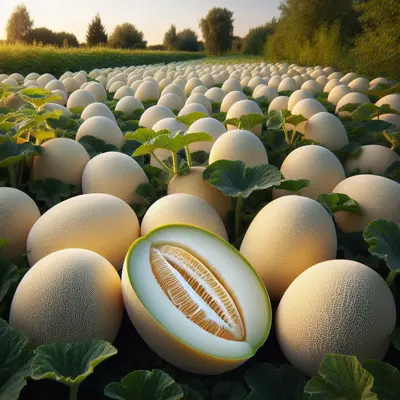
A treasured Ukrainian heirloom honeydew-type melon with an unforgettable name and exceptional flavor that has won over gardeners worldwide. This reliable variety produces smooth, cream-colored melons with incredibly sweet, white flesh that stores well into winter. Originally grown on Soviet collective farms, it's perfectly adapted to shorter seasons and variable weather conditions.
Harvest
80-90d
Days to harvest
Sun
Full sun
Zones
2–11
USDA hardiness
Height
6-9 feet
Planting Timeline
Showing dates for Collective Farm Woman Melon in USDA Zone 7
All Zone 7 melon →Zone Map
Click a state to update dates
Collective Farm Woman Melon · Zones 2–11
Growing Details
Succession Planting
Collective Farm Woman is a single-harvest melon — each vine sets fruit once and that's your crop. One sowing per season is the standard approach. Start seeds indoors 3–4 weeks before your last frost (late March to early April in zone 7), or direct sow after soil temps hit 65°F, typically May. At 80–90 days to harvest, a late-May transplant puts you at an August pick — which lands comfortably before the first fall frost.
If you want fruit ripening across a few weeks rather than all at once, start a second round of seeds indoors 2–3 weeks after the first. Don't push past a late-June direct sow in zone 7; plants started later won't finish before nights drop below 50°F in October, and immature melons won't sweeten off the vine.
Complete Growing Guide
This Ukrainian heirloom requires sowing after all frost danger passes, as its 80–90 day maturity demands warm soil and air temperatures to thrive in shorter seasons. Plant in full sun with rich, well-draining soil amended with compost, spacing vines 3–4 feet apart to accommodate their vigorous 6–9 foot sprawl. Unlike many melons, this cultivar shows remarkable cold tolerance and thrives in variable weather, though inconsistent watering during fruit development can cause internal hollowing and reduce the signature sweet flesh quality. Monitor for powdery mildew in humid conditions by ensuring good air circulation around foliage. The key to success is patience: allow melons to fully mature on the vine until the stem slips easily when gently twisted, then store in a cool location where they'll maintain quality for weeks or even months.
Light: Full sun (6 or more hours of direct sunlight a day). Soil: Clay, High Organic Matter, Loam (Silt). Soil pH: Acid (<6.0), Neutral (6.0-8.0). Drainage: Good Drainage, Moist. Height: 6 ft. 0 in. - 9 ft. 0 in.. Spread: 1 ft. 0 in. - 3 ft. 0 in.. Spacing: 12 inches-3 feet. Growth rate: Medium. Maintenance: Medium. Propagation: Seed. Regions: Coastal, Mountains, Piedmont.
Harvesting
Harvest Collective Farm Woman melons when the smooth cream-colored skin develops a subtle golden undertone and the melon reaches 4-5 pounds, which typically occurs 80-90 days after planting. The fruit is ready when it yields slightly to gentle pressure at the blossom end and the tendril nearest the fruit stem begins to brown and dry. These melons are single-harvest varieties, so pick them once they reach maturity rather than expecting multiple harvests from one plant. A critical timing tip: harvest in early morning when temperatures are coolest, as this helps preserve the melon's exceptional sweetness and extends its impressive storage life through winter months.
Musky-scented, spherical to oblong berry with a rind (pepo), often furrowed with yellow, white or green flesh and many seeds. The rind may be green, yellow, tan, beige or white and the surface may be smooth, rough, warty, scaly, or netted. Seeds white, about 1/2 inch long, narrow. Seeds ripen in August and September.
Color: Gold/Yellow, Green, White. Type: Berry. Length: < 1 inch. Width: < 1 inch.
Garden value: Edible, Showy
Harvest time: Fall
Edibility: Eaten fresh, wrapped in prosciutto, in salads, or as a dessert. Watery, but delicate, flavor. Avoid the seeds as the sprouting seed produces a toxic substance in its embryo.
Storage & Preservation
Store freshly harvested Collective Farm Woman melons at room temperature for 2-3 days to allow flavors to fully develop, then refrigerate for up to 2 weeks. For long-term storage, this variety excels - wrap individual fruits in newspaper and store in a cool (50-55°F), humid basement or root cellar where they'll keep for 2-3 months.
Cut melon stores in the refrigerator for 3-5 days in airtight containers. For preservation, dice flesh and freeze in single-layer trays before transferring to freezer bags - perfect for smoothies and agua fresca. The sweet flesh also makes excellent preserves and pickled rind. Dehydrate thin slices at 135°F for 8-12 hours to create chewy melon leather that concentrates the honeyed flavor beautifully.
History & Origin
This Ukrainian heirloom originated from Soviet-era collective farming operations, where it developed as a practical melon variety suited to the challenging climate and shorter growing seasons of Eastern Europe. The specific breeder, introduction year, and breeding institution remain undocumented in widely accessible horticultural records, reflecting the reality that many Soviet-era vegetable varieties emerged through collective farm selection rather than formal institutional breeding programs. The variety's name itself testifies to its origins on collective farms, where women farmers played essential roles in seed selection and cultivation. It belongs to the honeydew-type melons within the inodorus group and represents the broader heritage tradition of Eastern European melon cultivation that prioritized cold hardiness and storage quality.
Origin: Africa, Arabian Peninsula, India, Australia
Advantages
- +Exceptionally sweet white flesh rivals commercial honeydew melons in flavor
- +Matures in 80-90 days, perfect for short growing seasons
- +Cream-colored melons store reliably into winter months
- +Ukrainian heirloom bred for variable weather and tough conditions
- +Smooth skin and consistent quality attract gardeners worldwide
Considerations
- -Vulnerable to powdery mildew in humid climates requiring management
- -Susceptible to bacterial wilt spread by cucumber beetles and aphids
- -Requires moderate skill; not ideal for absolute beginner gardeners
Companion Plants
Nasturtiums and French marigolds (Tagetes patula) earn the spots closest to your melon hills. Nasturtiums pull aphids off melon foliage onto themselves — they're a trap crop you can monitor and cut back rather than chasing aphids across your cucurbits. French marigolds do something more durable: their root exudates suppress soil nematodes over a full season, and NC State Extension's IPM case study on cucurbits recommends a solid planting of them in beds with nematode history before rotating back to susceptible crops. Beans fix nitrogen at a depth that doesn't compete with melon's sprawling surface roots, making them a reasonable edge planting if you've got the space.
Fennel is the one to keep 10–15 feet away minimum — it releases allelopathic compounds that stunt most vegetables, and melons are no exception. Potatoes share several soilborne diseases with cucurbits and have similar moisture demands, so planting them in adjacent beds just concentrates your disease risk in one area. Sage and rosemary are often lumped in with "beneficial herbs," but their preference for drier, leaner soil runs directly against the 1–1.5 inches of weekly moisture Collective Farm Woman needs to size up properly.
Plant Together
Basil
Repels aphids, thrips, and hornworms while potentially enhancing melon flavor
Nasturtiums
Acts as trap crop for cucumber beetles and aphids, protecting melons
Radishes
Deters cucumber beetles and squash bugs that commonly attack melons
Marigolds
Repels nematodes and various pests while attracting beneficial insects
Beans
Fix nitrogen in soil and don't compete heavily for nutrients with melons
Sunflowers
Provide beneficial shade and attract pollinators essential for melon fruit set
Oregano
Repels cucumber beetles and other pests while attracting beneficial predatory insects
Catnip
Strong natural repellent for cucumber beetles, aphids, and squash bugs
Keep Apart
Fennel
Releases allelopathic compounds that inhibit growth of melons and most cucurbits
Potatoes
Compete for similar nutrients and may attract shared pests like aphids
Aromatic herbs (sage, rosemary)
Strong essential oils can inhibit melon seed germination and growth
Nutrition Facts
Per 100g serving. % Daily Value based on 2,000 calorie diet. Source: USDA FoodData Central (FDC #167765)
Pests & Disease Resistance
Resistance
Good adaptation to cool conditions, moderate disease resistance
Common Pests
Cucumber beetles, squash bugs, aphids
Diseases
Powdery mildew, bacterial wilt, anthracnose
Troubleshooting Collective Farm Woman Melon
What you'll see, why it happens, and what to do about it.
Sunken, dry, tan or brown rotted patch on the blossom end of developing fruit
Likely Causes
- Blossom-end rot — calcium deficiency in the developing fruit, usually triggered by uneven soil moisture rather than a true lack of calcium in the soil
- Overfertilization with high-nitrogen fertilizers, which drives rapid vegetative growth and outpaces calcium uptake
- Soil pH outside the 6.0–7.0 range, limiting calcium availability
What to Do
- 1.Mulch 3–4 inches deep with straw and water consistently — 1 to 1.5 inches per week, deep and even — to stop the moisture swings that trigger this
- 2.Back off nitrogen-heavy fertilizers once vines are running; side-dress with compost instead
- 3.Test your soil pH and lime to 6.5–6.8 if needed, per NC State Extension's guidance on calcium availability
Vines wilting suddenly and collapsing even when soil is moist, sometimes with a sticky sap strand when a stem is cut
Likely Causes
- Bacterial wilt (Erwinia tracheiphila), transmitted by striped or spotted cucumber beetles feeding on leaves
- High cucumber beetle pressure in the first 30 days after transplant, before vines are established
What to Do
- 1.Cover transplants with row cover immediately at planting and pull it only when flowers open (around day 40–50) to exclude cucumber beetles during the critical early window
- 2.Scout daily for cucumber beetles — yellow-green insects roughly 1/4 inch long — and hand-pick or apply kaolin clay as a deterrent
- 3.Pull and bag any wilted vines immediately; bacterial wilt doesn't persist in soil, but the beetles carrying it will move straight to your remaining plants
Frequently Asked Questions
How long does Collective Farm Woman melon take to grow from seed?▼
Can you grow Collective Farm Woman melon in containers?▼
What does Collective Farm Woman melon taste like compared to honeydew?▼
Is Collective Farm Woman melon good for beginners?▼
When should I plant Collective Farm Woman melon in Zone 6?▼
How do you know when Collective Farm Woman melon is ripe?▼
Zone-by-Zone Planting Calendar
| Zone | Indoor Start | Transplant | Direct Sow | Harvest |
|---|---|---|---|---|
| Zone 1 | June – June | July – August | July – September | October – August |
| Zone 2 | May – June | July – July | July – August | October – September |
| Zone 11 | January – January | February – February | February – March | May – June |
| Zone 12 | January – January | February – February | February – March | May – June |
| Zone 13 | January – January | February – February | February – March | May – June |
| Zone 3 | May – May | June – July | June – August | September – October |
| Zone 4 | April – May | June – June | June – July | September – October |
| Zone 5 | April – April | May – June | May – July | September – October |
| Zone 6 | April – April | May – June | May – July | August – October |
| Zone 7 | March – April | May – May | May – June | August – September |
| Zone 8 | March – March | April – May | April – June | July – September |
| Zone 9 | February – February | March – April | March – May | June – August |
| Zone 10 | January – February | March – March | March – April | June – July |
Growing Guides from Wind River Greens
Sources & References
External authority sources used in compiling this guide.
See the Methodology page for how this data is sourced, what's AI-assisted, and known limitations.
More Melons
Charleston Gray Watermelon
Ali Baba Watermelon
Cantaloup Charentais
Watermelon Charleston Gray
Hale's Best Cantaloupe
Cantaloupe Iroquois
Sugar Baby Watermelon
Tiger Baby Watermelon