Osaka Purple Mustard
Brassica juncea 'Osaka Purple'
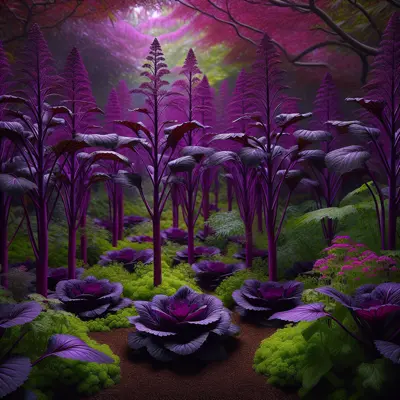
A stunning Japanese mustard green with deep purple leaves and bright green stems that creates an eye-catching contrast in any garden bed or salad bowl. This fast-growing beauty offers a mild mustard flavor when young that intensifies as leaves mature, giving you versatility from baby greens to cooking greens.
Harvest
21-40d
Days to harvest
Sun
Full sun to partial shade
Zones
8–9
USDA hardiness
Height
12-18 inches
Planting Timeline
Showing dates for Osaka Purple Mustard in USDA Zone 7
All Zone 7 brassica →Zone Map
Click a state to update dates
Osaka Purple Mustard · Zones 8–9
Growing Details
Succession Planting
Direct sow Osaka Purple every 14–21 days starting in late February (zones 8–9) or mid-March (zone 7), and keep going through mid-April for a spring run. Stop when daytime highs push consistently above 75–80°F — mustard bolts fast in heat, and the leaves go bitter and tough before you can get a full harvest out of them. Pick back up with a fall succession in late August or early September, sowing every 2–3 weeks through October; fall-grown mustard is noticeably sweeter than spring-grown.
Baby leaf cuts at 21 days let you squeeze more successions into a short window. If you're harvesting at full leaf size — closer to 35–40 days — you can afford fewer sowings but need to time them more carefully around the first heat spike.
Complete Growing Guide
This Japanese mustard thrives in cool-season conditions and reaches harvestable size remarkably fast—often within 3 weeks for tender baby leaves—making it ideal for succession planting every 10-14 days for continuous harvests. Unlike slower brassicas, Osaka Purple demands consistent moisture and appreciates afternoon shade in warm climates, as heat accelerates bolting and intensifies bitterness undesirably. The deep purple foliage, while visually striking, can occasionally attract flea beetles more aggressively than green varieties, so monitor closely and consider row covers during peak pest season. This cultivar's tendency to stretch in low light means providing at least 6 hours of direct sun daily prevents leggy growth. A practical strategy: harvest outer leaves frequently while plants are young to encourage bushier growth and enjoy the milder flavor window; waiting for full maturity concentrates the peppery punch, which works better in cooked applications than fresh salads.
Light: Full sun (6 or more hours of direct sunlight a day), Partial Shade (Direct sunlight only part of the day, 2-6 hours). Soil: High Organic Matter. Soil pH: Neutral (6.0-8.0). Drainage: Good Drainage, Moist. Height: 1 ft. 0 in. - 1 ft. 6 in.. Spread: 1 ft. 0 in. - 1 ft. 6 in.. Spacing: Less than 12 inches. Growth rate: Rapid. Maintenance: Medium. Regions: Coastal, Mountains, Piedmont.
Harvesting
Harvest Osaka Purple Mustard when the deep purple leaves reach 4-6 inches long and feel tender yet crisp to the touch, with the bright green stems still showing vibrant color rather than becoming woody. For maximum yield and tenderness, practice continuous harvesting by pinching off outer leaves from the base while the plant is still young, which encourages bushier growth and extends your harvest window beyond the typical 21-40 day window. Alternatively, cut the entire plant 2 inches above soil level for a single harvest. Time your picking in early morning after dew dries, as this is when leaves are most succulent and the mild mustard flavor is most pleasant; afternoon heat can intensify the peppery notes prematurely.
Long pods with round, brown seeds. The fruits will dry and split when ripe. The seeds are harvested for use in condiments and oil.
Color: Brown/Copper. Type: Siliqua.
Garden value: Edible
Edibility: The leaves, seeds, flowers, and stems of this mustard variety are edible raw or cooked. Harvested leaves can be stored in the fridge for 3-5 days.
Storage & Preservation
Fresh Osaka Purple Mustard leaves store best when harvested dry and immediately refrigerated. Wrap unwashed leaves loosely in damp paper towels, then place in perforated plastic bags in your refrigerator's crisper drawer. Properly stored, young leaves maintain quality for 5-7 days, while mature leaves last 3-4 days.
For preservation, blanch leaves in boiling water for 2 minutes, then shock in ice water before freezing in airtight containers—this method preserves both color and nutritional value for up to 8 months. The deep purple leaves also make stunning additions to lacto-fermented vegetable mixes, maintaining their vibrant color while developing complex flavors.
Dehydrating works well for mature leaves; dried Osaka Purple Mustard creates an attractive purple seasoning powder perfect for spice blends. Young tender leaves can be preserved in herb salt or frozen directly into ice cubes for adding to soups and stews during winter months.
History & Origin
Osaka Purple Mustard belongs to the Japanese mustard green tradition, specifically within the Brassica juncea species that has been cultivated in Asia for centuries. The "Osaka" designation references the Kansai region of Japan, where purple-leafed mustard varieties have long been valued in traditional cuisine and gardening. While specific breeder documentation and introduction dates remain elusive in widely accessible records, this variety represents the continuation of Japanese heirloom mustard breeding focused on ornamental appeal combined with culinary utility. The cultivar likely emerged through selective breeding by Japanese seed companies or regional growers seeking to enhance the visual contrast of purple foliage against green stems while maintaining the characteristic mild-to-peppery flavor profile prized in Asian cooking.
Origin: Russia to central Asia
Advantages
- +Striking purple foliage adds ornamental beauty to gardens and plates
- +Fast maturity at 21-40 days means quick harvests and succession planting
- +Versatile flavor profile works for delicate baby greens or robust cooked dishes
- +Easy cultivation makes Osaka Purple suitable for beginner gardeners
- +Vibrant purple-green contrast creates visually appealing culinary presentations
Considerations
- -Multiple pest vulnerabilities including flea beetles, aphids, and cabbage worms require monitoring
- -Susceptible to three serious diseases: downy mildew, white rust, and black rot
- -Peppery intensity increases with maturity, limiting appeal for mild-flavor preferences
Companion Plants
Nasturtiums act as a trap crop for aphids — the aphids colonize them instead of your mustard, which keeps your harvest clean without spraying. French marigolds have solid documentation behind them for suppressing soil-borne pests, and at 12–18 inches Osaka Purple is short enough that marigolds won't shade it out. Dill, chives, and garlic emit volatile sulfur compounds that disrupt the host-finding behavior of cabbage worms and aphids; planting them in alternating rows rather than a single clump gets you more coverage. Lettuce works as a neighbor because its shallow roots sit in the top 6 inches of soil while mustard roots go a bit deeper — no meaningful competition. Skip pole beans and tomatoes; both create allelopathic soil chemistry that brassicas don't tolerate well.
Plant Together
Nasturtiums
Act as trap crops for flea beetles and aphids that commonly attack brassicas
Dill
Attracts beneficial insects like parasitic wasps that control cabbage worms and aphids
Onions
Repel cabbage maggots and other root pests with their strong sulfur compounds
Garlic
Deters flea beetles and cabbage worms while improving soil health
Marigolds
Repel nematodes and various pests while attracting beneficial predatory insects
Lettuce
Makes efficient use of space as a low-growing companion and has similar water needs
Carrots
Help break up soil for shallow brassica roots and don't compete for nutrients
Chives
Repel aphids and improve growth of neighboring brassicas through root secretions
Keep Apart
Strawberries
Compete for similar nutrients and can harbor pests that also attack brassicas
Tomatoes
Both are heavy feeders that compete for nutrients, and tomatoes can stunt brassica growth
Pole Beans
Can shade the mustard greens excessively and compete for root space
Nutrition Facts
Per 100g serving. % Daily Value based on 2,000 calorie diet. Source: USDA FoodData Central (FDC #747447)
Pests & Disease Resistance
Resistance
Good bolt resistance in cool weather
Common Pests
Flea beetles, aphids, cabbage worms
Diseases
Downy mildew, white rust, black rot
Troubleshooting Osaka Purple Mustard
What you'll see, why it happens, and what to do about it.
Tiny round holes peppering leaves, especially on young seedlings in early spring or fall
Likely Causes
- Flea beetles (Phyllotreta spp.) — small, jumping beetles that chew shot-hole damage; worst on seedlings under 3 inches tall
- Dry soil stress, which makes leaves more susceptible to flea beetle feeding
What to Do
- 1.Cover seedlings immediately at planting with row cover (Agribon-15 or similar); flea beetles can't find what they can't smell
- 2.Keep soil consistently moist — stressed seedlings get hammered harder and recover slower
- 3.Once plants hit 6 inches, they can tolerate moderate feeding pressure without significant yield loss; remove row cover then if you need pollinator access
White to grayish fuzzy sporulation on the undersides of leaves, with pale yellow patches on the upper surface
Likely Causes
- Downy mildew (Peronospora parasitica) — a water mold, not a true fungus; thrives in cool, humid conditions between 45–65°F with poor airflow
- Overhead watering late in the day, keeping foliage wet overnight
What to Do
- 1.Strip and trash (don't compost) any affected leaves as soon as you see them
- 2.Water at the base of the plant in the morning so foliage dries before nightfall
- 3.Thin to at least 4–6 inches apart — dense plantings trap the humid air this pathogen needs to spread
V-shaped yellow to brown lesions at leaf margins, sometimes with darkened veins visible; older outer leaves affected first
Likely Causes
- Black rot (Xanthomonas campestris pv. campestris) — a bacterial disease that enters through leaf margins and moves into the vascular system
- Contaminated seed or transplants, or splash from infected crop debris left in the bed
What to Do
- 1.Pull and trash infected plants — black rot spreads fast and there's no curative spray once it's in the vascular tissue
- 2.Don't work in the bed when foliage is wet; that's how the bacteria moves from plant to plant on your hands and tools
- 3.Rotate out of brassicas for at least 2 seasons; the pathogen overwinters in soil debris
Frequently Asked Questions
How long does Osaka Purple Mustard take to grow?▼
Can you grow Osaka Purple Mustard in containers?▼
What does Osaka Purple Mustard taste like?▼
When should I plant Osaka Purple Mustard?▼
Is Osaka Purple Mustard good for beginners?▼
Does Osaka Purple Mustard stay purple when cooked?▼
Zone-by-Zone Planting Calendar
| Zone | Indoor Start | Transplant | Direct Sow | Harvest |
|---|---|---|---|---|
| Zone 1 | April – May | June – July | June – July | July – September |
| Zone 2 | April – May | June – July | May – July | June – September |
| Zone 11 | January – January | January – February | January – February | January – December |
| Zone 12 | January – January | January – February | January – February | January – December |
| Zone 13 | January – January | January – February | January – February | January – December |
| Zone 3 | March – April | May – June | May – June | June – October |
| Zone 4 | March – April | May – June | April – June | May – October |
| Zone 5 | February – March | April – May | April – May | May – November |
| Zone 6 | February – March | April – May | April – May | May – November |
| Zone 7 | February – March | April – May | March – May | April – November |
| Zone 8 | January – February | March – April | March – April | April – December |
| Zone 9 | January – January | February – March | February – March | March – December |
| Zone 10 | January – January | February – March | January – March | February – December |
Growing Guides from Wind River Greens
Sources & References
External authority sources used in compiling this guide.
See the Methodology page for how this data is sourced, what's AI-assisted, and known limitations.