Yellow Pear
Solanum lycopersicum 'Yellow Pear'
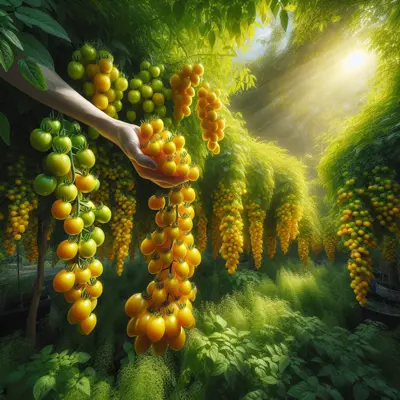
A charming heirloom cherry tomato dating back to the 1800s, producing abundant clusters of bright yellow, pear-shaped fruits that are as decorative as they are delicious. This prolific variety is beloved by children and adults alike for its sweet, mild flavor and unique teardrop shape that adds visual interest to any garden or salad.
Harvest
75-80d
Days to harvest
Sun
Full sun
Zones
10–11
USDA hardiness
Height
1-10 feet
Planting Timeline
Showing dates for Yellow Pear in USDA Zone 7
All Zone 7 tomato →Zone Map
Click a state to update dates
Yellow Pear · Zones 10–11
Growing Details
Complete Growing Guide
This prolific heirloom produces fruit earlier than many cherry varieties, reaching maturity in just 75-80 days, making it ideal for shorter growing seasons. Yellow Pear thrives in full sun with consistent moisture—irregular watering triggers splitting, a common issue with this thin-skinned cultivar. The plants grow vigorously and often stretch tall, sometimes exceeding eight feet, so robust staking or caging prevents branch breakage under heavy fruit load. This variety shows moderate resistance to early blight but remains susceptible to late blight in humid regions; provide good air circulation by pruning lower foliage. A practical advantage: Yellow Pear's compact clusters mature synchronously, allowing you to harvest entire trusses at once rather than individual fruits, maximizing efficiency during peak season.
Light: Full sun (6 or more hours of direct sunlight a day). Soil: Clay, High Organic Matter, Loam (Silt), Sand. Soil pH: Acid (<6.0), Neutral (6.0-8.0). Drainage: Good Drainage, Moist. Height: 1 ft. 0 in. - 10 ft. 0 in.. Spread: 1 ft. 0 in. - 4 ft. 0 in.. Spacing: 3 feet-6 feet. Growth rate: Rapid. Maintenance: High. Propagation: Seed. Regions: Coastal, Mountains, Piedmont.
Harvesting
Yellow Pear tomatoes reach peak harvest readiness when they display a deep, consistent golden-yellow color throughout the fruit and yield slightly to gentle pressure, indicating full ripeness. Unlike single-harvest varieties, Yellow Pear produces prolifically throughout the season, rewarding continuous picking every two to three days once fruits mature. Monitor for the characteristic pear shape to fill out completely and lose any green shoulders at the stem end, which signals optimal sweetness. A practical timing tip: harvest in early morning after dew dries but before afternoon heat, as fruits picked during cooler hours retain better flavor and store longer than those picked in intense midday sun.
The fruits are smooth, shiny, glossy, and are classified as berries. The size, shape, and color will vary depending on the variety or cultivar. The color of the fruits may be red, yellow, orange, green, purple, or pink. The fruits may contain over 100 yellow to light brown seeds.
Color: Gold/Yellow, Green, Orange, Pink, Purple/Lavender, Red/Burgundy, Variegated. Type: Berry. Length: > 3 inches. Width: > 3 inches.
Garden value: Edible, Showy
Harvest time: Fall, Summer
Edibility: The fruits or berries of the tomato are edible. They may be eaten raw, cooked, dried, or processed. They are a rich source of Vitamin A, Vitamin C, folic acid, and antioxidants. Lycopene is an antioxidant that gives the tomato its rich red color. Many plants will drop fruit when ripe or the fruit will come off easily. Tomatoes will continue to ripen once picked. Store them at room temperature.
Storage & Preservation
Yellow Pear tomatoes keep best at room temperature away from direct sunlight, ideally between 65-70°F with moderate humidity. Store them in a single layer in a cardboard box or shallow basket rather than sealed plastic, which traps moisture and promotes rot. Fresh fruit will hold for 5-7 days this way, though vine-ripened specimens picked at peak color last longest. For longer preservation, freezing works well for this thin-skinned variety—simply wash, whole freeze on a tray, then transfer to bags for up to eight months of usable product. They're excellent candidates for drying, developing concentrated sweetness that makes superior snacking. For canning, their low acidity means pressure canning is necessary for safety, though their small size makes whole-pack canning tedious. Consider instead making yellow tomato jam or preserves, which complement their fruity character beautifully. Fermentation is another rewarding option that highlights their mild flavor. Because these pears are primarily grown for fresh eating and garnish work, harvest only what you'll use within a week for optimal texture and appearance.
History & Origin
The Yellow Pear tomato's documented origins remain somewhat obscure, though it is widely recognized as an heirloom variety with roots in 19th-century American cultivation. Specific breeder attribution and exact introduction year are not well-established in horticultural records. The variety likely emerged from selective breeding within early cherry tomato populations circulating among American gardeners during the 1800s, contributing to a heritage tradition of preserving prolific, visually distinctive cultivars. Its distinctive pear shape and cheerful yellow color made it popular for home gardens, where seeds were saved and shared informally across generations, which may explain the lack of formal documentation compared to commercially introduced varieties.
Origin: Peru
Advantages
- +Prolific producer of abundant clusters throughout the season
- +Sweet, mild flavor with low acidity appeals to children
- +Charming pear shape adds decorative visual appeal to gardens
- +Heirloom variety with 150+ years of proven garden performance
- +Minimal fruit cracking due to naturally small size
Considerations
- -Susceptible to early and late blight in humid conditions
- -Birds and wildlife strongly attracted to sweet yellow fruits
- -Requires vigilant pest management for aphids and whiteflies
Companion Plants
Basil is worth planting within 12–18 inches of Yellow Pear. Its volatile oils — linalool and estragole especially — are thought to disorient aphids and thrips on nearby plants, and in our zone 7 Georgia garden both pests tend to build pressure fast once August heat settles in. Marigolds (specifically Tagetes patula, the French dwarf type) pull their weight underground: the roots produce alpha-terthienyl, a compound that suppresses root-knot nematode populations in the soil. NC State Extension points out that heirloom tomatoes like Yellow Pear lack the nematode resistance bred into modern hybrids, so having something working on that problem at the root zone makes sense. Nasturtiums planted at the bed edge will draw aphids off the tomatoes — just pull the nasturtium if it gets completely overrun rather than letting it become a source colony.
Fennel doesn't play well with much of anything in the vegetable garden; its root exudates stunt neighboring plants and tomatoes are particularly sensitive to it. Keep it at least 3 feet away, preferably in its own container. Brassicas compete hard for calcium and nitrogen — the same nutrients Yellow Pear needs in consistent supply to set fruit continuously across a 75–80 day season — and there's evidence they inhibit tomato root development when planted close. Given that this is an indeterminate vine that can push past 6 feet on a good trellis, it needs every advantage at the root level it can get.
Plant Together
Basil
Repels aphids and whiteflies, may improve tomato flavor
Marigold
Deters nematodes and aphids with natural compounds
Nasturtium
Acts as trap crop for aphids and cucumber beetles
Parsley
Attracts beneficial insects like hoverflies and parasitic wasps
Carrots
Loosens soil around tomato roots and doesn't compete for nutrients
Chives
Repels aphids and may reduce fungal diseases
Borage
Attracts pollinators and may deter tomato hornworms
Lettuce
Benefits from tomato shade and efficient use of garden space
Keep Apart
Black Walnut
Produces juglone which is toxic to tomatoes and causes wilting
Brassicas
Compete heavily for nutrients and may stunt tomato growth
Fennel
Inhibits growth of tomatoes through allelopathic compounds
Nutrition Facts
Per 100g serving. % Daily Value based on 2,000 calorie diet. Source: USDA FoodData Central (FDC #169118)
Pests & Disease Resistance
Resistance
Generally hardy with good disease tolerance for an heirloom
Common Pests
Aphids, whiteflies, spider mites, birds (love the sweet fruit)
Diseases
Early blight, late blight, minimal cracking due to small size
Troubleshooting Yellow Pear
What you'll see, why it happens, and what to do about it.
Lower leaves developing dark brown bullseye-patterned spots, starting mid-season around day 45–50 after transplant
Likely Causes
- Early blight (Alternaria solani) — a soil-borne fungus that splashes up onto foliage during rain or overhead watering
- Dense canopy with poor airflow, especially on an indeterminate vine that hasn't been pruned
What to Do
- 1.Strip affected lower leaves and throw them in the trash — not the compost
- 2.Lay 3–4 inches of straw mulch around the base to stop soil splash
- 3.NC State Extension recommends rotating nightshades out of the same bed for at least 3–4 years; for tomato-specific diseases, 5–7 years is better if you have the space
Tiny, distorted new growth at the shoot tips; sticky residue on leaves; clusters of small soft-bodied insects visible on stems
Likely Causes
- Aphids (commonly Macrosiphum euphorbiae, the potato aphid) colonizing new growth
- Whiteflies (Trialeurodes vaporariorum), which also leave sticky honeydew and can vector viruses
What to Do
- 1.Knock aphids off with a firm stream of water from a hose — repeat every 2–3 days until the population drops
- 2.If populations persist, apply insecticidal soap directly to the undersides of leaves where both aphids and whitefly nymphs feed
- 3.Check for ants farming the aphid colonies; a sticky barrier wrapped around the base of each stake cuts off their access and leaves the aphids without protection
Frequently Asked Questions
How long do Yellow Pear tomatoes take to grow from seed?▼
Can you grow Yellow Pear tomatoes in containers?▼
Is Yellow Pear tomato good for beginners?▼
What does Yellow Pear tomato taste like compared to red cherry tomatoes?▼
When should I plant Yellow Pear tomato seeds?▼
Do Yellow Pear tomatoes need pruning and staking?▼
Zone-by-Zone Planting Calendar
| Zone | Indoor Start | Transplant | Direct Sow | Harvest |
|---|---|---|---|---|
| Zone 3 | April – April | June – July | — | September – October |
| Zone 4 | March – April | June – June | — | August – October |
| Zone 5 | March – March | May – June | — | August – October |
| Zone 6 | March – March | May – June | — | August – October |
| Zone 7 | February – March | April – May | — | July – September |
| Zone 8 | February – February | April – May | — | July – September |
| Zone 9 | January – January | March – April | — | June – August |
| Zone 10 | January – January | February – March | — | May – July |
| Zone 1 | May – May | July – August | — | October – August |
| Zone 2 | April – May | June – July | — | September – September |
| Zone 11 | January – January | January – February | — | April – June |
| Zone 12 | January – January | January – February | — | April – June |
| Zone 13 | January – January | January – February | — | April – June |
Growing Guides from Wind River Greens
Sources & References
External authority sources used in compiling this guide.
See the Methodology page for how this data is sourced, what's AI-assisted, and known limitations.