Bonanza™ Bee
Tagetes patula
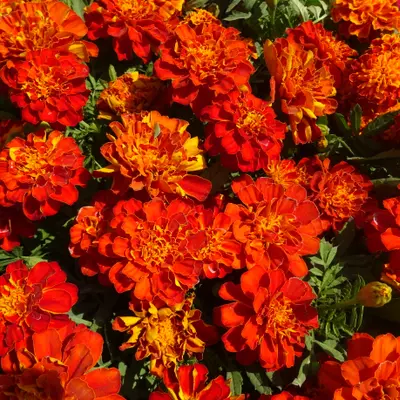
1 1/2-2 1/2" refined crested blooms. Highly uniform plants are more compact than the Durango series. An easy-to-grow addition to garden beds, containers, and small spaces. Vibrant red and gold blooms.
Harvest
50d
Days to harvest
Sun
Full sun to partial shade
Zones
1–11
USDA hardiness
Height
6-12 inches
Planting Timeline
Showing dates for Bonanza™ Bee in USDA Zone 7
All Zone 7 flower →Zone Map
Click a state to update dates
Bonanza™ Bee · Zones 1–11
Growing Details
Succession Planting
Bonanza Bee blooms around 50 days from transplant and keeps flowering all season as long as you deadhead spent blooms every week or so — it doesn't exhaust itself the way a cut-and-come-again green does, so tight succession planting isn't really the point. Two rounds of indoor starts (February, then March) will give you enough transplants to cover your warm season without much further thought.
If you want fresh plants for filling gaps in a border or swapping out containers as the originals get leggy in late summer, start a second tray around late May and move those out in July. They'll carry color through first frost while the February-started plants wind down.
Complete Growing Guide
1 1/2-2 1/2" refined crested blooms. Highly uniform plants are more compact than the Durango series. An easy-to-grow addition to garden beds, containers, and small spaces. Vibrant red and gold blooms. According to Johnny's Selected Seeds, Bonanza™ Bee is 50 days to maturity, annual, open pollinated. Notable features: Grows Well in Containers, Edible Flowers.
Light: Full sun (6 or more hours of direct sunlight a day), Partial Shade (Direct sunlight only part of the day, 2-6 hours). Soil: Clay, Loam (Silt), Sand. Soil pH: Acid (<6.0), Neutral (6.0-8.0). Drainage: Good Drainage, Occasionally Dry. Height: 0 ft. 6 in. - 1 ft. 0 in.. Spread: 0 ft. 6 in. - 1 ft. 6 in.. Spacing: Less than 12 inches. Growth rate: Medium. Maintenance: Low. Regions: Coastal, Mountains, Piedmont.
Harvesting
Bonanza™ Bee reaches harvest at 50 days from sowing per Johnny's Selected Seeds. Expect 1 1/2-2 1/2" at peak. As an annual, harvest continues until frost ends the season.
Edibility: Flowers are used to make refreshing drinks and the leaves are used for flavoring.
Storage & Preservation
Bonanza® Bee flowers are ornamental blooms meant for immediate display rather than storage. Cut flowers should be placed in cool water immediately after cutting and kept in a cool location (65-72°F) away from direct sunlight and ripening fruit. Change water every 2-3 days and trim stems at an angle. For dried flower preservation, hang bundles upside down in a warm, dry, well-ventilated space for 1-2 weeks. Alternatively, press flowers between parchment paper under heavy books for 2-3 weeks, or use silica gel for faster drying (3-5 days) to maintain color vibrancy.
History & Origin
Bonanza™ Bee is open-pollinated, meaning seed saved from healthy plants will produce true-to-type offspring. Listed in the Johnny's Selected Seeds catalog.
Origin: Mexico, Guatamala
Advantages
- +Compact plant size makes it ideal for small garden spaces and containers
- +Refined crested blooms with vibrant red and gold colors add visual interest
- +Quick 50-day bloom time allows fast gratification for gardeners
- +Highly uniform plants create neat, organized appearance in garden beds
- +Easy growing difficulty means suitable for beginner gardeners
Considerations
- -Refined crested petals may trap moisture and increase powdery mildew risk
- -Compact size produces fewer flowers per plant than larger marigold varieties
- -Red and gold blooms may fade or bleach in intense afternoon heat
Companion Plants
The beneficial companions here split into two camps: plants that reinforce Bonanza Bee's pest-disrupting role, and plants that pull in the predatory insects that clean up whatever pests the marigolds shake loose. Lavender, Sweet Alyssum, and Borage all attract parasitic wasps and hoverflies — whose larvae eat aphids and whiteflies — so while the marigold's thiopene compounds (concentrated in the foliage and roots) disorient pest insects at the source, those three are quietly staffing the cleanup crew nearby. Nasturtium adds a different angle: it draws aphids to itself preferentially, acting as a trap crop that keeps pressure off neighboring vegetables. Cosmos and Zinnia are less about pest dynamics and more about holding pollinators in the bed long enough that everything else gets visited too.
The harmful companions deserve more than a passing note. Black Walnut produces juglone, an allelopathic compound that leaches through the soil and is genuinely toxic to Tagetes — plants grown within the drip line of a walnut tend to yellow and stall with no obvious cause until you think to look up at what's overhead. Eucalyptus works similarly through its leaf litter and root exudates; if your soil has been under one for years, that residue lingers. Sunflowers are less chemically aggressive but grow fast enough to shade out a 6–12 inch plant within a few weeks, and they compete hard for water in the top 12 inches of soil. Give Bonanza Bee at least 10–15 feet of clearance from any black walnut, and pair it with shorter companions that won't close in over it by July.
Plant Together
Lavender
Attracts beneficial pollinators and repels pests like moths and fleas
Marigold
Deters nematodes and aphids while attracting beneficial insects
Nasturtium
Acts as trap crop for aphids and cucumber beetles, attracts predatory insects
Sweet Alyssum
Attracts hover flies and parasitic wasps that control aphids
Cosmos
Attracts beneficial insects and provides complementary bloom structure
Zinnia
Attracts butterflies, ladybugs, and other beneficial pollinators
Parsley
Attracts beneficial wasps and hover flies for natural pest control
Borage
Attracts bees and beneficial insects while improving soil nutrients
Keep Apart
Black Walnut
Produces juglone toxin that inhibits growth of most flowering plants
Eucalyptus
Releases allelopathic compounds that suppress growth of nearby plants
Sunflower
Produces allelopathic chemicals and competes heavily for nutrients and water
Troubleshooting Bonanza™ Bee
What you'll see, why it happens, and what to do about it.
Leaves and stems covered in sticky residue or distorted new growth, often with tiny green or black insects clustered on stem tips
Likely Causes
- Aphid infestation (Myzus persicae or Aphis gossypii) — French marigolds attract them when plants are stressed or overcrowded
- High nitrogen from over-fertilizing, which pushes soft, aphid-attractive growth
What to Do
- 1.Blast aphids off with a firm jet of water — repeat every 2–3 days until the population drops
- 2.Spray insecticidal soap directly on the insects, making sure to hit the undersides of leaves
- 3.Back off any nitrogen-heavy fertilizer; these are compact plants that don't need much feeding once established
Gray, powdery coating on the upper surface of leaves, starting mid-season when plants are mature and nights cool down
Likely Causes
- Powdery mildew (Podosphaera xanthii or Erysiphe cichoracearum) — common on Tagetes in humid conditions with poor airflow
- Crowded planting that traps moisture around foliage
What to Do
- 1.Remove and bin the worst-affected leaves — don't compost them
- 2.Spray a diluted baking soda solution (1 tablespoon per gallon of water) on affected foliage every 7 days as a mild preventive
- 3.Next planting, space at least 8–10 inches apart and site them where morning sun dries the dew off fast
Seedlings or young transplants collapsing at the soil line, stems pinched and dark at the base
Likely Causes
- Damping off — typically Pythium or Rhizoctonia solani fungi, triggered by overwatering or poorly draining seed-starting mix
- Starting seed in containers without drainage holes or reusing unsterilized potting mix
What to Do
- 1.Pull and discard the affected seedlings immediately — they won't recover
- 2.Let the top half-inch of soil dry out between waterings and improve drainage in your seed trays
- 3.Start a fresh batch in clean, sterile mix; sow seeds shallowly (barely cover them) and run a small fan nearby to keep air moving
Frequently Asked Questions
How long do Bonanza® Bee flowers bloom?▼
Is Bonanza® Bee a good choice for beginner gardeners?▼
Can you grow Bonanza® Bee flowers in containers?▼
What is the Bonanza® Bee flower color?▼
How do I get the most blooms from Bonanza® Bee flowers?▼
When should I plant Bonanza® Bee flowers?▼
Zone-by-Zone Planting Calendar
| Zone | Indoor Start | Transplant | Direct Sow | Harvest |
|---|---|---|---|---|
| Zone 3 | April – May | June – July | June – August | — |
| Zone 4 | March – April | June – June | June – July | — |
| Zone 5 | March – April | May – June | May – July | — |
| Zone 6 | March – April | May – June | May – July | — |
| Zone 7 | February – March | April – May | April – June | — |
| Zone 8 | February – March | April – May | April – June | — |
| Zone 9 | January – February | March – April | March – May | — |
| Zone 10 | January – January | February – March | February – April | — |
| Zone 1 | May – June | July – August | July – September | — |
| Zone 2 | April – May | June – July | June – August | — |
| Zone 11 | January – January | January – February | January – March | — |
| Zone 12 | January – January | January – February | January – March | — |
| Zone 13 | January – January | January – February | January – March | — |
Growing Guides from Wind River Greens
Sources & References
External authority sources used in compiling this guide.
- BreederJohnny's Selected Seeds
See the Methodology page for how this data is sourced, what's AI-assisted, and known limitations.