Red Clover Microgreens
Trifolium pratense
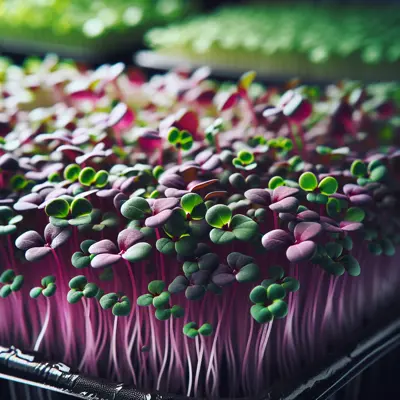
A tall (2-3'), quick-growing clover. Sow in spring, summer, or fall, alone or with grain/grass. Will grow in more acidic soil (pH 5.0-6.0) than other clovers if lime is applied at seeding time. Widely grown biennial used for Nitrogen addition and hay crops. Large plant with big leaves makes it an ideal grazing crop. Red clover may be the best choice for frost seeding; it is extremely cold hardy and does well in most soils and growing conditions. it does, like most clovers, perform poorly in hot weather unless seeded into a crop canopy. Incorporate fully for best results. Mammoth Red clover will fix between 70-110 lb. nitrogen per acre. The long taproots loosen soils and mine phosphorus and other nutrients from deep in the soil. It should be seeded with 48-64 lb. or 1.5-2 bushels/acre of oats to "nurse" the clover. Inoculate with Alfalfa/True Clover Inoculant (#7535) for best performance. Edible Flowers: The flowers of red clover may be used to garnish drinks, salads, soups, and desserts; the flavor is sweet and mild.
Harvest
8-12d
Days to harvest
Sun
Full sun
Zones
3–9
USDA hardiness
Height
6-24 inches
Planting Timeline
Showing dates for Red Clover Microgreens in USDA Zone 7
All Zone 7 microgreen →Zone Map
Click a state to update dates
Red Clover Microgreens · Zones 3–9
Growing Details
Succession Planting
Red clover microgreens are a cut-once crop with an 8-12 day turnaround, which makes them one of the easier things to run on a tight indoor schedule. Sow a fresh 10x20 tray every 5-7 days for a continuous weekly supply — that cadence gives you a day or two of overlap so you're never sitting around waiting on the next tray. Because you're growing indoors, there's no seasonal cutoff; January through December is a real window, not a technicality.
The one thing that throws off the rhythm is ambient heat in summer. If your grow space climbs above 75°F consistently, germination stays fast but the greens get leggy and thin out sooner. In those months, bump your sow frequency slightly or plan to harvest closer to day 8 rather than letting trays run to day 12.
Complete Growing Guide
Light: Full sun (6 or more hours of direct sunlight a day). Soil: Clay, Loam (Silt). Soil pH: Acid (<6.0), Neutral (6.0-8.0). Drainage: Good Drainage, Occasionally Dry. Height: 0 ft. 6 in. - 2 ft. 0 in.. Spread: 0 ft. 8 in. - 1 ft. 8 in.. Spacing: Less than 12 inches, 12 inches-3 feet. Growth rate: Rapid. Maintenance: Medium. Propagation: Seed. Regions: Coastal, Mountains, Piedmont.
Harvesting
Each flower head is eventually replaced by a seedpod. The con contain 1 or 2 heart shaped seeds.
Color: Brown/Copper.
Garden value: Edible
Harvest time: Summer
Edibility: The leaves and you flowering heads are edible, raw or cooked.
Storage & Preservation
Store freshly harvested red clover microgreens in the refrigerator immediately, placing them in a container lined with paper towels to absorb excess moisture. They'll maintain peak quality for 5-7 days when kept at 35-40°F with proper humidity control. Avoid washing until just before use, as excess moisture accelerates deterioration.
For longer storage, gently wash and thoroughly dry the microgreens, then freeze them in ice cube trays with a small amount of water for smoothie additions. They can also be dehydrated at low temperatures (95-105°F) for 4-6 hours to create a nutrient-dense powder perfect for sprinkling on soups and salads.
Unlike mature clover, these tender microgreens aren't suitable for traditional preservation methods like canning or fermenting due to their delicate structure and high water content.
History & Origin
Origin: Eurasia
Advantages
- +Edible: The leaves and you flowering heads are edible, raw or cooked.
- +Fast-growing
Companion Plants
Tray neighbors matter more for logistics than for chemistry with microgreens, but a few pairings are worth the thought. Radish and mustard microgreens want nearly identical moisture levels and both germinate in 2-4 days, so you're not juggling mismatched watering schedules across your shelf. Pea shoots and spinach microgreens fit the same profile — steady moisture, no volatile compounds that muddy red clover's mild, faintly grassy flavor during a shared harvest window. Around here in our zone 7 Georgia growing spaces, stacking compatible trays is really an airflow problem: similar canopy heights mean no one tray is trapping humidity against another and inviting damping-off.
Sunflower microgreens are worth keeping physically separate. The hulls shed allelopathic compounds and hold moisture in a way that encourages mold growth on adjacent trays — a real issue when clover is already high-water. Fennel has documented chemical interference with neighboring seedlings, and that doesn't stop applying just because you've moved things indoors. A full tray's width of separation from both is enough.
Plant Together
Lettuce
Compatible growing conditions and harvest timing, good space utilization
Radish Microgreens
Natural pest deterrent properties protect clover from aphids and flea beetles
Pea Shoots
Both are nitrogen-fixing legumes with similar water and light requirements
Spinach Microgreens
Compatible growth rates and can be harvested together in mixed salads
Arugula Microgreens
Natural pest repellent properties and complementary nutritional profiles
Chives
Repels aphids and other small insects that can damage tender microgreen shoots
Cilantro Microgreens
Similar growing requirements and harvest timing, attracts beneficial insects
Mustard Microgreens
Natural fungicide properties help prevent damping-off disease in clover
Keep Apart
Sunflower Microgreens
Allelopathic compounds inhibit germination and growth of legumes like clover
Fennel
Strong allelopathic effects suppress growth of most other plants including clover
Black Walnut
Juglone compound is toxic to legumes and severely stunts clover growth
Nutrition Facts
Per 100g serving. % Daily Value based on 2,000 calorie diet. Source: USDA FoodData Central (FDC #167782)
Pests & Disease Resistance
Resistance
Generally disease-free when grown properly with good air circulation
Common Pests
Aphids, fungus gnats (indoor growing)
Diseases
Damping-off if overwatered
Troubleshooting Red Clover Microgreens
What you'll see, why it happens, and what to do about it.
Seedlings collapsing at the soil line 3-5 days after germination, stems look pinched or water-soaked at the base
Likely Causes
- Damping-off — typically Pythium or Rhizoctonia fungi thriving in waterlogged growing medium
- Poor drainage in the tray combined with overwatering between checks
What to Do
- 1.Pull the affected tray immediately and toss it — damping-off spreads fast and there's no saving a tray once it takes hold
- 2.Water from the bottom only: set the 10x20 tray in a shallow dish for 5-10 minutes, then let it drain fully before the next watering
- 3.Cut your water frequency back by one day and make sure your grow medium — coconut coir or a fine potting mix — isn't staying saturated between waterings
Tiny white or yellow insects clustered on stems around day 7-10, growth slowing noticeably before harvest
Likely Causes
- Fungus gnats (Bradysia spp.) — larvae in the growing medium damage roots; adults cluster on shoots
- Aphids (likely Aphis fabae or similar) introduced through open windows or infested nearby trays
What to Do
- 1.For fungus gnats, let the top half-inch of your growing medium dry slightly between waterings — their larvae can't survive without constant moisture near the surface
- 2.Set yellow sticky traps flat at tray level to confirm which pest you're dealing with before doing anything else
- 3.If the greens are at 6+ days and usable, harvest now — red clover microgreens don't regrow after cutting, so an early harvest beats losing the tray to an infestation
Frequently Asked Questions
How long do red clover microgreens take to grow?▼
Do I need to soak red clover seeds before planting?▼
Can you regrow red clover microgreens after cutting?▼
What do red clover microgreens taste like?▼
Are red clover microgreens good for beginners?▼
How do you prevent damping off in red clover microgreens?▼
Zone-by-Zone Planting Calendar
| Zone | Indoor Start | Transplant | Direct Sow | Harvest |
|---|---|---|---|---|
| Zone 3 | January – December | — | — | January – December |
| Zone 4 | January – December | — | — | January – December |
| Zone 5 | January – December | — | — | January – December |
| Zone 6 | January – December | — | — | January – December |
| Zone 7 | January – December | — | — | January – December |
| Zone 8 | January – December | — | — | January – December |
| Zone 9 | January – December | — | — | January – December |
| Zone 10 | January – December | — | — | January – December |
| Zone 1 | January – December | — | — | January – December |
| Zone 2 | January – December | — | — | January – December |
| Zone 11 | January – December | — | — | January – December |
| Zone 12 | January – December | — | — | January – December |
| Zone 13 | January – December | — | — | January – December |
Growing Guides from Wind River Greens
Sources & References
External authority sources used in compiling this guide.
- ExtensionNC State Extension
- USDAUSDA FoodData Central
See the Methodology page for how this data is sourced, what's AI-assisted, and known limitations.