American Elm
Ulmus americana
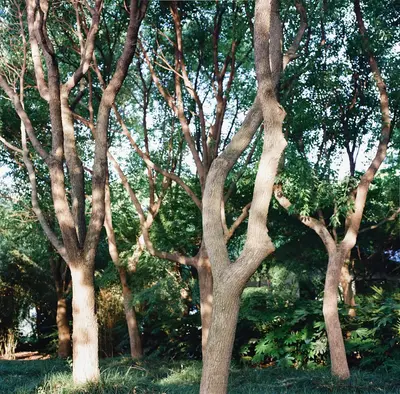
The classic American street tree famous for its graceful vase-shaped canopy that once lined countless city streets. Modern disease-resistant cultivars have brought this beloved native back from near extinction caused by Dutch elm disease. Fast-growing and adaptable, American elms create cathedral-like canopies perfect for large properties and urban settings.
Sun
Full sun to partial shade
Zones
3–9
USDA hardiness
Height
60-80 feet
Planting Timeline
Showing dates for American Elm in USDA Zone 7
All Zone 7 shade-tree →Zone Map
Click a state to update dates
American Elm · Zones 3–9
Growing Details
Complete Growing Guide
Light: Full sun (6 or more hours of direct sunlight a day), Partial Shade (Direct sunlight only part of the day, 2-6 hours). Soil: Clay, High Organic Matter, Loam (Silt), Sand. Soil pH: Neutral (6.0-8.0). Drainage: Good Drainage, Moist, Occasionally Dry, Occasionally Wet, Very Dry. Height: 60 ft. 0 in. - 80 ft. 0 in.. Spread: 30 ft. 0 in. - 60 ft. 0 in.. Spacing: more than 60 feet. Growth rate: Rapid. Maintenance: Medium. Propagation: Seed. Regions: Coastal, Mountains, Piedmont.
Harvesting
The flowers give way to single-seeded wafer-like samaras (each tiny seed is surrounded by a flattened oval-rounded papery wing). The seeds are clustered on long stems and mature in April-May as the leaves reach full size. In North Carolina, fruits are available from March to April.
Type: Samara.
Harvest time: Spring
Storage & Preservation
American Elm trees do not require storage or preservation in the traditional sense—they are permanent landscape features. However, newly planted saplings benefit from consistent moisture (50-60% soil humidity) during their first 2-3 years. Mulching is the primary preservation method, maintaining a 3-4 inch layer around the base to retain soil moisture and regulate temperature. Pruning dead or diseased branches annually preserves tree health and structure. Regular fertilization with a balanced fertilizer every 2-3 years supports vigor and disease resistance, particularly important for cultivars selected for Dutch elm disease tolerance.
History & Origin
The American elm is native to eastern North America, where it evolved naturally across forests and waterways from Canada to Florida before European settlement. Rather than being a deliberately bred cultivar, it represents the wild species Ulmus americana as it naturally occurs, though documentation of its formal botanical description is limited to the colonial and early scientific periods. Modern disease-resistant cultivars bearing the American elm name—such as 'Princeton' and 'Valley Green'—emerged from twentieth-century breeding programs at universities and research institutions responding to Dutch elm disease devastation. These improved selections were developed by crossing surviving American elms with resistant Asian elm species or through careful selection of naturally tolerant specimens, though detailed records of individual breeders remain sparse for many cultivars.
Origin: Eastern North America
Advantages
- +Attracts: Butterflies, Pollinators, Small Mammals, Songbirds
- +Fast-growing
Companion Plants
In our zone 7 Georgia gardens, the understory beneath an American Elm works best with shade-tolerant plants that don't pick fights over water — hostas, ferns, wild ginger, and coral bells all root shallow while the elm goes deep, and they handle the dry shade that builds under a mature canopy without complaint. Bleeding heart and wild columbine finish their cycle before summer heat peaks, so they're out of the way before drought stress sets in. Keep turf grass out of the root zone entirely: it competes hard for moisture and nitrogen, and repeated mowing that close to the trunk creates bark nicks that elm bark beetles use as entry points. Black walnut needs 60 feet of clearance — juglone from its roots moves through the soil and can stress or kill elms planted too close.
Plant Together
Hostas
Thrives in the dappled shade provided by elm canopy, creates attractive understory
Wild Ginger
Native groundcover that tolerates deep shade and helps suppress weeds
Coral Bells
Shade-tolerant perennial that adds color and attracts beneficial pollinators
Astilbe
Flourishes in partial shade with consistent moisture retained by elm's canopy
Ferns
Natural woodland companions that thrive in filtered light and leaf litter
Violets
Native groundcover that naturalizes well under established trees
Bleeding Heart
Spring ephemeral that complements elm's seasonal cycle and shade conditions
Wild Columbine
Native woodland flower that attracts beneficial insects and tolerates root competition
Keep Apart
Black Walnut
Produces juglone toxin that can stress or kill elm trees through allelopathy
Turf Grass
Competes aggressively for water and nutrients, compacts soil around shallow elm roots
Norway Maple
Dense canopy blocks light and aggressive roots outcompete elm for resources
Pests & Disease Resistance
Resistance
Modern cultivars have improved Dutch elm disease resistance
Common Pests
Elm leaf beetle, elm bark beetle, aphids
Diseases
Dutch elm disease, elm yellows, powdery mildew
Troubleshooting American Elm
What you'll see, why it happens, and what to do about it.
Leaves skeletonized or chewed to lace, with yellow or brown patches across the canopy in summer
Likely Causes
- Elm leaf beetle (Xanthogaleruca luteola) — adults and larvae both feed on leaf tissue, larvae from the underside
- Heavy infestations can defoliate a tree entirely by August
What to Do
- 1.For young trees under 15 feet, apply a spinosad-based spray to the undersides of leaves when larvae are small (early June in zone 7)
- 2.For established trees, a soil-applied systemic imidacloprid in early spring can protect foliage for the season — read the label on proximity to water
- 3.Rake and bag fallen leaves in autumn; larvae overwinter in leaf litter and bark at the tree's base
Branches wilting and dying back from the tips, with brown streaking visible in the sapwood when you cut a cross-section
Likely Causes
- Dutch elm disease (Ophiostoma ulmi or O. novo-ulmi) — a fungal pathogen spread by elm bark beetles (Scolytus and Hylurgopinus species) or through root grafts with infected neighbors
- Wounds from pruning or storm damage that weren't addressed quickly
What to Do
- 1.Prune out infected branches at least 10 feet below visible streaking, sterilizing your saw between every cut with a 10% bleach solution
- 2.Do not move infected wood off-site as firewood — the bark beetles travel with it
- 3.For any new planting, use only certified disease-resistant cultivars like 'Valley Forge' or 'Princeton'; mature trees with confirmed Dutch elm disease rarely recover fully
White powdery coating on young leaves and new shoots in late spring or early fall, leaves sometimes curling or stunted
Likely Causes
- Powdery mildew (Phyllactinia guttata or Uncinula macrospora) — fungal spores spread by wind, thrives in humid air with dry leaf surfaces
- Dense canopy or crowded planting that restricts airflow
What to Do
- 1.On a tree 60-80 feet tall, chemical treatment is rarely practical or necessary — powdery mildew on elms is mostly cosmetic
- 2.If a young tree under 10 feet is heavily affected, apply a potassium bicarbonate spray every 7-10 days during active infection
- 3.The longer fix is spacing: plant at the full 40-60 foot recommended distance so the canopy gets real airflow from the start
Frequently Asked Questions
How long does it take for an American Elm tree to mature?▼
Is American Elm a good choice for beginners?▼
Can you grow American Elm in containers?▼
When is the best time to plant American Elm?▼
What's the difference between heirloom American Elm and modern disease-resistant cultivars?▼
How much sunlight does an American Elm tree need?▼
Zone-by-Zone Planting Calendar
Growing Guides from Wind River Greens
Sources & References
External authority sources used in compiling this guide.
- ExtensionNC State Extension
See the Methodology page for how this data is sourced, what's AI-assisted, and known limitations.