Tatsoi
Brassica rapa var. narinosa
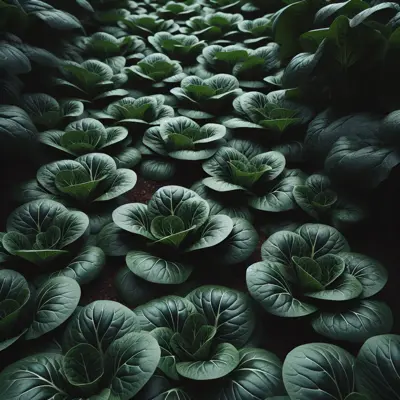
Tatsoi is a compact Asian brassica featuring glossy, dark green spoon-shaped leaves arranged in a dense rosette, typically reaching 4-6 inches tall. Ready to harvest in 40-50 days, this heirloom variety offers a mild mustard flavor balanced with subtle sweetness and tender, succulent texture. Its small, self-contained growth habit makes it ideal for succession planting and container cultivation. Tatsoi works exceptionally well in stir-fries, salads, and Asian cuisine, where its delicate leaves and stems can be used whole.
Harvest
40-50d
Days to harvest
Sun
Full sun to partial shade
Zones
5–10
USDA hardiness
Height
3 feet
Planting Timeline
Showing dates for Tatsoi in USDA Zone 7
All Zone 7 brassica →Zone Map
Click a state to update dates
Tatsoi · Zones 5–10
Growing Details
Succession Planting
Direct sow every 14-21 days from March through early May in zone 7, then stop when daytime highs are consistently above 80°F — tatsoi bolts fast once heat sets in, turning bitter and throwing up a flower stalk within days of stress. Resume direct sowings in late August through September for fall harvest; those plantings often run through November and the flavor sharpens noticeably after the first light frost. Skip indoor starts for succession rounds — tatsoi germinates in 4-7 days and direct-sown plants catch transplants within two weeks anyway.
Complete Growing Guide
Start by preparing your planting site with well-draining soil enriched with 2-3 inches of compost or aged manure. Tatsoi thrives in slightly alkaline conditions with a pH between 6.0-7.5, so test your soil and amend with lime if needed. Choose a location that receives morning sun but benefits from afternoon shade in hot climates, as tatsoi can bolt prematurely in intense heat.
Direct sowing works best for tatsoi since it doesn't transplant well due to its taproot. Plant seeds ¼ inch deep and space them 4-6 inches apart in rows 8-10 inches wide. For zones 3-6, sow in early spring 2-3 weeks before your last frost date, then again in late summer for fall harvest. In zones 7-9, focus on fall through early spring plantings, avoiding the hottest months. Succession plant every 2-3 weeks for continuous harvests.
Keep soil consistently moist but not waterlogged – tatsoi needs about 1 inch of water weekly. Apply a balanced organic fertilizer (10-10-10) at planting, then side-dress with nitrogen-rich fertilizer like fish emulsion every 3 weeks during active growth. Mulch around plants with straw to retain moisture and suppress weeds, keeping mulch 2 inches from plant centers to prevent slug issues.
Avoid the common mistake of planting too thickly – overcrowded tatsoi develops weak, spindly leaves instead of robust rosettes. Thin seedlings to proper spacing when they're 2 inches tall. Never cultivate deeply around established plants as this damages their shallow feeder roots. Instead, hand-pull weeds or use a stirrup hoe very lightly.
To maximize yields, harvest outer leaves regularly once plants reach 4 inches across, leaving the growing center intact. This encourages continuous production for 6-8 weeks. In fall plantings, light frosts actually improve flavor by concentrating sugars, so don't rush to harvest before cold weather hits.
Harvesting
Begin harvesting tatsoi when the rosettes reach 3-4 inches across, typically 40-50 days from seeding. Look for deep green, glossy leaves that feel thick and succulent when gently squeezed. The spoon-shaped leaves should be firm and crisp, without yellowing or tough stems.
For continuous harvest, cut individual outer leaves at the base using clean scissors, leaving the central growing point undisturbed. This allows the plant to keep producing new leaves for several weeks. Alternatively, harvest entire young plants by cutting at soil level when rosettes are 4-6 inches across.
Harvest in early morning when leaves are fully hydrated and crisp. Avoid harvesting during hot afternoon sun when leaves may be wilted. After light frosts, wait until leaves have warmed and perked up before cutting. Cold-kissed leaves will be noticeably sweeter than those harvested before frost exposure. Handle gently to prevent bruising the tender leaves.
Storage & Preservation
Fresh tatsoi keeps best when stored unwashed in perforated plastic bags in your refrigerator's crisper drawer at 32-35°F with high humidity. Properly stored, it maintains quality for 7-10 days, though it's best used within 5 days for optimal texture and flavor.
For longer preservation, blanch leaves in boiling water for 2 minutes, plunge into ice water, drain thoroughly, and freeze in airtight containers for up to 8 months. Tatsoi also ferments beautifully – chop leaves and ferment with 2% salt by weight for a tangy kimchi-style preserve. Unlike heartier greens, tatsoi doesn't dehydrate well due to its high water content. For immediate use, store harvested leaves in cold water like cut flowers to maintain crispness for several hours before cooking.
History & Origin
Tatsoi (Brassica rapa var. narinosa) originates from the Yangtze River region of China, where it has been cultivated for over 1,000 years. Also known as tat choy, spoon mustard, or rosette bok choy, this ancient Asian green was traditionally grown in cool mountain valleys where its cold tolerance made it invaluable for winter nutrition.
The name 'tatsoi' comes from the Mandarin 'ta ts'ai,' meaning 'collapsed vegetable,' referring to its distinctive flat, ground-hugging growth habit. Chinese farmers developed this variety through generations of selection for plants that could survive harsh winters while maintaining tender, flavorful leaves.
Tatsoi remained largely unknown in Western gardens until the 1980s when specialty seed companies began importing Asian vegetables for adventurous American gardeners. Its introduction coincided with growing interest in stir-fry cooking and diverse salad greens. Today, it's prized by both home gardeners and restaurant chefs for its unique appearance, mild flavor, and exceptional cold hardiness that surpasses most other Asian greens.
Advantages
- +Exceptional cold tolerance – survives temperatures down to 15°F while other greens fail
- +Becomes sweeter and more flavorful after frost exposure
- +Compact rosette form makes efficient use of garden space
- +Fast growing with harvest possible in just 40 days
- +Cut-and-come-again harvesting extends productivity for 6-8 weeks
- +Naturally resistant to most common brassica diseases
- +Unique spoon-shaped leaves add visual interest to salads and dishes
Considerations
- -Bolts quickly in hot weather above 75°F
- -Attracts flea beetles which can riddle young leaves with holes
- -Doesn't transplant well due to sensitive taproot
- -Short storage life compared to heartier greens like kale
- -Can develop bitter flavor if water-stressed during growth
Companion Plants
Radishes are the most practical neighbor here — direct-sow them at the bed edge and they're pulled in 25-30 days, well before tatsoi fills in, and they draw flea beetles away from your rosettes as a trap crop. Garlic and onions planted 4-6 inches away add some aphid and cabbage worm disruption through scent, though don't expect miracles. Lettuce and spinach share tatsoi's need for consistent moisture and a soil pH of 6.0-7.0, so they slot in without fighting over resources. Tomatoes are a different story — they're heavy feeders, they want a lower soil pH than tatsoi prefers, and they bring no pest-deterrent benefit to brassicas whatsoever.
Plant Together
Lettuce
Shares similar growing conditions and doesn't compete for nutrients
Spinach
Compatible growth habits and both benefit from cool weather
Radishes
Quick-growing radishes help break up soil and deter flea beetles
Onions
Strong scent deters cabbage worms and aphids that attack brassicas
Garlic
Natural pest deterrent, repels cabbage maggots and aphids
Dill
Attracts beneficial insects like parasitic wasps that control cabbage pests
Marigolds
Repel nematodes and various garden pests through natural compounds
Nasturtiums
Act as trap crop for aphids and flea beetles, drawing them away from tatsoi
Keep Apart
Tomatoes
Heavy feeders that compete for nutrients and may stunt brassica growth
Strawberries
Different water and nutrient requirements can inhibit brassica development
Pole Beans
Can shade low-growing tatsoi and compete for soil nutrients
Nutrition Facts
Per 100g serving. % Daily Value based on 2,000 calorie diet. Source: USDA FoodData Central (FDC #747447)
Pests & Disease Resistance
Resistance
Very cold hardy, tolerates frost well, generally disease resistant
Common Pests
Flea beetles, aphids, cabbage worms, leaf miners
Diseases
Downy mildew, white spot, clubroot, black rot
Troubleshooting Tatsoi
What you'll see, why it happens, and what to do about it.
Tiny ragged holes scattered across leaves, often heaviest on seedlings in the first 2-3 weeks after germination
Likely Causes
- Flea beetles (Phyllotreta spp.) — adults chew shot-hole damage, worse in hot dry spells
- Young transplants stressed by inconsistent watering, which makes tissue more attractive
What to Do
- 1.Cover seedlings immediately at sowing with row cover (Reemay or similar) and keep it on until plants are 4-5 inches tall
- 2.Keep soil consistently moist — stressed plants get hit harder and recover slower
- 3.If beetles are already present, apply kaolin clay or spinosad as a contact spray, repeating every 5-7 days
Gray-purple fuzzy coating on the undersides of leaves, with yellow patches on the upper surface, usually appearing in cool damp weather
Likely Causes
- Downy mildew (Peronospora brassicae) — a water mold that spreads fastest when nights are cool (50-60°F) and humidity is high
- Crowded spacing that traps moisture and cuts airflow between rosettes
What to Do
- 1.Strip affected outer leaves and bin them — don't compost
- 2.Space plants at least 6-8 inches apart and avoid overhead watering in the evening
- 3.Rotate out of brassicas for at least 2 seasons in any bed where downy mildew has established
Plants stunted and yellowing, outer leaves wilting even with adequate water; roots are swollen, club-shaped, or gnarled when you pull the plant
Likely Causes
- Clubroot (Plasmodiophora brassicae) — a soil-borne pathogen that persists for 10-20 years once established
- Acidic soil below pH 6.0, which favors spore germination
What to Do
- 1.Pull and bag the entire plant — roots and all — and put it in the trash, not the compost
- 2.Raise soil pH to 7.0-7.2 with lime before the next planting; clubroot spore germination drops sharply above pH 7.0
- 3.Don't plant any brassicas — tatsoi, kale, cabbage, radishes — in that bed for at least 4 years
Frequently Asked Questions
How long does tatsoi take to grow?▼
Can you grow tatsoi in containers?▼
What does tatsoi taste like?▼
When should I plant tatsoi?▼
Is tatsoi good for beginners?▼
Tatsoi vs bok choy - what's the difference?▼
Zone-by-Zone Planting Calendar
| Zone | Indoor Start | Transplant | Direct Sow | Harvest |
|---|---|---|---|---|
| Zone 1 | April – May | June – July | June – July | July – September |
| Zone 2 | April – May | June – July | May – July | July – September |
| Zone 11 | January – January | January – February | January – February | February – December |
| Zone 12 | January – January | January – February | January – February | February – December |
| Zone 13 | January – January | January – February | January – February | February – December |
| Zone 3 | March – April | May – June | May – June | June – October |
| Zone 4 | March – April | May – June | April – June | June – October |
| Zone 5 | February – March | April – May | April – May | May – November |
| Zone 6 | February – March | April – May | April – May | May – November |
| Zone 7 | February – March | April – May | March – May | May – November |
| Zone 8 | January – February | March – April | March – April | April – December |
| Zone 9 | January – January | February – March | February – March | March – December |
| Zone 10 | January – January | February – March | January – March | March – December |
Growing Guides from Wind River Greens
Sources & References
External authority sources used in compiling this guide.
- BreederJohnny's Selected Seeds
- USDAUSDA FoodData Central
See the Methodology page for how this data is sourced, what's AI-assisted, and known limitations.