Reid's Yellow Dent
Zea mays var. indentata 'Reid's Yellow Dent'
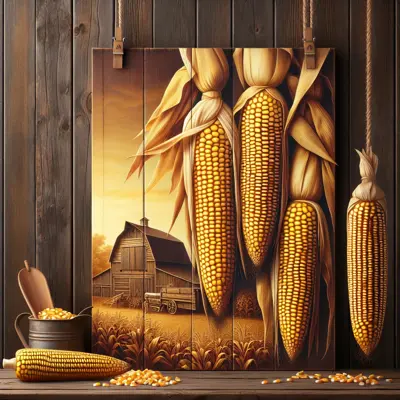
A legendary heirloom dent corn with over 150 years of American agricultural history, originally developed in Illinois in the 1840s. This variety became the foundation for modern corn breeding and remains popular among heritage gardeners for its reliability and multi-purpose uses. Perfect for those interested in preserving agricultural history while producing versatile corn for grinding, livestock feed, or ornamental use.
Harvest
110-120d
Days to harvest
Sun
Full sun
Zones
2–11
USDA hardiness
Height
5-8 feet
Planting Timeline
Showing dates for Reid's Yellow Dent in USDA Zone 7
All Zone 7 corn →Zone Map
Click a state to update dates
Reid's Yellow Dent · Zones 2–11
Growing Details
Succession Planting
Reid's Yellow Dent is a single-harvest dent corn — you plant the block once and wait 110-120 days for it to finish. There's no fresh eating window to extend, so traditional succession planting doesn't apply. Direct sow in zone 7 from April through early June, making sure your last sowing date still leaves enough days before first frost for the ears to hit black-layer. If you want to spread out the drying and shelling work, stagger two or three small blocks by 10-14 days — that's a workload choice, not a harvest-extension strategy.
Complete Growing Guide
Reid's Yellow Dent demands a full 110-120 day season, so plant only after soil reaches 60°F and all frost danger passes—early May in most northern zones is ideal for completing maturity before fall. This tall variety (5-8 feet) needs sturdy support and benefits from slightly richer soil than modern hybrids, as it was bred before intensive fertilizer inputs. Space plants 8-10 inches apart in rows 30-36 inches wide to prevent lodging in wind. Watch for corn borers and earworms, which historically plagued open-pollinated varieties; scout regularly and consider row covers early in the season. This cultivar exhibits moderate susceptibility to common rusts and leaf spots in humid conditions, so ensure good air circulation and avoid overhead watering. A practical tip: hand-select and save seeds only from the most vigorous, well-formed ears for next season—this heritage variety responds well to selection pressure and will improve in your specific microclimate within just a few generations.
Light: Full sun (6 or more hours of direct sunlight a day). Soil: Clay, High Organic Matter, Loam (Silt). Soil pH: Acid (<6.0), Neutral (6.0-8.0). Drainage: Good Drainage. Height: 5 ft. 0 in. - 8 ft. 0 in.. Spread: 1 ft. 0 in. - 2 ft. 0 in.. Spacing: 12 inches-3 feet. Growth rate: Rapid. Maintenance: Medium. Propagation: Seed. Regions: Coastal, Mountains, Piedmont.
Harvesting
Reid's Yellow Dent reaches peak harvest maturity when the kernels display their characteristic deep golden-yellow color and the cob turns from green to reddish-brown, typically occurring 110-120 days after planting. The husks should feel papery and pull back easily from the cob, while individual kernels will feel hard and resist denting with fingernail pressure. Unlike sweet corn requiring continuous picking, Reid's Yellow Dent is a single-harvest crop best gathered all at once when the majority of ears have fully matured, allowing for efficient drying and storage. For optimal results, wait until after a light frost, which signals full physiological maturity and makes hand-shelling easier once ears have dried sufficiently in the field or in well-ventilated storage.
Color: Gold/Yellow. Type: Caryopsis. Length: > 3 inches. Width: 1-3 inches.
Garden value: Edible, Showy
Harvest time: Fall
Edibility: Edibile
Storage & Preservation
After harvest, continue drying Reid's Yellow Dent until moisture content reaches 14% or lower – kernels should be so hard they barely dent under pressure. Spread unhusked ears on screens or hang in braids in a well-ventilated area for 4-6 weeks. Once fully dried, remove husks and store whole ears in breathable containers like mesh bags or wooden crates.
Properly dried corn stores for years in cool, dry conditions below 70°F with low humidity. Check periodically for signs of mold or insect activity. For grinding into meal, remove kernels by twisting ears against a hardware cloth screen. Store shelled corn in airtight containers with bay leaves to deter weevils. Whole kernels can also be prepared as hominy by soaking in lye solution, or ground fresh for cornmeal using a grain mill or high-powered blender.
History & Origin
Reid's Yellow Dent originated in Illinois during the 1840s through the work of James L. Reid, a farmer who selected and refined the variety from local corn populations. Reid's careful selection of plants with superior ear characteristics and consistent performance established the variety's reputation for reliability. The corn gained prominence in the late 19th century as agricultural shows and competitive exhibitions highlighted its uniform appearance and productive qualities. Its success at corn competitions and adoption by farmers throughout the Corn Belt made Reid's Yellow Dent foundational to subsequent corn breeding programs, influencing the development of modern hybrid corn varieties that dominated 20th-century American agriculture.
Origin: Mexico
Advantages
- +Historic heirloom variety with over 150 years of proven American agricultural heritage
- +Reliable performer that serves as foundation for modern corn breeding programs
- +Versatile multi-purpose corn suitable for grinding, livestock feed, and ornamental display
- +Easy to grow with minimal care requirements for heritage gardeners and farmers
- +Excellent for seed saving and preserving agricultural history for future generations
Considerations
- -Susceptible to gray leaf spot, southern corn rust, and Diplodia ear rot diseases
- -Vulnerable to corn rootworm and corn borer pest damage during growing season
- -Not suitable for fresh eating due to starchy, hard field corn endosperm
- -Requires bird protection during drying phase to prevent significant harvest losses
Companion Plants
Bush beans and pole beans are the most practical companions here — they fix atmospheric nitrogen, which Reid's Yellow Dent burns through fast across a block planting at 8-12 inches. Winter squash fills the ground beneath the stalks, shading out weeds and retaining soil moisture without much root competition against the corn. Tagetes patula (French marigold) and nasturtiums are worth a border row — they pull in aphid predators and trip up some pest cycles — though don't plant them expecting dramatic results. Keep fennel well away from the whole block; it's broadly allelopathic and will suppress germination and early growth of nearly everything planted near it, corn included.
Plant Together
Bush Beans
Fixes nitrogen in soil for corn's heavy nitrogen needs
Winter Squash
Ground cover reduces weeds, large leaves provide living mulch
Pole Beans
Uses corn stalks as natural support while fixing nitrogen
Nasturtiums
Trap crop for cucumber beetles and squash bugs that also attack corn
Marigolds
Deters corn earworm moths and other harmful insects
Dill
Attracts beneficial insects like parasitic wasps that control corn borers
Sunflowers
Attracts beneficial insects and can serve as windbreak for corn
Sweet Alyssum
Ground cover that attracts beneficial insects for pest control
Keep Apart
Black Walnut Trees
Produces juglone which is toxic to corn and stunts growth
Tomatoes
Both attract corn earworm, increasing pest pressure on both crops
Brassicas
Heavy nitrogen feeders that compete directly with corn for nutrients
Fennel
Allelopathic properties inhibit corn germination and growth
Nutrition Facts
Per 100g serving. % Daily Value based on 2,000 calorie diet. Source: USDA FoodData Central (FDC #168538)
Pests & Disease Resistance
Resistance
Good natural resistance developed through generations of selection
Common Pests
Corn rootworm, corn borer, birds during drying phase
Diseases
Gray leaf spot, southern corn rust, Diplodia ear rot
Troubleshooting Reid's Yellow Dent
What you'll see, why it happens, and what to do about it.
Ragged holes eaten through developing ears, with visible frass inside the husk around day 70-85 after germination
Likely Causes
- Corn earworm (Helicoverpa zea) — larvae follow the silk right down into the ear tip
- European corn borer (Ostrinia nubilalis) — tunnels into stalks and ears
What to Do
- 1.Apply Bacillus thuringiensis (Bt) directly to the silk every 3-4 days starting the day silks emerge, until they brown off
- 2.A few drops of mineral oil on each ear tip after pollination is complete can smother newly hatched earworm larvae
- 3.The UGA Pest Management Handbook outlines spray timing for corn earworm — follow that schedule rather than guessing
Rectangular tan lesions with gray centers running parallel to leaf veins, appearing first on lower leaves and moving up the plant after tasseling
Likely Causes
- Gray leaf spot (Cercospora zeae-maydis) — fungal, thrives in humid conditions with poor airflow
- Planting too densely, which traps moisture around foliage
What to Do
- 1.Space plants at least 10-12 inches apart within rows and keep rows 30-36 inches apart to open up airflow
- 2.Rotate corn out of any bed where gray leaf spot appeared — don't plant Zea mays in that spot again for at least 2 seasons
- 3.Strip and trash (don't compost) the worst-affected lower leaves to slow upward spread
Ears with rotted, discolored kernels and a bleached or straw-colored husk at drydown, often with visible white mold pushing out at the base of the ear
Likely Causes
- Diplodia ear rot (Stenocarpella maydis) — fungal, infects through the silk channel during wet weather near pollination
- Leaving ears on the stalk past black-layer formation during a wet fall
What to Do
- 1.Pull ears as soon as husks dry and kernels dent fully — Reid's Yellow Dent finishes at 110-120 days, so don't let it sit past that window if rain is in the forecast
- 2.Lay harvested ears in a single layer in a dry, ventilated shed immediately; piling them field-warm traps moisture and accelerates mold
- 3.Cut stalks to the ground and remove debris after harvest — Stenocarpella maydis overwinters in corn residue and will re-infect next season if you leave it
Frequently Asked Questions
How long does Reid's Yellow Dent corn take to grow?▼
Can you eat Reid's Yellow Dent corn fresh off the cob?▼
Is Reid's Yellow Dent good for beginner gardeners?▼
How much space does Reid's Yellow Dent corn need?▼
When should I plant Reid's Yellow Dent corn?▼
What's the difference between Reid's Yellow Dent and sweet corn?▼
Zone-by-Zone Planting Calendar
| Zone | Indoor Start | Transplant | Direct Sow | Harvest |
|---|---|---|---|---|
| Zone 1 | — | — | July – August | November – August |
| Zone 2 | — | — | June – August | November – September |
| Zone 11 | — | — | January – March | June – July |
| Zone 12 | — | — | January – March | June – July |
| Zone 13 | — | — | January – March | June – July |
| Zone 3 | — | — | June – July | October – October |
| Zone 4 | — | — | June – July | October – October |
| Zone 5 | — | — | May – June | October – October |
| Zone 6 | — | — | May – June | September – November |
| Zone 7 | — | — | April – June | September – October |
| Zone 8 | — | — | April – May | August – October |
| Zone 9 | — | — | March – April | July – September |
| Zone 10 | — | — | February – April | July – August |
Growing Guides from Wind River Greens
Sources & References
External authority sources used in compiling this guide.
See the Methodology page for how this data is sourced, what's AI-assisted, and known limitations.