Charleston Gray Watermelon
Citrullus lanatus 'Charleston Gray'
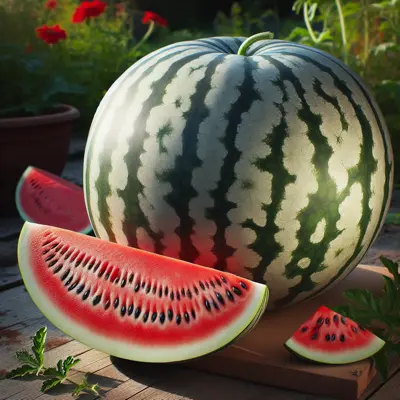
A classic heirloom watermelon that has been delighting gardeners since the 1950s with its distinctive gray-green skin and exceptional disease resistance. Charleston Gray produces large, oblong fruits with sweet, crisp red flesh that's perfect for summer gatherings and has excellent keeping quality. This vigorous variety consistently delivers reliable harvests even in challenging growing conditions.
Harvest
85-90d
Days to harvest
Sun
Full sun
Zones
4–11
USDA hardiness
Height
4-8 inches
Planting Timeline
Showing dates for Charleston Gray Watermelon in USDA Zone 7
All Zone 7 melon →Zone Map
Click a state to update dates
Charleston Gray Watermelon · Zones 4–11
Growing Details
Succession Planting
Charleston Gray is a single-harvest crop — each vine sets a handful of melons over the season and doesn't keep producing once you pick them. You can start a second round of seeds indoors 3 weeks after your first transplant date if you want a staggered harvest, but don't stretch it past early June: transplants need to hit the ground with enough runway to reach 85–90 days before fall nights drop below 55°F. In zone 7, that window closes fast.
Complete Growing Guide
Charleston Gray's 85-90 day maturity means you should direct sow seeds after your last frost when soil reaches 70°F, aiming for harvest before early fall temperatures drop. This variety excels in full sun with well-draining, sandy loam enriched with compost, requiring consistent moisture during fruit development but tolerating drier conditions better than many modern hybrids. While Charleston Gray's legendary disease resistance protects against anthracnose and fusarium wilt—common watermelon killers—watch for cucumber beetles and spider mites in hot, dry years. The vigorous vines need ample space; provide 4-6 feet between plants to ensure good air circulation and reduce fungal issues. One essential tip: mulch heavily around plants to maintain soil moisture and regulate temperature, which stabilizes sugar development in the fruit and helps achieve that crisp, classic flavor the variety is famous for.
Light: Full sun (6 or more hours of direct sunlight a day). Soil: Loam (Silt). Soil pH: Neutral (6.0-8.0). Drainage: Good Drainage, Moist. Height: 0 ft. 4 in. - 0 ft. 8 in.. Spread: 5 ft. 0 in. - 10 ft. 0 in.. Growth rate: Medium. Maintenance: Medium. Propagation: Seed. Regions: Coastal, Mountains, Piedmont.
Harvesting
Charleston Gray watermelons reach peak readiness when the skin develops a characteristic dull gray-green color with a creamy yellow spot on the bottom where the fruit rested on soil. The melon should feel heavy for its size, typically weighing 10-15 pounds at maturity, and when thumped produce a hollow, deep sound rather than a high-pitched ring. Harvest these heirloom fruits as they ripen throughout the 85-90 day season, cutting the stem with a sharp knife rather than pulling to avoid vine damage. For optimal sweetness, pick Charleston Grays in early morning when temperatures are cooler, as this helps retain the crisp texture and maximum juice content that defines this classic variety.
The plant produces melons which are large modified berries called a pepo. They are rounded to oval mottled green with darker green rind. Black, cream or mottled colored elliptic seeds. Flesh general red or pink but can also be yellowish.
Color: Green. Type: Berry. Length: > 3 inches. Width: > 3 inches.
Garden value: Edible
Harvest time: Summer
Edibility: The fruit can be eaten raw or pickled. The rind is edible after cooking.
Storage & Preservation
Charleston Gray watermelons store best at 50–60°F with moderate humidity in a cool, dark place such as a root cellar or basement; avoid refrigeration if possible, as cold temperatures can mute flavor and cause chilling injury. Whole melons keep for 2–3 weeks under these conditions, though flavor peaks within the first week of harvest. Once cut, wrap exposed flesh tightly in plastic wrap and refrigerate for up to 5 days.
For preservation, freezing works well for cubed flesh destined for smoothies or agua fresca; simply arrange pieces on a tray, freeze solid, then transfer to freezer bags for up to three months. The rind's natural pectin makes it excellent for pickling—ferment thin slices with spices and vinegar for a tangy condiment. Juice can be frozen in ice cube trays for later use. A specific advantage of Charleston Gray is its thick, sturdy rind, which holds up remarkably well to the pickling process without becoming mushy.
History & Origin
Developed at Clemson University in South Carolina during the 1950s, Charleston Gray emerged as a deliberate breeding effort to create a disease-resistant watermelon suitable for commercial cultivation in the humid Southeast. The variety was introduced by the university's agricultural extension program and quickly became a cornerstone of American watermelon production throughout the latter half of the twentieth century. Charleston Gray inherited vigor and disease tolerance from its parent stock while maintaining the sweet, crisp flesh that made watermelons commercially viable. Its success in challenging growing conditions and exceptional storage quality made it a preferred choice for farmers and home gardeners alike, securing its status as a classic heirloom variety still widely grown today.
Origin: Africa
Advantages
- +Classic heirloom variety proven reliable since the 1950s with consistent performance
- +Excellent disease resistance makes Charleston Gray dependable in challenging growing conditions
- +Large oblong fruits with sweet, crisp red flesh perfect for entertaining
- +Outstanding keeping quality ensures longer storage and enjoyment after harvest
- +Vigorous growth habit produces reliable harvests with easy-to-moderate difficulty level
Considerations
- -Susceptible to bacterial fruit blotch and gummy stem blight in humid climates
- -Multiple pest pressures including cucumber beetles, aphids, and squash bugs require management
- -Mosaic virus vulnerability demands careful sanitation and aphid control throughout season
Companion Plants
Nasturtiums and French marigolds are the two worth planting close. Nasturtiums act as a trap crop for aphids — the aphids pile onto them and leave the watermelon vines alone long enough to matter. French marigolds suppress root-knot nematodes (Meloidogyne spp.) over a full growing season through root exudates, which is a documented mechanism, not folklore. Radishes tucked at the bed edge can disrupt cucumber beetle feeding patterns. Keep fennel well away — it releases allelopathic compounds that stunt most vegetable neighbors — and black walnut produces juglone, a root toxin that kills cucurbits; don't plant within the drip line of any walnut tree.
Plant Together
Nasturtiums
Trap crop for cucumber beetles and squash bugs, repels aphids
Marigolds
Repel nematodes and cucumber beetles, attract beneficial insects
Radishes
Repel cucumber beetles and squash vine borers, improve soil structure
Beans
Fix nitrogen in soil, provide natural ground cover without competing
Corn
Provides natural windbreak and partial shade for vines
Sunflowers
Attract pollinators and beneficial insects, provide vertical structure
Catnip
Repels ants, aphids, and cucumber beetles more effectively than DEET
Oregano
Repels cucumber beetles and provides ground cover
Keep Apart
Black Walnut
Produces juglone toxin that inhibits growth and can kill melon plants
Fennel
Releases allelopathic compounds that stunt growth of nearby plants
Potatoes
Compete for nutrients and space, may harbor similar pests like cucumber beetles
Nutrition Facts
Per 100g serving. % Daily Value based on 2,000 calorie diet. Source: USDA FoodData Central (FDC #167765)
Pests & Disease Resistance
Resistance
Excellent resistance to fusarium wilt and anthracnose, good tolerance to sunscald
Common Pests
Cucumber beetles, aphids, squash bugs, flea beetles
Diseases
Bacterial fruit blotch, gummy stem blight, powdery mildew, mosaic virus
Troubleshooting Charleston Gray Watermelon
What you'll see, why it happens, and what to do about it.
Dark, water-soaked blotches on the fruit's bottom end, sometimes with mold growing on the rotted tissue
Likely Causes
- Blossom-end rot — calcium not reaching developing fruit due to uneven soil moisture
- Overfertilization with high-nitrogen fertilizer, which interferes with calcium uptake
- Soil pH outside the 6.5–6.8 range, reducing calcium availability
What to Do
- 1.Mulch heavily and water deeply and consistently — 1 to 2 inches per week — to avoid the wet-dry swings that trigger this
- 2.Back off on nitrogen fertilizer once vines are running; too much pushes foliage at the expense of fruit development
- 3.Get a soil test and lime to pH 6.5–6.8 if you're not already there; NC State Extension's FAQ on blossom-end rot points to pH as a frequent culprit
Greasy, dark green to brown streaks or blotches on the rind shortly after fruit sets, sometimes spreading rapidly across multiple fruits
Likely Causes
- Bacterial fruit blotch (Acidovorax citrulli) — seed-borne and spreads fast in warm, wet weather
- Overhead irrigation or rain splashing bacteria from infected seedlings or soil onto developing fruit
What to Do
- 1.Pull and bag any infected fruit immediately — don't compost it
- 2.Switch to drip irrigation or soaker hoses to keep water off the fruit and foliage
- 3.Source seed from a reputable supplier that tests for Acidovorax; if you save seed from Charleston Gray, don't save from any plant that showed symptoms
Yellowing, wilting, or stunted vines with no obvious above-ground pest damage; roots look stubby or have small galls
Likely Causes
- Root-knot nematodes (Meloidogyne spp.) — common in sandy, warm soils and persistent across seasons
- Replanting cucurbits in the same bed year after year, which allows nematode populations to build
What to Do
- 1.Rotate out of cucurbits — and also out of tomatoes, okra, and sweetpotatoes — for several years; the NC State Extension cucurbit IPM case study recommends a solid planting of French marigolds in the affected area for at least one full season to suppress nematode populations
- 2.Send a soil sample to your state's nematode assay lab before replanting susceptible crops in that spot
- 3.If you're stuck with no rotation options, consider a raised bed with fresh soil mix
Frequently Asked Questions
How long does Charleston Gray watermelon take to grow?▼
Can you grow Charleston Gray watermelon in containers?▼
Is Charleston Gray watermelon good for beginners?▼
What does Charleston Gray watermelon taste like?▼
When should I plant Charleston Gray watermelon seeds?▼
Charleston Gray vs Sugar Baby watermelon - what's the difference?▼
Zone-by-Zone Planting Calendar
| Zone | Indoor Start | Transplant | Direct Sow | Harvest |
|---|---|---|---|---|
| Zone 1 | June – June | July – August | July – September | October – August |
| Zone 2 | May – June | July – July | July – August | October – September |
| Zone 11 | January – January | February – February | February – March | May – June |
| Zone 12 | January – January | February – February | February – March | May – June |
| Zone 13 | January – January | February – February | February – March | May – June |
| Zone 3 | May – May | June – July | June – August | September – October |
| Zone 4 | April – May | June – June | June – July | September – October |
| Zone 5 | April – April | May – June | May – July | September – October |
| Zone 6 | April – April | May – June | May – July | August – October |
| Zone 7 | March – April | May – May | May – June | August – September |
| Zone 8 | March – March | April – May | April – June | July – September |
| Zone 9 | February – February | March – April | March – May | June – August |
| Zone 10 | January – February | March – March | March – April | June – July |
Growing Guides from Wind River Greens
Sources & References
External authority sources used in compiling this guide.
- ExtensionNC State Extension
- USDAUSDA FoodData Central
See the Methodology page for how this data is sourced, what's AI-assisted, and known limitations.