Sweet Alyssum
Lobularia maritima
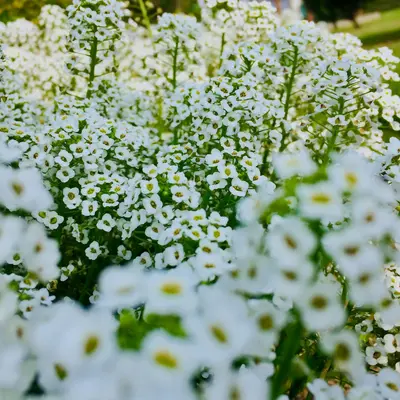
Sweet Alyssum is a delicate, low-growing annual wildflower featuring clusters of tiny, fragrant flowers in white, pink, or purple. Reaching just 3-9 inches tall, it matures in 50-60 days and spreads gracefully across borders and containers. This heirloom variety thrives in full sun to partial shade and tolerates poor, well-drained soil exceptionally well, making it ideal for challenging garden spots. While not typically eaten, Sweet Alyssum's defining characteristic is its intensely sweet, honey-like fragrance that attracts pollinators and fills gardens with subtle fragrance. Its vigorous self-seeding habit ensures prolific blooms throughout the season.
Harvest
50-60d
Days to harvest
Sun
Full sun to partial shade
Zones
5–9
USDA hardiness
Height
3-10 inches
Planting Timeline
Showing dates for Sweet Alyssum in USDA Zone 7
All Zone 7 native-wildflower →Zone Map
Click a state to update dates
Sweet Alyssum · Zones 5–9
Growing Details
Succession Planting
Direct sow every 3 weeks starting March 1 in zone 7, continuing through early May. Germination takes 5-10 days in soil around 65-70°F. Alyssum slows down and goes partly dormant once daytime highs push past 85-90°F — sowings after mid-May tend to produce leggy, sparse-blooming plants that aren't worth the bed space. Start a second round in late August through September; fall-started alyssum frequently outperforms the spring planting in zones 7-9 because the cooler nights suit Lobularia maritima's preference for mild conditions.
Complete Growing Guide
Sweet Alyssum is fast and low growing, trouble free, and low cost, making it a popular choice for use as beneficial insect habitat in vegetable and fruit production. Because of its very manageable plant habit, Sweet Alyssum is a good choice for beneficial planting in greenhouses and containers, in addition to outdoor production. Sprawling plants with dense clusters of small flowers. Commonly known as sweet alyssum, but also known simply as alyssum. Tender perennial in Zones 9-11. Attracts and provides a food source for beneficial insects such as lacewings, parasitic wasps, syrphid flies, and tachinid flies. According to Johnny's Selected Seeds, Sweet Alyssum is 50 - 60 days to maturity, tender perennial, open pollinated. Notable features: Grows Well in Containers, Edible Flowers, Fragrant, Attracts Beneficial Insects.
Light: Full sun (6 or more hours of direct sunlight a day), Partial Shade (Direct sunlight only part of the day, 2-6 hours). Soil: Clay, Loam (Silt), Sand. Soil pH: Acid (<6.0), Alkaline (>8.0), Neutral (6.0-8.0). Drainage: Good Drainage, Moist, Occasionally Dry. Height: 0 ft. 3 in. - 0 ft. 10 in.. Spread: 0 ft. 6 in. - 1 ft. 0 in.. Spacing: 12 inches-3 feet. Growth rate: Medium. Maintenance: Medium. Propagation: Seed. Regions: Coastal, Mountains, Piedmont.
Harvesting
Sweet Alyssum reaches harvest at 50 - 60 days from sowing per Johnny's Selected Seeds.
Cream-colored oval seed pods with 1 yellowish seed each. The fruits are numerous, rather hairy, oval to rounded.
Color: Cream/Tan, Gold/Yellow. Type: Capsule.
Storage & Preservation
Sweet Alyssum is grown for flowers and beneficial insect habitat rather than as a food crop, so traditional storage is minimal. Fresh edible flowers last 1-2 days refrigerated in a shallow container lined with barely damp paper towels; keep at 35-40°F and avoid moisture that causes rot.
For preservation: **Drying** is most practical—hang small bunches in a warm, dry, dark space for 2-3 weeks, then store in airtight jars away from light. Dried flowers retain fragrance and can be used in herbal tea blends or crafts for 6+ months. **Candying** flowers for decoration: brush petals lightly with egg white, coat with superfine sugar, and dry on parchment paper for 24-48 hours; store in airtight containers with parchment between layers for up to 2 months. **Freezing** isn't practical for this delicate flower. For seed saving, dry mature seed pods completely, thresh, and store seeds in a cool, dry place (32-41°F) in paper envelopes for 2-3 years.
History & Origin
Sweet Alyssum is open-pollinated, meaning seed saved from healthy plants will produce true-to-type offspring. Listed in the Johnny's Selected Seeds catalog.
Origin: Southern Europe, west and central Mediterranean.
Advantages
- +Fast-growing and low-maintenance, perfect for budget-conscious growers
- +Attracts beneficial insects like lacewings and parasitic wasps effectively
- +Compact sprawling habit suits containers, greenhouses, and outdoor production
- +Dense flower clusters provide abundant nectar for beneficial insect populations
- +Very easy to grow with minimal skill or experience required
Considerations
- -Susceptible to aphids, flea beetles, and caterpillar infestations regularly
- -Vulnerable to downy mildew, clubroot, and white rust diseases
- -Not commonly eaten; primarily ornamental with limited culinary applications
Companion Plants
Sweet alyssum works best near tomatoes, brassicas like cabbage and broccoli, and carrots because its tiny clustered flowers — open at just 3-10 inches tall — are sized exactly right for hoverflies (Syrphidae) and parasitic wasps, both of which prey on or parasitize the aphids and caterpillars that hammer those crops. Marigolds and nasturtiums fit the same logic without competing for root space at alyssum's shallow depth. Black walnut is the one to avoid: juglone, the allelopathic compound it releases through roots and decomposing hulls, suppresses small-statured annuals like alyssum even at distances up to 50 feet. Dense-canopied trees cause a simpler problem — alyssum needs at least 4 hours of direct sun to bloom reliably, and a shaded plant that isn't flowering isn't attracting anything useful.
Plant Together
Tomatoes
Sweet alyssum attracts beneficial insects that control tomato pests like aphids and whiteflies
Cabbage
Acts as a living mulch and attracts parasitic wasps that control cabbage worms
Broccoli
Attracts hoverflies and lacewings that feed on aphids commonly found on brassicas
Carrots
Provides ground cover while attracting beneficial insects that help control carrot fly
Lettuce
Creates beneficial microclimate and attracts predatory insects for aphid control
Nasturtiums
Both attract beneficial pollinators and create complementary pest control strategies
Marigolds
Work together to create a diverse beneficial insect habitat while repelling various garden pests
Roses
Attracts beneficial insects that help control aphids and thrips on rose bushes
Keep Apart
Black Walnut
Produces juglone which is toxic to many plants and inhibits alyssum growth
Eucalyptus
Releases allelopathic compounds that suppress growth of nearby smaller plants
Dense Shade Trees
Sweet alyssum requires full sun and will become leggy and fail to flower in heavy shade
Pests & Disease Resistance
Resistance
Good disease resistance, may get downy mildew in humid conditions
Common Pests
Aphids, flea beetles, caterpillars
Diseases
Downy mildew, clubroot, white rust
Troubleshooting Sweet Alyssum
What you'll see, why it happens, and what to do about it.
White powdery or mealy coating on leaves and stems, often starting on older growth
Likely Causes
- White rust (Albugo candida) — an oomycete pathogen common in cool, humid conditions
- Poor airflow from overcrowded planting at less than 6-inch spacing
What to Do
- 1.Remove and trash (don't compost) affected leaves as soon as you spot them
- 2.Thin plants to at least 6-8 inches apart to get air moving through the canopy
- 3.Avoid overhead watering — water at the base in the morning so foliage dries fast
Grayish-purple fuzzy growth on the undersides of leaves, with yellowing on top — sometimes plants collapse fast
Likely Causes
- Downy mildew (Peronospora parasitica) — thrives when nights are cool (50–65°F) and humidity is high
- Dense plantings that trap moisture overnight
What to Do
- 1.Pull infected plants entirely if more than 30% of foliage is affected — this one spreads quickly
- 2.Space remaining plants out and mulch the soil surface to cut down on splash-up
- 3.Next season, keep Lobularia out of beds that recently held cabbage, broccoli, or other brassicas, which share this pathogen
Tiny round holes scattered across leaves, giving foliage a shot-hole look — seedlings hit hardest
Likely Causes
- Flea beetles (Phyllotreta species) — they jump when disturbed and are worse in hot, dry spells
- Transplanting or direct-sowing into a bed that previously held brassicas
What to Do
- 1.Cover young transplants with floating row cover (Agribon AG-19 or similar) for the first 2-3 weeks after planting
- 2.Keep the bed consistently moist — flea beetles prefer dry soil conditions
- 3.Once plants hit 4-5 inches tall and are putting on vigorous new growth, feeding pressure usually drops off on its own
Stunted, distorted growth on shoot tips; sticky residue on leaves; ants trailing up the stems
Likely Causes
- Aphid colonies (commonly green peach aphid, Myzus persicae) clustering on new growth
- Nearby ant colonies farming aphids for honeydew, which shields aphids from natural predators
What to Do
- 1.Knock aphids off with a firm spray of water — do this 3 days in a row to break the cycle
- 2.For heavy infestations, apply insecticidal soap (2 tsp per quart of water) directly to colonies, hitting the undersides of leaves
- 3.Avoid broad-spectrum sprays — alyssum draws parasitic wasps and ladybeetles that will do the cleanup work if you don't kill them first
Frequently Asked Questions
How long does sweet alyssum take to grow from seed to flowering?▼
Can you grow sweet alyssum in containers and pots?▼
Is sweet alyssum good for beginners?▼
What insects does sweet alyssum attract?▼
When should I plant sweet alyssum in my garden?▼
Can sweet alyssum flowers be eaten?▼
Zone-by-Zone Planting Calendar
Growing Guides from Wind River Greens
Sources & References
External authority sources used in compiling this guide.
- ExtensionNC State Extension
- BreederJohnny's Selected Seeds
See the Methodology page for how this data is sourced, what's AI-assisted, and known limitations.