Stowell's Evergreen
Zea mays var. saccharata 'Stowell's Evergreen'
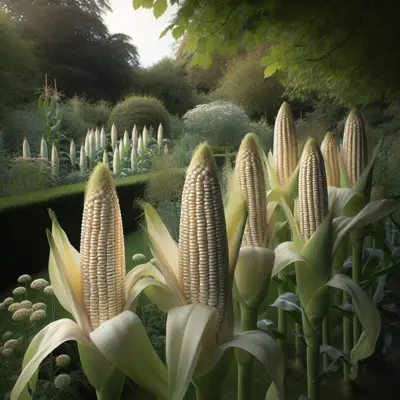
Dating back to 1848, Stowell's Evergreen earned its name for staying tender and sweet longer than other varieties, remaining in perfect eating condition for weeks. This tall, vigorous heirloom produces large ears with deep white kernels and is considered one of the finest varieties for canning and preserving. Its reliable performance and extended harvest window make it invaluable for serious corn growers.
Harvest
95-100d
Days to harvest
Sun
Full sun
Zones
2–11
USDA hardiness
Height
5-8 feet
Planting Timeline
Showing dates for Stowell's Evergreen in USDA Zone 7
All Zone 7 corn →Zone Map
Click a state to update dates
Stowell's Evergreen · Zones 2–11
Growing Details
Succession Planting
Direct sow Stowell's Evergreen from late April through early June — but this is a 95–100 day variety, which compresses your window considerably. A first sowing around April 15, once soil hits 60°F, will be silking in late July. A second sowing 3 weeks later will silk in mid-August. That's about all you can fit before fall frost becomes a factor. The UGA Vegetable Garden Calendar recommends successive corn plantings into May, which is sound — just don't push past a June 1 sow date with this variety or the ears will still be filling when temperatures drop.
If you're running two blocks in the same garden, keep the sowing interval to no more than 3 weeks. Corn is wind-pollinated, and blocks that are too far apart in timing won't be shedding pollen when the neighboring silks are receptive — the result is gappy, poorly filled ears. Each block should be at least 4 rows wide; a single long row pollinates poorly no matter how well you time it.
Complete Growing Guide
This vigorous heirloom demands consistent moisture and warmth to fully express its extended harvest potential—plant only after soil temperatures reach 60°F, as seeds will rot in cool, wet conditions. Stowell's Evergreen's height of 5–8 feet requires sturdy support or windbreak placement, especially in exposed gardens where tall stalks risk lodging. The variety's greatest strength, its prolonged tenderness window, paradoxically creates a timing challenge: successive plantings every two weeks ensure continuous harvest rather than overwhelming gluts. Watch for corn earworm and fall armyworm, which are attracted to the large, accessible ears; row covers during silking offer organic protection. Unlike dwarf hybrids, this heirloom needs deeper spacing (10–12 inches between plants) to prevent competition that triggers premature stalk elongation. To maximize your investment, stagger sowings in 14-day intervals so you're not processing dozens of ears simultaneously—the "evergreen" name rewards patient harvesting rather than all-at-once picking.
Light: Full sun (6 or more hours of direct sunlight a day). Soil: Clay, High Organic Matter, Loam (Silt). Soil pH: Acid (<6.0), Neutral (6.0-8.0). Drainage: Good Drainage. Height: 5 ft. 0 in. - 8 ft. 0 in.. Spread: 1 ft. 0 in. - 2 ft. 0 in.. Spacing: 12 inches-3 feet. Growth rate: Rapid. Maintenance: Medium. Propagation: Seed. Regions: Coastal, Mountains, Piedmont.
Harvesting
Harvest Stowell's Evergreen when silks turn dark brown and kernels reach full plumpness, with a slight milky fluid released when punctured—this variety's signature extended maturity window means ears remain harvestable over several weeks rather than all at once. Pick continuously every two to three days once the first ears peak, as this heirloom's defining trait is prolonged tenderness that rewards staggered harvesting. A crucial timing tip: begin checking ears around day 90 but don't rush; Stowell's Evergreen actually improves in sweetness if left on the stalk a few extra days compared to modern hybrids, making patience one of the greatest advantages of growing this variety.
Color: Gold/Yellow. Type: Caryopsis. Length: > 3 inches. Width: 1-3 inches.
Garden value: Edible, Showy
Harvest time: Fall
Edibility: Edibile
Storage & Preservation
Fresh Stowell's Evergreen corn stores remarkably well compared to other varieties, maintaining sweetness for up to a week when kept in the refrigerator with husks on. For immediate use, store unhusked ears in the crisper drawer at 32-35°F with high humidity.
This variety excels at preservation – its original claim to fame in the 1800s. For freezing, blanch whole kernels for 4 minutes or cut kernels from cobs and blanch for 3 minutes before packaging. The deep, plump kernels are ideal for cream-style corn preparation.
Stowell's Evergreen is exceptional for canning due to its firm texture that holds up during processing. Can using pressure canning methods only – water bath canning is unsafe for corn. The variety's natural tendency to maintain kernel integrity makes it perfect for whole kernel canning, corn relish, and succotash recipes that were popular during its heyday.
History & Origin
Stowell's Evergreen emerged in 1848, though documentation of its specific breeder remains sparse in historical records. The variety likely arose from the broader tradition of American sweet corn improvement in the nineteenth century, building on earlier cultivars that farmers and seed companies were actively selecting and refining. Its name reflects the practical observation that it maintained tenderness and palatability longer than competing varieties of its era—a trait that proved commercially valuable for both market gardeners and canners. While detailed breeding lineage is not well documented, Stowell's Evergreen became widely distributed through seed catalogs and established itself as a standard variety, suggesting it represented a significant improvement over existing sweet corn genetics available before the Civil War.
Origin: Mexico
Advantages
- +Extended harvest window keeps ears tender and sweet for weeks
- +Large, deep white kernels ideal for canning and preserving
- +Reliable heirloom performer with vigorous, tall growth habit
- +Excellent flavor quality that holds longer than most varieties
Considerations
- -Susceptible to multiple serious pests including corn earworm and borers
- -Vulnerable to four major diseases including bacterial wilt and leaf blights
- -Requires 95-100 days, limiting options in shorter growing seasons
- -Moderate difficulty level demands more attention than beginner varieties
Companion Plants
The Three Sisters combination — corn, beans, and squash — holds up for structural reasons. Pole beans or bush beans fix atmospheric nitrogen and feed it into the soil over the growing season, which matters for a crop as heavy-feeding as corn. Squash spreads low and shades out weeds that would otherwise compete for the consistent moisture Stowell's Evergreen needs across its long 95–100 day run. Sequence matters: get the corn in first, let it reach about 6 inches, add beans, then squash another week or two after that — squash planted too early will shade out corn seedlings before they can get ahead of it.
Sunflowers on the north side of the corn block pull aphid pressure away from the ears and draw predatory insects without casting shade onto the corn rows. Marigolds and nasturtiums at the planting perimeter are worth including for the same reason — they attract parasitic wasps and hoverflies that go after corn earworm eggs and early-instar larvae. Dill and borage do similar work; borage in particular draws predatory insects reliably without competing hard for root space at corn's depth.
Black walnut is the companion to avoid most firmly. Walnut roots release juglone, a compound that suppresses growth in many vegetables, and corn is sensitive enough that proximity isn't worth testing. Fennel is allelopathic to most garden vegetables and should be kept in its own container or a far corner — it doesn't play well in a mixed patch regardless of what else is growing. Tomatoes are a subtler problem: there's no chemical conflict, but both tomatoes and corn host Helicoverpa zea (the same insect goes by "corn earworm" on corn and "tomato fruitworm" on tomatoes), so putting them side by side concentrates that pest pressure in one section of the garden rather than spreading it out.
Plant Together
Bush Beans
Fix nitrogen in soil that corn utilizes, while corn provides natural trellis support
Winter Squash
Ground cover reduces weeds and retains soil moisture, part of traditional Three Sisters planting
Pole Beans
Climb corn stalks for support while adding nitrogen to soil through root nodules
Marigolds
Repel corn earworms, aphids, and nematodes with natural pest-deterrent compounds
Nasturtiums
Act as trap crop for aphids and cucumber beetles while repelling squash bugs
Sunflowers
Attract beneficial insects and pollinators, can serve as windbreak when planted strategically
Dill
Attracts beneficial insects like parasitic wasps that control corn borers and aphids
Borage
Repels hornworms and cabbage worms while attracting pollinators and beneficial insects
Keep Apart
Black Walnut
Releases juglone toxin that severely stunts corn growth and can kill plants
Fennel
Allelopathic properties inhibit corn germination and growth through chemical compounds
Tomatoes
Both are heavy nitrogen feeders creating competition, and attract similar pest insects like hornworms
Nutrition Facts
Per 100g serving. % Daily Value based on 2,000 calorie diet. Source: USDA FoodData Central (FDC #168538)
Pests & Disease Resistance
Resistance
Moderate resistance to common smut, susceptible to bacterial diseases
Common Pests
Corn earworm, European corn borer, corn rootworm, fall armyworm
Diseases
Bacterial wilt, northern corn leaf blight, gray leaf spot, rust
Troubleshooting Stowell's Evergreen
What you'll see, why it happens, and what to do about it.
Silks browning and kernels missing or partially filled at harvest — worm frass visible inside the husk
Likely Causes
- Corn earworm (Helicoverpa zea) — moths lay eggs directly on fresh silks, larvae feed down into the ear
- Fall armyworm (Spodoptera frugiperda) — similar damage, often more aggressive later in the season
What to Do
- 1.Apply a few drops of mineral oil to the silks right after they emerge and before they brown — this suffocates young larvae before they burrow in
- 2.Time your plantings so silks emerge before the heavy earworm flight in late July and August; Stowell's Evergreen at 95–100 days is already a late crop, so watch the calendar carefully
- 3.Check ears at harvest and cut off the tip — the rest of the ear is almost always clean and perfectly edible
Long tan or brown lesions running parallel to leaf veins, starting on lower leaves and moving up the plant
Likely Causes
- Northern corn leaf blight (Exserohilum turcicum) — a fungal disease that spreads via spores in wet, humid conditions
- Gray leaf spot (Cercospora zeae-maydis) — produces similar rectangular lesions, especially in warm, humid summers with heavy dew
What to Do
- 1.Space rows 30–36 inches apart — plants at 10–12 inches within the row is fine for pollination, but tight row spacing kills airflow and keeps foliage wet longer
- 2.Pull and trash corn stalks in fall rather than turning them under; both Exserohilum turcicum and Cercospora zeae-maydis overwinter in crop debris and reinfect the next season
- 3.Stowell's Evergreen carries no built-in blight resistance — if these diseases have hit the same bed two years running, rotate out of corn for at least 2 seasons before coming back
Seedlings wilting and collapsing at soil level within the first 2 weeks after germination, or seeds rotting before they emerge
Likely Causes
- Seed rot from cold, wet soil — corn seed planted below 60°F sits and decays rather than germinating
- Corn rootworm (Diabrotica species) larvae chewing on young roots — populations build fast where corn returns to the same ground year after year
What to Do
- 1.Don't direct sow until soil temperature reaches at least 60°F — ideally 65°F; Stowell's Evergreen's 7–14 day germination window stretches badly in cold soil and open seed is just rot waiting to happen
- 2.Rotate corn to a fresh bed every year; NC State Extension lists corn rootworm as a primary corn pest and continuous-corn situations are exactly where pressure spikes
- 3.If a stand fails, let the bed dry out and warm for a week before resowing — throwing more seed at wet ground just repeats the problem
Frequently Asked Questions
How long does Stowell's Evergreen corn take to grow?▼
Can you grow Stowell's Evergreen corn in containers?▼
What does Stowell's Evergreen corn taste like?▼
When should I plant Stowell's Evergreen corn?▼
Is Stowell's Evergreen corn good for beginners?▼
Stowell's Evergreen vs Golden Bantam corn - what's the difference?▼
Zone-by-Zone Planting Calendar
| Zone | Indoor Start | Transplant | Direct Sow | Harvest |
|---|---|---|---|---|
| Zone 3 | — | — | June – July | October – October |
| Zone 4 | — | — | June – July | October – October |
| Zone 5 | — | — | May – June | September – October |
| Zone 6 | — | — | May – June | September – October |
| Zone 7 | — | — | April – June | August – October |
| Zone 8 | — | — | April – May | August – September |
| Zone 9 | — | — | March – April | July – August |
| Zone 10 | — | — | February – April | June – August |
| Zone 1 | — | — | July – August | November – August |
| Zone 2 | — | — | June – August | October – September |
| Zone 11 | — | — | January – March | May – July |
| Zone 12 | — | — | January – March | May – July |
| Zone 13 | — | — | January – March | May – July |
Growing Guides from Wind River Greens
Sources & References
External authority sources used in compiling this guide.
See the Methodology page for how this data is sourced, what's AI-assisted, and known limitations.