Alaska Mix
Tropaeolum minus
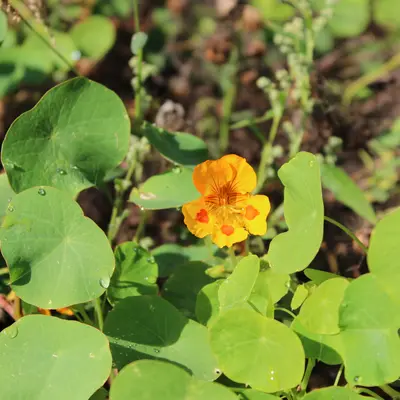
Improved strain of brilliant 2" single flowers in yellow, crimson, orange, salmon and cherry. Compact, mound-shaped plants. Also known as garden nasturtium and Indian cress. Edible Flower: Use the flowers as garnishes, or stuff with soft cheese. The flowers can be minced and added to butters and the immature seed heads can be pickled. Nasturtiums are a popular choice for adding color to salad mix. Peppery-flavored foliage is also edible.
Harvest
55-65d
Days to harvest
Sun
Full sun
Zones
2–11
USDA hardiness
Height
1-10 feet
Planting Timeline
Showing dates for Alaska Mix in USDA Zone 7
All Zone 7 flower →Zone Map
Click a state to update dates
Alaska Mix · Zones 2–11
Growing Details
Succession Planting
Direct sow Alaska Mix every 3 to 4 weeks starting in April (zone 7) through early June. Each sowing gives you a fresh flush of flowers for roughly 4 to 6 weeks before heat and aphid pressure start to degrade the planting. Stop sowing once daytime highs are consistently above 85°F — germination drops off and seedlings struggle to establish in that kind of heat. A late-August sowing can bring fall color right up until frost, so it's worth keeping a packet in reserve.
Soak the wrinkled seeds overnight before direct sowing — they germinate in 7 to 10 days with that treatment, sometimes a day or two faster. Alaska Mix doesn't transplant especially well once the taproot gets going, so direct sow is almost always the better call.
Complete Growing Guide
Light: Full sun (6 or more hours of direct sunlight a day). Soil: Clay, Loam (Silt). Soil pH: Acid (<6.0), Neutral (6.0-8.0). Drainage: Good Drainage, Moist, Occasionally Dry. Height: 1 ft. 0 in. - 10 ft. 0 in.. Spread: 1 ft. 0 in. - 3 ft. 0 in.. Spacing: Less than 12 inches, 12 inches-3 feet. Growth rate: Rapid. Maintenance: Low. Propagation: Seed, Stem Cutting. Regions: Coastal, Mountains, Piedmont.
Harvesting
Edibility: The leaves, flowers and buds, pods, and seeds are edible.
Storage & Preservation
Fresh nasturtium flowers are best stored in a shallow container lined with damp paper towels in the refrigerator, kept at 35-40°F with moderate humidity, lasting 3-5 days. For longer preservation, dry flowers by hanging upside-down in a cool, dark, well-ventilated space for 1-2 weeks, then store in airtight containers away from light. Edible flowers can be frozen in ice cubes with water or simple syrup for up to 3 months. Immature seed pods are traditionally pickled in vinegar brine (similar to capers) and can be stored in sealed jars at room temperature for several months.
History & Origin
Origin: Southern America and Mexico Southeast
Advantages
- +Attracts: Butterflies, Pollinators
- +Edible: The leaves, flowers and buds, pods, and seeds are edible.
- +Fast-growing
- +Low maintenance
Companion Plants
Nasturtiums pull their weight next to vegetables mostly by being sacrificial. Aphids find them irresistible, so planting Alaska Mix near tomatoes, cucumbers, or beans draws pest pressure away from your crop plants — a classic trap-crop move. It works best when you're willing to let the nasturtiums take the hit and don't spray them the moment you see Myzus persicae building up. The goal is to concentrate the problem somewhere you don't mind losing, not to run a clean garden on all fronts. Cucumber beetles (Diabrotica undecimpunctata) are similarly attracted, which makes this variety useful as a perimeter planting around cucumbers and squash.
The open-faced bloom also gives predatory insects somewhere to feed and loiter. Hoverflies (Syrphidae), lacewings, and ladybugs — all of which prey on aphids or lay eggs near colonies — will visit nasturtium flowers and then work their way into adjacent beds. Put Alaska Mix near broccoli or carrots and you're giving those beneficials a reason to patrol where you actually need them. Radishes and lettuce make easy neighbors: neither competes for the same vertical space, and both can use the afternoon shade a sprawling nasturtium throws once temperatures climb past 80°F.
Keep sunflowers, fennel, and black walnut well clear. Sunflowers release allelopathic compounds from their roots and decomposing seed hulls that stunt nearby plants — NC State Extension lists this as a documented concern for mixed plantings. Fennel is similarly antisocial; it suppresses germination and growth in most garden companions, and nasturtiums are no exception. Black walnut produces juglone, a compound that damages root function across a wide range of species, and the toxic zone can extend well beyond the canopy drip line.
Plant Together
Marigolds
Repel aphids, nematodes, and other pests that can damage nasturtiums
Lettuce
Nasturtiums provide shade and protection while lettuce utilizes space efficiently
Radishes
Nasturtiums attract beneficial insects that help pollinate radish flowers
Tomatoes
Nasturtiums repel hornworms, aphids, and whiteflies that commonly attack tomatoes
Cucumbers
Nasturtiums deter cucumber beetles and squash bugs while attracting pollinators
Broccoli
Nasturtiums trap crop pests like aphids and flea beetles away from brassicas
Beans
Nasturtiums repel bean beetles and provide ground cover without competing for nutrients
Carrots
Nasturtiums improve soil structure and repel carrot flies and other root pests
Keep Apart
Sunflowers
Compete for nutrients and space, can overshadow and stunt nasturtium growth
Black Walnut Trees
Release juglone toxin that inhibits nasturtium growth and development
Fennel
Allelopathic compounds inhibit germination and growth of nasturtiums
Pests & Disease Resistance
Common Pests
Aphids, whiteflies, cucumber beetles
Diseases
Powdery mildew, leaf spot
Troubleshooting Alaska Mix
What you'll see, why it happens, and what to do about it.
Soft, distorted growing tips with clusters of small green or black insects, sometimes with sticky residue on leaves
Likely Causes
- Aphid infestation (Myzus persicae or Aphis fabae) — nasturtiums are a known aphid magnet, which is sometimes intentional but can get out of hand fast
- Ants farming aphids and protecting them from predators
What to Do
- 1.Blast the aphids off with a strong stream of water — do this in the morning so the plant dries before nightfall
- 2.If the population is heavy, spray with insecticidal soap, hitting the undersides of leaves where they cluster
- 3.Check for ant trails; if ants are present, use a sticky barrier around the base of any support structure
White powdery coating on upper leaf surfaces, usually appearing in mid to late summer
Likely Causes
- Powdery mildew (Erysiphe sp.) — common when nights cool down but days stay warm, especially in humid conditions
- Crowded planting with poor airflow between plants
What to Do
- 1.Remove and bin (don't compost) the worst-affected leaves immediately
- 2.Space plants at least 12 inches apart at planting to keep air moving
- 3.Apply a diluted baking soda spray (1 tablespoon baking soda per gallon of water) as a low-cost preventive on remaining healthy foliage
Irregular tan or brown spots on leaves, sometimes with a water-soaked margin, appearing after wet weather
Likely Causes
- Leaf spot (Pseudomonas or Cercospora sp.) — splash-transmitted, moves fast in rainy stretches
- Overhead watering that keeps foliage wet for extended periods
What to Do
- 1.Strip affected leaves and dispose of them in the trash
- 2.Switch to drip irrigation or water at the base of the plant rather than overhead
- 3.Avoid working around plants when they're wet — you'll spread spores from plant to plant
Ragged holes chewed through leaves and flowers, often with a slime trail nearby or visible beetles on the plant
Likely Causes
- Cucumber beetles (Diabrotica undecimpunctata) — drawn to nasturtiums and will chew flowers and foliage
- Slugs — especially in shaded spots or after heavy rain
What to Do
- 1.Hand-pick cucumber beetles in early morning when they're sluggish; drop them in soapy water
- 2.For slugs, scatter iron phosphate bait (Sluggo) around the base of plants — it's safe around edibles and pets
- 3.If nasturtiums are being used as a trap crop near vegetables, this damage is expected — let it happen and protect the main crop instead
Frequently Asked Questions
How long do Alaska Mix nasturtium flowers last once picked?▼
Is Alaska Mix nasturtium good for beginners?▼
Can you grow Alaska Mix nasturtiums in containers?▼
What does Alaska Mix nasturtium taste like?▼
When should I plant Alaska Mix nasturtium seeds?▼
How often should I water Alaska Mix nasturtiums?▼
Zone-by-Zone Planting Calendar
| Zone | Indoor Start | Transplant | Direct Sow | Harvest |
|---|---|---|---|---|
| Zone 3 | April – May | June – July | June – August | — |
| Zone 4 | March – April | June – June | June – July | — |
| Zone 5 | March – April | May – June | May – July | — |
| Zone 6 | March – April | May – June | May – July | — |
| Zone 7 | February – March | April – May | April – June | — |
| Zone 8 | February – March | April – May | April – June | — |
| Zone 9 | January – February | March – April | March – May | — |
| Zone 10 | January – January | February – March | February – April | — |
| Zone 1 | May – June | July – August | July – September | — |
| Zone 2 | April – May | June – July | June – August | — |
| Zone 11 | January – January | January – February | January – March | — |
| Zone 12 | January – January | January – February | January – March | — |
| Zone 13 | January – January | January – February | January – March | — |
Growing Guides from Wind River Greens
Sources & References
External authority sources used in compiling this guide.
- BreederJohnny's Selected Seeds
See the Methodology page for how this data is sourced, what's AI-assisted, and known limitations.