Green Drops
Panicum violaceum
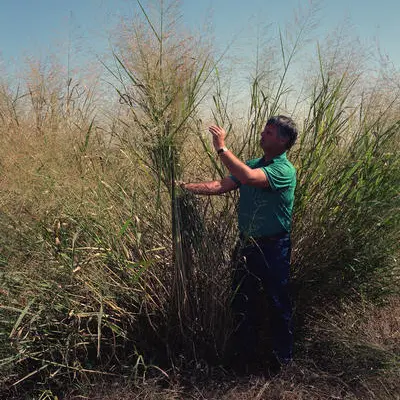
Stems can be harvested early when bead-like tassels are sparkling bright green. Or for a more autumnal look, harvest a bit later when seed heads have developed hues of purple and gold, and a deeper, graceful arch. Uniform plants can be used fresh or dried. Plumes are approx. 4-7" long, depending on stage of harvest. Similar in appearance to broom corn, but the plants are faster growing, and the plant height and habit are much more manageable.
Harvest
65-75d
Days to harvest
Sun
Full sun
Zones
1–11
USDA hardiness
Height
4-7 feet
Planting Timeline
Showing dates for Green Drops in USDA Zone 7
All Zone 7 grass →Zone Map
Click a state to update dates
Green Drops · Zones 1–11
Growing Details
Succession Planting
Direct sow every 3 weeks from when soil hits 65°F through early summer, stopping about 75 days before your first expected frost — that gives the last planting enough time to reach harvest. In zone 7, that window runs roughly March through late May for direct sow, with transplants carrying you into June. Don't push a late sowing trying to squeeze one more round; Green Drops needs warm nights to fill out its seed heads, and a plant caught by early cool weather at day 50 won't recover.
Complete Growing Guide
Growing Green Drops (Panicum violaceum) grass. Light: Full sun. Hardy in USDA zones 1 to 11. Days to maturity: 65. Difficulty: Moderate.
Harvesting
Green Drops reaches harvest at 65 - 75 days from sowing per Johnny's Selected Seeds. Expect 4-7" at peak. As an annual, harvest continues until frost ends the season.
This is an ornamental variety — not grown for harvest. Enjoy in the garden landscape.
Storage & Preservation
Fresh stems should be stored in a cool location away from direct sunlight to maintain color vibrancy. Keep at room temperature (60-70°F) with moderate humidity for short-term display (2-3 weeks). For longer storage, refrigerate at 35-40°F in a vase with water, extending life to 4-6 weeks. For preservation, air-dry bundles hung upside down in a dark, well-ventilated space (2-3 weeks) to lock in colors. Alternatively, use glycerin preservation by soaking stems in a 1:3 glycerin-to-water solution for 2-3 weeks for a softer texture and extended lifespan of several months. Silica gel drying is also effective for maintaining seed head structure and color intensity.
History & Origin
Panicum (panicgrass) is a large genus of about 250 species of grasses mostly native to tropical regions.
Advantages
- +Dual-harvest option with bright green or purple-gold color variations
- +Faster growing than similar broom corn with more manageable plant height
- +Plumes reach usable 4-7 inches across wide harvest window
- +Works fresh or dried for floral arrangements and crafts
- +Uniform plants provide consistent, professional appearance for design use
Considerations
- -Moderate difficulty requires more skill than beginner-friendly ornamental grasses
- -Harvest timing is critical to achieve desired color and plume development
- -Purple-gold coloration may fade during drying process if not handled properly
- -Requires 65-75 days to maturity, limiting short-season growing regions
Companion Plants
Clover, yarrow, and thyme are your best neighbors here — clover fixes nitrogen at the root zone, which feeds a heavy grass like Green Drops without you reaching for a fertilizer bag, while yarrow and thyme pull in parasitic wasps and predatory beetles that keep soft-bodied pest populations from building. Chamomile and wild strawberry fill the low ground without competing for the same soil depth Green Drops roots into (roughly 12–18 inches down). Black walnut is the companion to avoid hardest: juglone, the allelopathic compound walnut roots release, is potent enough to stunt most warm-season annuals, and crabgrass will simply out-pace it for water and light from the first week of growth.
Plant Together
Clover
Fixes nitrogen in soil, improving grass nutrition and reducing fertilizer needs
Yarrow
Deep roots improve soil aeration and bring nutrients to surface for grass
Dandelion
Deep taproot breaks up compacted soil and brings minerals to grass root zone
Plantain
Tolerates foot traffic well and helps fill bare spots in lawn naturally
Chamomile
Improves soil health and may help grass resist disease through root interactions
Wild Strawberry
Low-growing groundcover that complements grass without competing aggressively
Thyme
Forms dense mat that reduces weeds and tolerates light foot traffic
Violet
Adds nitrogen to soil and provides early season ground cover
Keep Apart
Black Walnut
Releases juglone toxin that inhibits grass growth and causes yellowing
Crabgrass
Aggressive annual weed that outcompetes desirable grass for nutrients and space
Moss
Indicates poor drainage and soil conditions, crowds out grass in shaded areas
Troubleshooting Green Drops
What you'll see, why it happens, and what to do about it.
Seedlings emerge thin and pale, then flop over at the soil line within the first 2 weeks
Likely Causes
- Damping-off (Pythium or Rhizoctonia spp.) — triggered by overwatering or poor drainage in cool, wet soil
- Sowing too early when soil temps are still below 60°F
What to Do
- 1.Wait until soil is consistently 65°F or warmer before direct sowing — use a cheap probe thermometer, not the calendar
- 2.Improve drainage by raking a shallow raised bed; don't water again until the top inch is dry
- 3.Thin to 18–24 inches promptly; crowded seedlings are the first to collapse
Leaves developing irregular yellowish streaks running parallel to the veins, mid-season
Likely Causes
- Panicum mosaic virus — transmitted by aphids feeding on stressed plants
- Nitrogen deficiency in sandy or depleted soils, which mimics viral streaking
What to Do
- 1.Check the undersides of lower leaves for aphid colonies and knock them off with a firm water spray
- 2.Side-dress with a balanced granular fertilizer (10-10-10) at about 1 cup per 10 feet of row to rule out nitrogen as the cause
- 3.If streaking persists on well-fed plants and aphids are present, pull and bag the worst-affected stems — there's no cure for the virus itself
Plants reach only 2–3 feet tall by day 60 and produce sparse, underfilled seed heads
Likely Causes
- Insufficient sunlight — Green Drops needs at least 8 hours of direct sun daily
- Spacing tighter than 18 inches, which causes root competition and shuts down tillering
What to Do
- 1.Move next season's planting to a spot with unobstructed full sun from mid-morning through late afternoon
- 2.Thin to a minimum of 18 inches between plants as soon as they hit 6 inches tall — waiting until day 40 won't get you the same result
- 3.A single side-dressing of compost at 30 days can help if soil is depleted, but lost sun hours are the harder problem to fix mid-season
Frequently Asked Questions
When should I plant Green Drops grass seeds?▼
How long does it take to grow Green Drops from seed to harvest?▼
Can you grow Green Drops grass in containers?▼
Is Green Drops grass good for beginners?▼
What is the difference between Green Drops and broom corn?▼
How much spacing do Green Drops plants need?▼
Zone-by-Zone Planting Calendar
| Zone | Indoor Start | Transplant | Direct Sow | Harvest |
|---|---|---|---|---|
| Zone 3 | — | June – August | May – July | — |
| Zone 4 | — | June – July | April – June | — |
| Zone 5 | — | May – July | April – June | — |
| Zone 6 | — | May – July | April – June | — |
| Zone 7 | — | May – June | March – May | — |
| Zone 8 | — | April – June | March – May | — |
| Zone 9 | — | March – May | February – April | — |
| Zone 10 | — | March – April | January – March | — |
| Zone 1 | — | July – September | June – August | — |
| Zone 2 | — | July – August | May – July | — |
| Zone 11 | — | February – March | January – February | — |
Growing Guides from Wind River Greens
Sources & References
External authority sources used in compiling this guide.
- BreederJohnny's Selected Seeds
See the Methodology page for how this data is sourced, what's AI-assisted, and known limitations.