California Poppy
Eschscholzia californica
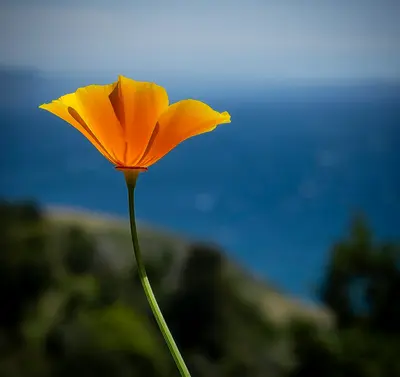
California Poppy is a vibrant native wildflower with silky, cup-shaped petals in golden-orange hues that close at night and on cloudy days. This easy-to-grow heirloom matures in 55-60 days and thrives in poor, sandy soils with minimal care—ideal for xeriscaping and cottage gardens. The delicate petals are edible with a mild, lettuce-like flavor, adding color and subtle taste to salads. Its self-seeding nature and drought tolerance distinguish it from ornamental annuals, making it a low-maintenance native choice for sunny landscapes with good drainage.
Harvest
55-60d
Days to harvest
Sun
Full sun
Zones
6–10
USDA hardiness
Height
12-24 inches
Planting Timeline
Showing dates for California Poppy in USDA Zone 7
All Zone 7 native-wildflower →Zone Map
Click a state to update dates
California Poppy · Zones 6–10
Growing Details
Succession Planting
Direct sow every 3 weeks from early March through late April in zone 7. Don't push earlier than late February — seeds germinate best when soil temps sit between 55°F and 65°F, and a cold snap below 28°F after germination will set you back. Stop sowing by early May; anything going in the ground after that will struggle to bloom before heat shuts it down.
For a fall run, direct sow again in late August through mid-September. The plants won't reach full height — expect 12-15 inches rather than 24 — but they'll bloom reliably through October and into November. Let that final flush go completely to seed. Those seedheads will handle your spring sowing for you.
Complete Growing Guide
Light: Full sun (6 or more hours of direct sunlight a day). Soil: Loam (Silt), Sand. Soil pH: Alkaline (>8.0), Neutral (6.0-8.0). Drainage: Good Drainage. Height: 1 ft. 0 in. - 2 ft. 0 in.. Spread: 1 ft. 0 in. - 2 ft. 0 in.. Spacing: 12 inches-3 feet. Growth rate: Rapid. Maintenance: Low. Propagation: Seed. Regions: Coastal, Mountains, Piedmont.
Harvesting
The three sided capsules will split open to self-seed when dry.
Color: Brown/Copper. Type: Achene, Capsule.
Edibility: The leaves and stems can be eaten.
Storage & Preservation
California Poppy blooms are best enjoyed fresh and should be stored on the counter at room temperature (65-70°F) in a vase with water, lasting 3-5 days. For short-term storage, refrigerate in a damp paper towel at 35-40°F for up to a week. Preservation methods include: (1) air-drying petals in a cool, dark place for tea or culinary use, (2) pressing flowers between parchment paper under weight for 2-3 weeks for dried arrangements, and (3) freezing petals in ice cube trays with water for later cocktail or dessert garnishes.
History & Origin
Origin: South western U.S.A. to Mexico
Advantages
- +Edible: The leaves and stems can be eaten.
- +Fast-growing
- +Low maintenance
Companion Plants
Lavender, yarrow, sage, and rosemary are the strongest companions here because they share the same basic needs — full sun, lean soil, and dry spells between waterings. Plant them together and you're not fighting yourself to keep one happy while the other drowns. Yarrow does extra work by attracting parasitic wasps and hoverflies, which keeps aphid pressure lower across the whole planting without any intervention from you. Lupine is worth including at the edges of the bed; it fixes atmospheric nitrogen through root nodules, which sounds counterintuitive for a wildflower that prefers poor ground, but a modest background nitrogen input won't push poppies into the floppy, leafy growth you'd get from side-dressing with fertilizer.
Corn, tomatoes, and sunflowers cause trouble mainly through competition — all three are heavy feeders and deep drinkers that outpace California poppies for moisture and nutrients quickly. In our zone 7 Georgia gardens, sunflowers are the worst offender: they put on 3-4 feet of height through May and June and will shade out a poppy stand before it even peaks. Keep at least 3-4 feet of buffer if you're growing them in the same space.
Plant Together
Lavender
Attracts beneficial pollinators and repels pests while tolerating similar dry conditions
Yarrow
Improves soil health and attracts beneficial insects like ladybugs and lacewings
Sage
Repels harmful insects and thrives in similar Mediterranean climate conditions
Rosemary
Deters pests naturally and shares preference for well-draining, dry soil
Lupine
Fixes nitrogen in soil and creates attractive native wildflower combinations
Coreopsis
Extends blooming season and attracts pollinators without competing for resources
Penstemon
Native companion that attracts hummingbirds and butterflies while sharing water needs
Clarkia
Fellow California native that blooms simultaneously and supports local ecosystem
Keep Apart
Corn
Requires heavy watering and rich soil that can cause California poppies to become leggy
Tomatoes
Need frequent watering and fertilization which promotes excessive foliage in poppies
Sunflowers
Tall growth creates shade that reduces poppy flowering and vigor
Pests & Disease Resistance
Resistance
Generally disease-free in proper conditions
Common Pests
Aphids, spider mites in humid conditions
Diseases
Root rot in wet soils, powdery mildew in humid climates
Troubleshooting California Poppy
What you'll see, why it happens, and what to do about it.
Seedlings rot at the soil line shortly after germination, often in a cluster
Likely Causes
- Damping off (Pythium or Rhizoctonia spp.) — triggered by overwatering or poorly drained soil
- Sowing too thickly so seedlings stay wet and airflow is minimal
What to Do
- 1.Back off watering immediately — California poppies want dry spells between waterings once germinated
- 2.Thin aggressively to 6-8 inches so air can move through the stand
- 3.If the problem is recurring, scratch a thin layer of coarse sand into the top inch of soil before the next sowing to improve surface drainage
Leaves and stems develop a white powdery coating in midsummer, usually on older growth first
Likely Causes
- Powdery mildew (Erysiphe spp.) — common when humidity is high and nighttime temps drop below 65°F after hot days
- Crowded planting that traps moisture around foliage
What to Do
- 1.Pull and discard heavily affected plants — by midsummer, a late-spring-sown stand is mostly spent anyway
- 2.For plants you want to keep producing, spray with a diluted neem oil solution (2 tsp per quart of water with a drop of dish soap) every 7 days
- 3.Next season, space at the wider end of the range — 8 inches apart — and avoid overhead irrigation
Soft, pale green clusters on new growth and flower buds, sometimes with sticky residue on stems below
Likely Causes
- Aphid colonies (commonly Myzus persicae or Macrosiphum euphorbiae) feeding on new tissue
- Absence of natural predators — often worse early in the season before ladybugs and lacewings establish
What to Do
- 1.Knock aphids off with a sharp stream of water from the hose — do this in the morning so foliage dries quickly
- 2.If the infestation is heavy, spray insecticidal soap directly on the colonies; repeat every 4-5 days for two weeks
- 3.Yarrow planted nearby draws parasitic wasps that tend to keep aphid pressure lower across the whole bed over time
Plants look fine through spring, then stop blooming and begin to go limp once daytime highs hit the mid-80s°F
Likely Causes
- Heat-induced senescence — California poppy is a cool-season performer and genuinely shuts down above 85°F
- Soil drying out too fast in summer heat, accelerating plant decline
What to Do
- 1.Let a few plants go to full seed before you pull them — the seedheads will scatter, and those seeds will germinate on their own the following March
- 2.Cut plants back by half when bloom production first starts dropping; this can stretch flowering by 2-3 weeks in marginal heat
- 3.Plan a second direct sowing in late August to early September for fall color — nights cool down fast enough by then to get another 6-8 weeks of bloom before frost
Frequently Asked Questions
How long do California Poppy flowers last once bloomed?▼
Are California Poppies good for beginners?▼
Can you grow California Poppies in containers?▼
What do California Poppy petals taste like?▼
When should I plant California Poppy seeds?▼
How much water do California Poppies need?▼
Zone-by-Zone Planting Calendar
Growing Guides from Wind River Greens
Sources & References
External authority sources used in compiling this guide.
- ExtensionNC State Extension
- BreederJohnny's Selected Seeds
See the Methodology page for how this data is sourced, what's AI-assisted, and known limitations.