Benary's Giant Bright Pink
Zinnia elegans
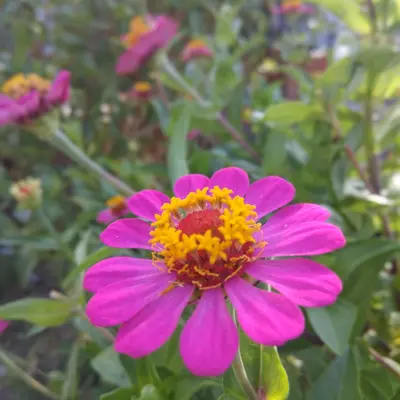
Benary's Giant Bright Pink is a vigorous heirloom zinnia cultivar prized for its large, double-petaled blooms in vibrant hot pink. Reaching mature height of 24-36 inches, it flowers prolifically in 75-90 days from seed. The substantial 4-5 inch flower heads are excellent for cut arrangements and garden display. This variety thrives in full sun and well-draining soil, offering reliable performance for both beginner and experienced gardeners seeking bold color impact in beds and borders.
Harvest
75-90d
Days to harvest
Sun
Full sun
Zones
2–11
USDA hardiness
Height
0-3 feet
Planting Timeline
Showing dates for Benary's Giant Bright Pink in USDA Zone 7
All Zone 7 flower →Zone Map
Click a state to update dates
Benary's Giant Bright Pink · Zones 2–11
Growing Details
Succession Planting
Direct sow every 2-3 weeks from your last frost date through early June for a continuous cut-flower supply. In zone 7, that window runs roughly April 1 through June 10; once daytime highs are regularly above 90°F, germination rates drop and young seedlings struggle to size up before heat stress sets in. A single mid-May sowing will typically carry you through first frost in October, which covers most of the cut-flower season on its own.
If you're starting indoors, sow 4-6 weeks before your transplant date and don't push it earlier — zinnias get root-bound in cells faster than you'd expect, and stunted transplants rarely catch up to direct-sown plants. Set transplants out after nighttime temps are reliably above 50°F. Direct sowing is honestly the easier route: 7-14 days to germination, no hardening off, no transplant shock.
Complete Growing Guide
Recommended by the Association of Specialty Cut Flower Growers. High yields of long, sturdy stems with 4-6" fully double, dahlia-like blooms. Excellent vase life. Vigorous plants hold up well in summer heat and rain. Low susceptibility to powdery mildew. Cut-and-come-again flower, yielding multiple cuts over the season. According to Johnny's Selected Seeds, Benary's Giant Bright Pink is 75 - 90 days to maturity, annual, open pollinated. Notable features: Use for Cut Flowers and Bouquets.
Light: Full sun (6 or more hours of direct sunlight a day). Soil: High Organic Matter, Loam (Silt). Soil pH: Acid (<6.0), Alkaline (>8.0), Neutral (6.0-8.0). Drainage: Good Drainage, Occasionally Dry. Height: 0 ft. 6 in. - 3 ft. 0 in.. Spread: 0 ft. 8 in. - 1 ft. 0 in.. Spacing: 12 inches-3 feet. Growth rate: Rapid. Maintenance: Medium. Propagation: Seed. Regions: Coastal, Mountains, Piedmont.
Harvesting
Benary's Giant Bright Pink reaches harvest at 75 - 90 days from sowing per Johnny's Selected Seeds. Expect 4-6" at peak. As an annual, harvest continues until frost ends the season.
Type: Achene.
Storage & Preservation
For fresh storage, keep cut stems in a clean vase filled with cool water (65-72°F) in a cool location away from direct sunlight and ripening fruit. Refrigeration extends vase life to 7-10 days; maintain humidity around 90% and change water every 2-3 days. For longer preservation: air dry upside-down in a dark, well-ventilated space (10-14 days) for dried arrangements; press flowers between acid-free paper under heavy weight for 2-3 weeks; or freeze blooms in water in ice cube trays for decorative use in beverages.
History & Origin
Benary's Giant Bright Pink is open-pollinated, meaning seed saved from healthy plants will produce true-to-type offspring. Listed in the Johnny's Selected Seeds catalog.
Origin: Mexico
Advantages
- +Produces long, sturdy stems ideal for professional cut flower arrangements
- +Generates high yields with cut-and-come-again harvesting throughout the season
- +Fully double dahlia-like blooms reach impressive 4-6 inches across
- +Maintains vigor and blooms reliably during hot, rainy summer weather
- +Resistant to powdery mildew, reducing need for fungicide treatments
Considerations
- -Requires 75-90 days to first bloom, limiting mid-season sowings
- -Bright pink color may clash with certain garden design schemes
- -Tall plants with long stems need staking or support structures
- -Prefers well-draining soil and may struggle in poorly drained areas
Companion Plants
Marigolds and Sweet Alyssum do the most useful work here. French marigold varieties like 'Petite Gold' deter aphids and whiteflies through root secretions and foliage scent, and because they run on roughly the same bloom schedule as Benary's Giant, the bed stays full without awkward gaps. Sweet Alyssum draws in parasitic wasps and hoverflies — both of which hunt the soft-bodied insects that occasionally chew zinnia foliage — and its low mat habit fills ground-level space that zinnias, growing 2-3 feet tall, leave open anyway. Nasturtiums work on a different principle: they're aphid magnets that pull pressure away from nearby plants, a useful decoy in a mixed cutting garden.
Black Walnut trees and Fennel are the two to avoid. Juglone, the compound Black Walnuts produce, leaches through the soil and can stunt or kill annuals planted within their drip line — and that drip line on a mature tree runs well past where most gardeners expect it to. Fennel is a quieter problem: its root exudates suppress neighboring plants, and it tends to attract pests that don't stay put. Neither pairs well with zinnias or with most of what you'd grow alongside them.
Plant Together
Marigolds
Repel aphids, whiteflies, and nematodes while attracting beneficial insects
Nasturtiums
Act as trap crops for aphids and cucumber beetles, drawing pests away from zinnias
Basil
Repels thrips, aphids, and spider mites while attracting pollinators
Cosmos
Similar growing requirements and bloom time, attract beneficial predatory insects
Sunflowers
Provide beneficial shade and attract pollinators and pest predators
Cleome
Similar height and bloom period, attracts hoverflies that control aphids
Lavender
Repels moths, fleas, and mosquitoes while attracting beneficial pollinators
Sweet Alyssum
Attracts beneficial wasps and hoverflies that prey on zinnia pests
Keep Apart
Black Walnut Trees
Release juglone toxin that stunts growth and causes wilting in zinnias
Impatiens
Compete for similar nutrients and water, both susceptible to similar fungal diseases
Fennel
Produces allelopathic compounds that inhibit growth of most flowering annuals
Pests & Disease Resistance
Diseases
Powdery mildew (low susceptibility)
Troubleshooting Benary's Giant Bright Pink
What you'll see, why it happens, and what to do about it.
White powdery coating on upper leaf surfaces, usually appearing mid-summer when nights cool down
Likely Causes
- Powdery mildew (Podosphaera xanthii) — fungal spores spread by wind, thrives when days are warm and nights dip below 60°F
- Poor airflow from tight spacing or planting near a wall
What to Do
- 1.Space plants at least 18 inches apart — crowding is the main thing you can control
- 2.Remove and trash (don't compost) the worst-affected leaves to slow spread
- 3.Apply a diluted neem oil spray (2 tsp per quart of water) every 7 days until symptoms stop advancing — it won't cure existing mildew but slows new infection
Seedlings stretch tall and flop over within 5-10 days of germination, stems thin as thread
Likely Causes
- Damping off (Pythium or Rhizoctonia spp.) from overwatering combined with low light
- Insufficient light — zinnias need 6+ hours of direct sun; a dim windowsill won't cut it
What to Do
- 1.Move trays under a grow light positioned 2-3 inches above the seedlings, running 14-16 hours per day
- 2.Water only when the top half-inch of the seed-starting mix is dry — zinnias hate wet feet at the seedling stage
- 3.Start fresh if the stem has pinched off at the soil line; collapsed seedlings don't recover
Flower buds form but fail to open, or open petals turn brown and papery at the edges
Likely Causes
- Botrytis blight (Botrytis cinerea) — a gray mold that moves in during extended wet or humid weather
- Spent blooms left on the plant trapping moisture against developing buds
What to Do
- 1.Deadhead every 3-5 days — clip the stem back to the next lateral bud, not just the spent head, so you're not leaving a rotting stub
- 2.Water at the base of the plant, not overhead; wet petals are an open invitation for Botrytis
- 3.If you see gray fuzzy mold on a stem, remove it entirely and thin surrounding plants to open up airflow
Frequently Asked Questions
How long do Benary's Giant Bright Pink flowers last in a vase?▼
Is Benary's Giant Bright Pink good for beginner flower growers?▼
Can you grow Benary's Giant Bright Pink in containers?▼
When should I plant Benary's Giant Bright Pink seeds?▼
How often should I cut Benary's Giant Bright Pink flowers?▼
What size are the blooms on Benary's Giant Bright Pink?▼
Zone-by-Zone Planting Calendar
| Zone | Indoor Start | Transplant | Direct Sow | Harvest |
|---|---|---|---|---|
| Zone 1 | May – June | July – August | July – September | — |
| Zone 2 | April – May | June – July | June – August | — |
| Zone 11 | January – January | January – February | January – March | — |
| Zone 12 | January – January | January – February | January – March | — |
| Zone 13 | January – January | January – February | January – March | — |
| Zone 3 | April – May | June – July | June – August | — |
| Zone 4 | March – April | June – June | June – July | — |
| Zone 5 | March – April | May – June | May – July | — |
| Zone 6 | March – April | May – June | May – July | — |
| Zone 7 | February – March | April – May | April – June | — |
| Zone 8 | February – March | April – May | April – June | — |
| Zone 9 | January – February | March – April | March – May | — |
| Zone 10 | January – January | February – March | February – April | — |
Growing Guides from Wind River Greens
Sources & References
External authority sources used in compiling this guide.
- BreederJohnny's Selected Seeds
See the Methodology page for how this data is sourced, what's AI-assisted, and known limitations.