Blue Lake Pole Bean
Phaseolus vulgaris 'Blue Lake Pole'
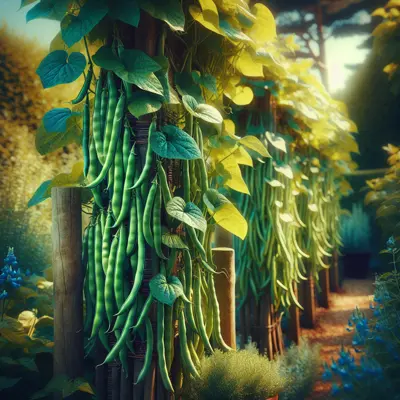
The gold standard of pole beans, Blue Lake produces heavy yields of tender, stringless pods that maintain their quality whether picked young or allowed to mature. This reliable variety climbs vigorously to 6-8 feet and delivers consistent harvests throughout the season, making it a favorite among home gardeners who want maximum production from minimal space.
Harvest
60-65d
Days to harvest
Sun
Full sun
Zones
2–11
USDA hardiness
Difficulty
Easy
Planting Timeline
Showing dates for Blue Lake Pole Bean in USDA Zone 7
All Zone 7 bean →Zone Map
Click a state to update dates
Blue Lake Pole Bean · Zones 2–11
Growing Details
Succession Planting
Direct sow every 14 to 21 days from April 1 through mid-June in zone 7. Blue Lake Pole hits harvest in 60–65 days, so a sowing on June 15 puts your last picking around late August, before the worst heat. Stop once daytime highs hold above 90°F — blossoms drop at that temperature and pods won't set. Two or three rounds is usually enough to keep a steady supply without everything coming in at once.
Complete Growing Guide
Blue Lake pole beans are best direct sown into the garden rather than started indoors, as they resent transplanting and their vigorous growth means they quickly outpace any indoor advantage. Wait until soil temperatures reach at least 60°F and all danger of frost has passed—typically one to two weeks after your region's last spring frost date. The soil should have warmed sufficiently to prevent seed rot, which is particularly important for Blue Lake since these beans germinate quickly and need consistent warmth to establish strong root systems.
Prepare your planting area by working in compost or well-rotted manure to improve drainage and fertility. Blue Lake beans prefer soil with a pH between 6.0 and 7.0 and benefit from moderate nitrogen levels, though excessive nitrogen can promote leafy growth at the expense of pod production. Direct sow seeds one inch deep and three to four inches apart along a sturdy trellis or support structure. Since Blue Lake vines climb vigorously to six to eight feet, install your support before planting—sturdy poles, twine, or wire trellises work well. Thin seedlings to six inches apart once they've emerged and developed their first true leaves.
Water consistently throughout the growing season, providing one to one and a half inches per week. Blue Lake beans are particularly susceptible to powdery mildew and fungal diseases if foliage remains wet, so water at soil level in the morning rather than overhead. Feed with a balanced fertilizer every three to four weeks once flowering begins, but avoid high-nitrogen formulas that encourage excessive vine growth at the expense of pod development.
Watch closely for bean beetles, which are notorious Blue Lake pests and can strip plants rapidly. Hand-pick beetles and yellow egg clusters from undersides of leaves early and often. Aphids congregate on new growth, and spider mites thrive in hot, dry conditions—maintain consistent moisture and spray with neem oil if populations spike. This variety is moderately susceptible to bacterial blight and rust, both of which spread through wet foliage, so always water at the base and avoid working in the garden when plants are wet.
One mistake many gardeners make with Blue Lake pole beans is neglecting succession planting. Rather than sowing all seeds at once, plant new seeds every two to three weeks until midsummer to ensure continuous harvests through fall instead of one exhausting glut. The consistent production Blue Lake is known for depends on staggered plantings that extend productivity into autumn, capturing the full potential of this reliable variety.
Harvesting
Harvest Blue Lake pole beans when pods reach 5-6 inches long with a bright, uniform green color and a firm, snappy texture that breaks cleanly when bent. The pods should feel full but not bulging with mature seeds, as overmaturity causes toughness and stringiness despite the variety's stringless reputation. This variety responds exceptionally well to continuous harvesting every 2-3 days rather than single-harvest picking, as frequent removal actively stimulates more flower production and extended yields throughout the season. Begin harvesting in early morning when pods are cool and crisp, which maximizes their quality and shelf life compared to afternoon picking when plants have wilted slightly in heat.
The boat-shaped seed pods are bilaterally symmetrical and can be green, yellow, white, or purple at maturity. There is a wide variety of color and shape choices among cultivars.
Color: Gold/Yellow, Green, Purple/Lavender, White. Type: Legume. Length: > 3 inches. Width: < 1 inch.
Garden value: Edible, Good Dried
Harvest time: Fall, Summer
Storage & Preservation
Fresh Blue Lake beans maintain peak quality for 5-7 days when stored unwashed in perforated plastic bags in the refrigerator crisper drawer. Keep temperature around 40°F with high humidity to prevent wilting and toughening.
For freezing, blanch whole pods in boiling water for 3 minutes, then plunge into ice water. Drain thoroughly and pack in freezer bags—properly blanched beans retain excellent texture for up to 12 months. Blue Lake's meaty pods also excel for pressure canning using tested recipes and processing times.
This variety's tender, stringless pods make excellent pickled beans (dilly beans). Pack raw pods into jars with dill, garlic, and hot peppers, then cover with seasoned vinegar brine. The firm texture holds up beautifully to the pickling process, creating crisp, flavorful beans that keep for months.
History & Origin
Blue Lake pole beans emerged in the early 1900s as an American selection, though detailed documentation of the original breeder remains sparse in horticultural records. The variety is believed to have been developed from common pole bean germplasm cultivated in the United States, with seed companies including Ferry Seeds and Burpee establishing their own Blue Lake lines by the mid-twentieth century. The name itself likely references either a geographic origin or a characteristic of the original stock, though this etymology is not definitively documented. Blue Lake's popularity as a commercial and home garden variety solidified throughout the latter half of the 1900s, making it one of the most widely distributed American pole bean cultivars despite uncertain origins.
Origin: Tropical America
Advantages
- +Heavy yields of stringless pods maximize production in small spaces
- +Tender, sweet flavor maintains quality whether harvested early or mature
- +Vigorous 6-8 foot growth climbs reliably without requiring excessive training
- +Consistent harvests throughout season provide prolonged fresh bean supply
- +Easy to grow with minimal care needed for reliable success
Considerations
- -Susceptible to bacterial blight, rust, and anthracnose under humid conditions
- -Requires sturdy trellising structure to support vigorous vine growth
- -Attractive to bean beetles and spider mites requiring regular monitoring
- -Needs consistent moisture and well-draining soil to prevent disease problems
Companion Plants
Corn does real structural work here — Blue Lake Pole will climb the stalks without a separate trellis, and the nitrogen the beans fix offsets some of corn's heavy feeding. Carrots and radishes stay shallow enough (top 6–8 inches) that they don't compete with bean roots, and radishes break up crusted soil as a side effect. Nasturtiums are worth the space: they act as a trap crop for aphids, pulling infestations away from your beans and drawing in predatory wasps. Keep onions out of the bed entirely — alliums suppress the Rhizobium bacteria that colonize bean roots and do the actual nitrogen-fixing. Fennel gets its own isolated spot; it stunts most vegetables it grows near, beans included.
Plant Together
Corn
Provides natural trellis support for climbing beans, creates classic Three Sisters polyculture
Carrots
Beans fix nitrogen in soil which carrots utilize, carrots help aerate soil for bean roots
Cucumber
Both are climbing plants that share space efficiently, beans provide nitrogen cucumbers need
Radishes
Quick-growing radishes break up soil for bean roots and are harvested before beans need full space
Nasturtiums
Act as trap crop for aphids and cucumber beetles, attract beneficial predatory insects
Summer Squash
Large leaves provide ground cover to retain soil moisture, benefits from nitrogen fixed by beans
Strawberries
Low-growing strawberries use different soil levels, benefit from nitrogen fixation by beans
Rosemary
Aromatic oils repel bean beetles and other pests, perennial herb complements annual beans
Keep Apart
Onions
Inhibit bean growth and nitrogen fixation through root secretions and soil chemistry changes
Sunflowers
Compete heavily for nutrients and water, allelopathic compounds inhibit bean germination
Fennel
Produces allelopathic compounds that inhibit growth and germination of beans and most vegetables
Nutrition Facts
Per 100g serving. % Daily Value based on 2,000 calorie diet. Source: USDA FoodData Central (FDC #2346400)
Pests & Disease Resistance
Resistance
Good resistance to common bean mosaic virus
Common Pests
Bean beetles, aphids, spider mites
Diseases
Bacterial blight, rust, anthracnose
Troubleshooting Blue Lake Pole Bean
What you'll see, why it happens, and what to do about it.
Leaves with ragged chunks missing, some browning, starting around week 7 — roughly half the plants affected
Likely Causes
- Mexican bean beetle (Epilachna varivestis) — larvae and adults skeletonize leaves from the underside
- Bean leaf beetle (Cerotoma trifurcata) — chews irregular holes through leaf tissue
- Repeated planting in the same bed for 4+ years, which builds up pest pressure in the soil
What to Do
- 1.Flip leaves and hand-pick egg clusters — Mexican bean beetle lays bright yellow eggs in tidy rows on the underside
- 2.Spray undersides of leaves with insecticidal soap or spinosad if populations exceed 1-2 beetles per plant
- 3.Rotate beans out of that bed for at least 2 seasons — the UGA Vegetable Garden Calendar flags Mexican bean beetle as one of the top 10 culprits to catch early
Water-soaked or brown angular spots on leaves and pods, sometimes with a yellow halo; pods developing sunken dark lesions
Likely Causes
- Bacterial blight (Pseudomonas syringae pv. phaseolicola or Xanthomonas axonopodis pv. phaseoli) — spreads fast in wet, humid conditions
- Anthracnose (Colletotrichum lindemuthianum) — fungal, shows up as dark sunken pod lesions and reddish-brown leaf veins
- Rain splash or overhead irrigation moving pathogens from soil to foliage
What to Do
- 1.Switch to drip or a soaker hose — NC State Extension's IPM case study on pole beans points directly to irrigation method as a transmission factor
- 2.Pull and trash (don't compost) badly infected plants; don't work the bed when leaves are wet
- 3.Start next season with certified disease-free seed and keep that bed out of Phaseolus for 2-3 years
Frequently Asked Questions
How long do Blue Lake pole beans take to grow?▼
Can you grow Blue Lake pole beans in containers?▼
Are Blue Lake pole beans good for beginners?▼
What's the difference between Blue Lake bush beans and pole beans?▼
When should I plant Blue Lake pole beans?▼
Do Blue Lake pole beans need special fertilizer?▼
Zone-by-Zone Planting Calendar
| Zone | Indoor Start | Transplant | Direct Sow | Harvest |
|---|---|---|---|---|
| Zone 3 | — | — | June – July | September – October |
| Zone 4 | — | — | June – July | August – October |
| Zone 5 | — | — | May – June | August – October |
| Zone 6 | — | — | May – June | August – September |
| Zone 7 | — | — | April – June | July – September |
| Zone 8 | — | — | April – May | July – August |
| Zone 9 | — | — | March – April | June – July |
| Zone 10 | — | — | February – April | May – July |
| Zone 1 | — | — | July – August | October – August |
| Zone 2 | — | — | June – August | September – September |
| Zone 11 | — | — | January – March | April – June |
| Zone 12 | — | — | January – March | April – June |
| Zone 13 | — | — | January – March | April – June |
Growing Guides from Wind River Greens
Sources & References
External authority sources used in compiling this guide.
See the Methodology page for how this data is sourced, what's AI-assisted, and known limitations.