Stevia
Stevia rebaudiana
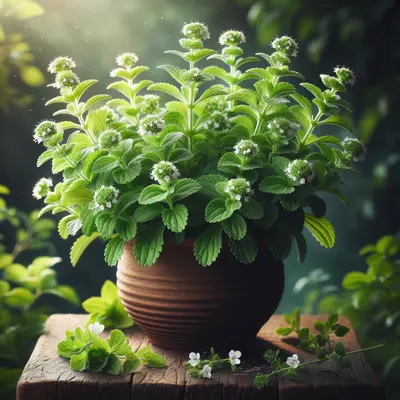
Use fresh, dried, powdered, or as a liquid to sweeten a variety of foods and beverages. Bushy, high-yielding plants. Perennial in Zones 9-11.
Harvest
100-120d
Days to harvest
Sun
Full sun to partial shade
Zones
10–11
USDA hardiness
Height
12-24 inches
Planting Timeline
Showing dates for Stevia in USDA Zone 9
All Zone 9 herb →Zone Map
Click a state to update dates
Stevia · Zones 10–11
Growing Details
Succession Planting
Stevia is a true perennial only in zones 10-11; everywhere else it's treated as an annual that you start once and harvest until frost. There's no succession cadence to set up — the plant keeps pushing new growth from transplant through the end of the season, so one planting covers the gap. Start seeds indoors 8-10 weeks before your last frost date to account for the slow 7-21 day germination window and the fragile early seedling stage. One planting is all you need.
Complete Growing Guide
Light: Full sun (6 or more hours of direct sunlight a day), Partial Shade (Direct sunlight only part of the day, 2-6 hours). Soil: Loam (Silt), Sand. Soil pH: Acid (<6.0), Neutral (6.0-8.0). Drainage: Good Drainage, Moist. Height: 1 ft. 0 in. - 2 ft. 0 in.. Spread: 1 ft. 0 in. - 2 ft. 0 in.. Spacing: 12 inches-3 feet. Growth rate: Medium. Maintenance: Medium. Propagation: Stem Cutting.
Harvesting
The fruit is a indehiscent, dry achene that contains one seed.
Type: Achene.
Edibility: Leaves are highly edible and used as a sweetener. They can be eaten immediately after harvesting from the plant. They can be used to make teas or dried.
Storage & Preservation
Fresh stevia leaves stay potent for 2-3 days when stored in the refrigerator wrapped in damp paper towels inside a plastic bag. For longer storage, stevia leaves dry beautifully and actually concentrate in sweetness when properly preserved.
Air-dry whole stems by hanging them in a warm, dark, well-ventilated area for 12-24 hours until leaves crumble easily. Strip dried leaves from stems and store in airtight containers away from light—properly dried stevia retains sweetness for up to two years.
For powdered stevia, grind thoroughly dried leaves in a coffee grinder and sift through fine mesh to remove stems. The powder is 10-15 times more concentrated than fresh leaves. Freezing fresh leaves works well for tea use—freeze whole leaves on baking sheets, then store in freezer bags for up to 8 months.
History & Origin
Origin: Brazil to Paraguay
Advantages
- +Edible: Leaves are highly edible and used as a sweetener. They can be eaten immediately after harvesting from the plant. They can be used to make teas or dried.
Companion Plants
Basil and oregano are the most practical neighbors for stevia — both share its preference for well-drained soil at pH 6.7-7.2 and won't compete aggressively for water. Marigolds pull weight by disrupting the aphids and whiteflies that target stevia's foliage; chives do similar work at a smaller footprint. Mint is the one to skip — not because of any chemical interaction, but because it spreads through underground runners and will physically crowd stevia's shallow roots within a single growing season, sometimes taking over a 12-inch radius in 8-10 weeks. Fennel is allelopathic and measurably suppresses growth in most neighboring herbs, stevia included.
Plant Together
Basil
Repels aphids and whiteflies that commonly attack stevia
Marigold
Deters nematodes and aphids while attracting beneficial insects
Cilantro
Attracts beneficial predatory insects and provides ground cover
Chives
Natural pest deterrent that repels aphids and improves soil health
Oregano
Repels common garden pests and has similar growing requirements
Parsley
Attracts beneficial insects and provides companion harvesting opportunities
Nasturtium
Acts as trap crop for aphids and cucumber beetles
Thyme
Natural fungicide properties help prevent disease spread
Keep Apart
Mint
Aggressive spreader that can overwhelm stevia and compete for nutrients
Black Walnut
Produces juglone toxin that inhibits stevia growth and development
Fennel
Allelopathic properties inhibit growth of most companion plants including stevia
Nutrition Facts
Per 100g serving. % Daily Value based on 2,000 calorie diet. Source: USDA FoodData Central (FDC #172232)
Pests & Disease Resistance
Resistance
Generally resistant, susceptible to root rot in wet conditions
Common Pests
Aphids, whiteflies, spider mites
Diseases
Root rot, leaf spot, powdery mildew
Troubleshooting Stevia
What you'll see, why it happens, and what to do about it.
Roots dark and mushy, lower stem collapsing at soil level — plant wilts even when soil is wet
Likely Causes
- Root rot from Pythium or Phytophthora — triggered by waterlogged or poorly drained soil
- Transplanting into cold, wet soil before temperatures have warmed (NC State Extension notes this exact pattern causes root problems in tender plants)
What to Do
- 1.Pull the plant — there's no saving a stevia with fully rotted roots
- 2.Work coarse perlite into the bed or raise the planting area 4-6 inches before replanting
- 3.Wait until soil temps are consistently above 60°F before transplanting; stevia's roots come from subtropical Paraguay and don't tolerate cold, saturated conditions
White powdery coating on upper leaf surfaces, usually appearing on older leaves first in late summer
Likely Causes
- Powdery mildew — a fungal infection that spreads by airspores during warm days and cool nights
- Spacing under 12 inches that blocks airflow between plants
What to Do
- 1.Remove and trash (don't compost) any heavily coated leaves
- 2.Spray affected plants with a diluted baking soda solution (1 tablespoon per gallon) or neem oil every 7-10 days
- 3.Give plants the full 12-18 inch spacing at transplant time — crowded stevia is the first to get hit
Tiny pale stippling across leaves, fine webbing on the undersides — plants look dull and washed out
Likely Causes
- Two-spotted spider mites (Tetranychus urticae) — populations explode fast in hot, dry weather above 85°F
- Whiteflies (Trialeurodes vaporariorum) cause similar stippling but leave sticky honeydew residue instead of webbing
What to Do
- 1.Blast the undersides of leaves with a firm stream of water in the morning so foliage dries before nightfall
- 2.Apply insecticidal soap or neem oil to leaf undersides on a 5-7 day repeat until pressure drops
- 3.Keep soil consistently moist — drought-stressed stevia draws spider mites faster than a well-watered plant does
Frequently Asked Questions
How long does stevia take to grow from seed?▼
Can you grow stevia in pots?▼
What does fresh stevia taste like?▼
Is stevia easy to grow for beginners?▼
When should I harvest stevia leaves for maximum sweetness?▼
Can stevia survive winter outdoors?▼
Zone-by-Zone Planting Calendar
Growing Guides from Wind River Greens
Sources & References
External authority sources used in compiling this guide.
- ExtensionNC State Extension
- BreederJohnny's Selected Seeds
- USDAUSDA FoodData Central
See the Methodology page for how this data is sourced, what's AI-assisted, and known limitations.