Tropicana
Lactuca sativa
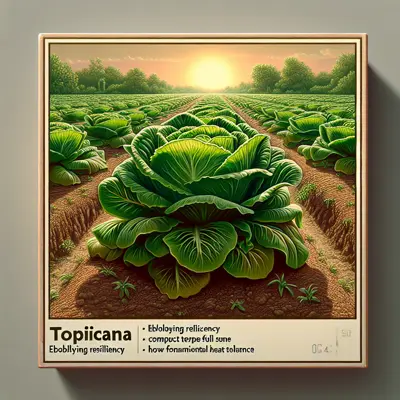
Plants produce full heads with heavy leaves. Tolerant to tipburn. MT0-30. Also available in organic seed or seed with NOP-compliant pelleting.
Harvest
52d
Days to harvest
Sun
Full sun to partial shade
Zones
2–11
USDA hardiness
Height
6-12 inches
Planting Timeline
Showing dates for Tropicana in USDA Zone 7
All Zone 7 lettuce →Zone Map
Click a state to update dates
Tropicana · Zones 2–11
Growing Details
Succession Planting
In zone 7, direct sow Tropicana every 14 days starting March 1 and continue through late April. That gives you 3–4 staggered harvests before daytime highs start pushing 85°F in late May, at which point bolting accelerates and the leaves go bitter fast. Pick back up around September 1 and sow every 14 days through mid-October — fall heads often outperform spring ones because the heat breaks gradually and you're less likely to lose a whole sowing to a sudden warm snap.
Don't try to push through summer. Tropicana is more heat-tolerant than many butterheads, but at 52 days to harvest, a mid-June sowing still finishes in August heat, and the quality won't justify the bed space. Plant okra or sweet potatoes there and come back to lettuce in September.
Complete Growing Guide
Tropicana lettuce thrives when direct sown into the garden about two weeks before your last spring frost, or started indoors three to four weeks prior for transplanting after frost danger has passed. This variety's relatively short 52-day maturity makes it an excellent choice for both spring and fall crops, so plan successive sowings every two to three weeks if you want continuous harvests throughout the growing season. For fall planting, count backward from your first expected frost date to time sowings appropriately.
Prepare your planting bed with rich, well-draining soil amended with compost or aged manure, as Tropicana's full heads demand consistent nutrition and moisture. Direct sow seeds just a quarter-inch deep and thin seedlings to six to eight inches apart once they develop their first true leaves. For transplants started indoors, space them eight inches apart when moving to the garden. This variety reaches only six to twelve inches in height, so even closer spacing can work in intensive gardens, though better air circulation at eight inches helps prevent disease issues.
Water Tropicana consistently and deeply, providing about one inch per week through rain or irrigation. Keep the soil consistently moist but not waterlogged, as fluctuating moisture can trigger the tipburn for which this variety is notably tolerant—one of its key advantages. Feed with a balanced, nitrogen-rich fertilizer every three weeks, or use a slow-release granular fertilizer worked into the soil at planting. Tropicana's heavy leaf production requires steady nutrient availability to achieve those full, dense heads the variety is known for.
Watch carefully for aphids, whiteflies, and thrips, which can quickly colonize lettuce without intervention. Scout plants weekly, checking both leaf surfaces. For light infestations, strong water sprays can dislodge aphids and whiteflies effectively. Neem oil or insecticidal soap work well for heavier pressure without requiring harsh chemicals. Monitor for downy mildew and bacterial leaf spot by spacing plants properly for airflow and avoiding overhead watering, which can promote fungal issues. Remove any spotted or yellowing outer leaves promptly to prevent spread.
The one aspect gardeners often overlook with Tropicana is succession planting discipline. Many home gardeners sow an entire packet at once and face a glut followed by nothing. Instead, deliberately plant small quantities every two weeks to maintain steady harvests throughout your growing season. This approach also spreads your pest pressure management and reduces the temptation to let heads bolt while you work through an oversupply. Tropicana's predictable 52-day timeline makes this planning straightforward—simply mark your calendar and commit to regular, small sowings rather than feast-or-famine planting.
Harvesting
Tropicana reaches harvest at 52 days from sowing per Johnny's Selected Seeds. As an annual, harvest continues until frost ends the season.
Tiny seeds with a dandelion-like tuft (pappus) to aid in wind dispersal.
Color: Brown/Copper. Type: Achene. Length: < 1 inch. Width: < 1 inch.
Harvest time: Summer
Edibility: Leaves can be used raw or cooked in salads, sandwiches, and other dishes. Head lettuce can be stored for 2-3 weeks while leaf and butterhead store for 1-2 weeks.
Storage & Preservation
Store freshly harvested Tropicana in the refrigerator's crisper drawer wrapped loosely in damp paper towels, then placed in perforated plastic bags. This method maintains optimal humidity while preventing moisture buildup that causes rot. Properly stored Tropicana keeps 7-10 days – longer than most lettuce varieties thanks to its robust cellular structure.
For preservation, Tropicana excels when dehydrated into lettuce powder for seasoning blends or frozen in smoothie-ready portions. Blanch whole leaves in boiling water for 30 seconds, shock in ice water, pat dry, and freeze in single layers before transferring to freezer bags. While texture changes prevent fresh salad use, frozen Tropicana works excellently in cooked dishes, soups, and green smoothies for up to 8 months.
History & Origin
Tropicana is open-pollinated, meaning seed saved from healthy plants will produce true-to-type offspring. Listed in the Johnny's Selected Seeds catalog.
Origin: Mediterranean to Siberia
Advantages
- +Produces full, heavy heads suitable for commercial and home markets
- +Sweet, mild, crisp flavor maintained even during hot growing seasons
- +Fast maturity at 52 days enables multiple plantings per season
- +Excellent tipburn tolerance reduces crop loss and improves marketability
- +Available in organic and NOP-compliant pelleted seed options
Considerations
- -Susceptible to downy mildew in humid or wet conditions
- -Multiple pest pressures including aphids, whiteflies, and thrips require management
- -Prone to bacterial leaf spot in warm, wet weather environments
Companion Plants
Radishes and carrots are the most practical companions for Tropicana — radishes germinate in 5–7 days and break up the soil crust for slower-emerging lettuce, while carrots sit 8–12 inches deep and don't compete for the same shallow moisture. Basil planted every 18 inches along the row does seem to interrupt aphid and whitefly flight patterns, though the evidence is mostly observational. Keep fennel on the other side of the property — it releases allelopathic compounds from its roots that stunt most vegetables, and in our zone 7 Georgia garden, where the usable window for Tropicana runs only about 10 weeks in spring, losing two or three weeks to stunted growth isn't recoverable.
Plant Together
Basil
Repels aphids and whiteflies, may improve lettuce flavor
Chives
Deters aphids and other soft-bodied insects with strong scent
Carrots
Deep roots don't compete with shallow lettuce roots, help break up soil
Radishes
Quick harvest allows succession planting, helps break up compacted soil
Marigolds
Repel nematodes and various garden pests through natural compounds
Spinach
Similar growing requirements and can be interplanted for space efficiency
Nasturtiums
Act as trap crop for aphids and cucumber beetles
Garlic
Natural fungicide properties help prevent lettuce diseases
Keep Apart
Fennel
Releases allelopathic compounds that inhibit lettuce growth
Broccoli
Heavy feeder that competes for nutrients and casts too much shade
Parsley
Can attract carrot flies which may damage lettuce roots
Nutrition Facts
Per 100g serving. % Daily Value based on 2,000 calorie diet. Source: USDA FoodData Central (FDC #2346388)
Pests & Disease Resistance
Resistance
Corky Root (Intermediate)
Common Pests
Aphids, whiteflies, thrips
Diseases
Downy mildew, bacterial leaf spot
Troubleshooting Tropicana
What you'll see, why it happens, and what to do about it.
Seedlings collapse at the soil line within the first 7-10 days after transplanting or germination — stems look pinched or water-soaked at the base
Likely Causes
- Damping off — a complex of soil-borne fungi (Pythium spp., Rhizoctonia solani) that thrive in cool, wet, poorly drained soil
- Overwatering or planting in heavy clay with no drainage amendment
What to Do
- 1.Don't replant lettuce in that same bed this season — the pathogen load is already high; move to a fresh spot or a clean container with sterile potting mix
- 2.Let the soil surface dry slightly between waterings; lettuce wants 1–1.5 inches per week, not constant moisture
- 3.Next round, start seeds in fresh, sterile germination mix rather than garden soil — NC State's IPM guidance on damping off points to contaminated, reused growing media as a common culprit
Gray-purple fuzz on the undersides of outer leaves, with yellow angular patches on the upper surface — shows up most in cool, humid stretches
Likely Causes
- Downy mildew (Bremia lactucae) — spreads fast when nights are cool (below 65°F) and foliage stays wet
- Overhead irrigation late in the day that leaves foliage wet overnight
What to Do
- 1.Strip and trash (don't compost) affected outer leaves as soon as you spot them
- 2.Water at the base in the morning so foliage dries before evening — drip tape or a soaker hose makes this easier on a full row
- 3.Give plants their full 8–10 inch spacing; crowding is what turns a light outbreak into a write-off
Frequently Asked Questions
How long does Tropicana lettuce take to grow?▼
Can you grow Tropicana lettuce in hot summer weather?▼
Is Tropicana lettuce good for container growing?▼
What does Tropicana lettuce taste like?▼
When should I plant Tropicana lettuce seeds?▼
Tropicana vs regular romaine lettuce - what's the difference?▼
Zone-by-Zone Planting Calendar
| Zone | Indoor Start | Transplant | Direct Sow | Harvest |
|---|---|---|---|---|
| Zone 1 | — | — | June – July | July – September |
| Zone 2 | — | — | May – July | July – September |
| Zone 11 | — | — | January – February | February – December |
| Zone 12 | — | — | January – February | February – December |
| Zone 13 | — | — | January – February | February – December |
| Zone 3 | — | — | May – June | June – October |
| Zone 4 | — | — | April – June | June – October |
| Zone 5 | — | — | April – May | June – November |
| Zone 6 | — | — | April – May | May – November |
| Zone 7 | — | — | March – May | May – November |
| Zone 8 | — | — | March – April | April – December |
| Zone 9 | — | — | February – March | March – December |
| Zone 10 | — | — | January – March | March – December |
Growing Guides from Wind River Greens
Sources & References
External authority sources used in compiling this guide.
- BreederJohnny's Selected Seeds
- USDAUSDA FoodData Central
See the Methodology page for how this data is sourced, what's AI-assisted, and known limitations.