Napa Cabbage 'Michihili'
Brassica rapa subsp. pekinensis 'Michihili'
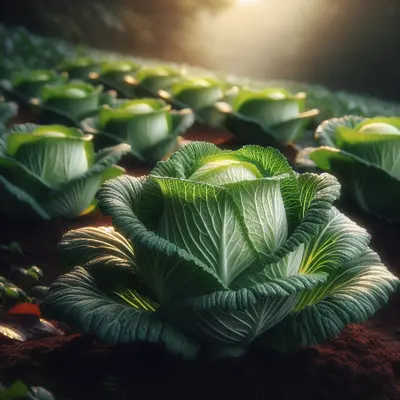
This classic Chinese cabbage produces tall, cylindrical heads with tender, sweet leaves perfect for Asian cuisine and fresh salads. The pale green leaves have crisp white ribs and a delicate flavor that's much milder than regular cabbage. Fast-growing and heat-tolerant, 'Michihili' is ideal for gardeners wanting to add authentic Asian vegetables to their garden repertoire.
Harvest
65-75d
Days to harvest
Sun
Full sun to partial shade
Zones
5–9
USDA hardiness
Height
3 feet
Planting Timeline
Showing dates for Napa Cabbage 'Michihili' in USDA Zone 7
All Zone 7 brassica →Zone Map
Click a state to update dates
Napa Cabbage 'Michihili' · Zones 5–9
Growing Details
Succession Planting
Michihili takes 65–75 days to harvest, which is long enough that you need to plan around your heat window. In zone 7, direct sow or transplant starting in late March for a spring crop, then sow again in late July or early August for fall. Stop spring sowings once daytime highs are consistently hitting 80°F — Michihili will bolt and fail to head up in real heat. For a continuous spring supply, stagger plantings every 14–18 days, but realistically you'll get 2–3 rounds before the weather shuts you down.
The fall planting is often the better one. Sow indoors around late July, transplant in mid-August, and the cooling nights in September and October actually improve flavor and heading. A light frost down to 28–30°F won't kill a mature head, so you can stretch the harvest into November in most of zone 7.
Complete Growing Guide
Start your 'Michihili' napa cabbage seeds indoors 3-4 weeks before your last expected frost in spring, or direct sow in late summer for your best fall harvest. This variety actually prefers cooler growing conditions and performs exceptionally well when temperatures range between 60-70°F, making fall planting ideal in zones 6-9.
Prepare your soil by working in 2-3 inches of well-aged compost or rotted manure, as 'Michihili' is a heavy feeder that thrives in rich, nitrogen-rich soil with a pH between 6.0-7.0. Choose a location with morning sun and afternoon shade in hot climates, or full sun in cooler regions. Good drainage is critical – standing water will quickly lead to root rot.
When transplanting seedlings, space them 12-15 inches apart in rows 18 inches apart to accommodate their tall, cylindrical growth habit. Plant them slightly deeper than they were in their starter pots to encourage strong root development. Water immediately after transplanting and provide shade cloth for the first week if temperatures exceed 75°F.
Feed your plants every 2-3 weeks with a balanced fertilizer (10-10-10) or side-dress with compost. About 4 weeks after transplanting, switch to a lower-nitrogen fertilizer to prevent excessive leaf growth at the expense of head formation. Maintain consistent soil moisture – aim for 1-1.5 inches per week including rainfall.
Unlike regular cabbage, 'Michihili' doesn't require staking despite its tall growth, but you can tie the outer leaves loosely around developing heads 3-4 weeks before harvest to blanch the inner leaves and create more tender, pale centers.
Avoid the common mistake of planting too early in spring – warm weather will cause immediate bolting. In hot climates, stick to late summer sowings (6-8 weeks before first frost). Also resist the urge to harvest individual outer leaves, as this weakens head development.
Harvesting
'Michihili' heads are ready when they feel firm and dense when gently squeezed, typically reaching 12-15 inches tall and 4-6 inches wide. The outer leaves should be pale green with prominent white ribs, and the head should feel heavy for its size. Harvest in the early morning when plants are fully hydrated for maximum crispness.
Perform the 'squeeze test' – a mature head will feel solid with little give when pressed gently. If the head feels loose or spongy, allow another week of growth. Look for tightly packed inner leaves that are pale yellow-white when you peek between the outer leaves.
Cut the entire head at soil level using a sharp knife, leaving the root system intact. Don't attempt to harvest individual leaves, as this variety is bred specifically for whole-head harvest. 'Michihili' doesn't hold well in the garden once mature, so harvest promptly when ready. You can harvest slightly immature heads if hard frost threatens – they'll still be delicious, just smaller and more tender.
Storage & Preservation
Fresh 'Michihili' heads store exceptionally well in the refrigerator for 2-3 weeks when kept in perforated plastic bags in the crisper drawer. Don't wash before storing – simply remove any damaged outer leaves and store whole heads with roots trimmed close.
For longer preservation, this variety is perfect for making traditional kimchi or sauerkraut – the mild flavor and crisp texture hold up beautifully during fermentation. You can also blanch and freeze chopped leaves for up to 8 months, though they'll lose their characteristic crunch and are best used in cooked dishes like soups and stir-fries.
Dehydrating isn't recommended as the high water content makes for poor results. Instead, consider quick-pickling techniques – the tender leaves absorb flavors quickly and create excellent refrigerator pickles that last 2-3 weeks.
History & Origin
'Michihili' represents one of the oldest and most authentic Chinese cabbage varieties available to Western gardeners, with roots tracing back over 1,000 years to the Beijing region of northern China. The name itself refers to the Michihli province (now part of modern Beijing), where this tall, cylindrical type of napa cabbage was first cultivated and perfected.
This heirloom variety was introduced to American gardens in the early 1900s through Chinese immigrants and missionary plant collectors. Unlike the more common barrel-shaped napa cabbages developed later, 'Michihili' maintains the traditional upright, elongated form that made it ideal for small garden plots in ancient China.
The variety gained popularity among American gardeners during the 1970s Asian cuisine boom, when home cooks began seeking authentic ingredients for stir-fries and other Asian dishes. Seed companies like Burpee and Ferry-Morse began offering 'Michihili' as gardeners discovered its superior flavor and texture compared to regular cabbage. Today, it remains the gold standard for gardeners wanting to grow traditional Chinese vegetables.
Advantages
- +Exceptional heat tolerance compared to other napa cabbage varieties, making it viable in zones 8-9
- +Naturally resistant to bolting when planted at appropriate times, unlike many Chinese cabbages
- +Compact growth habit requires only 12-15 inches spacing despite tall heads
- +Superior storage life of 2-3 weeks refrigerated versus 1 week for most napa varieties
- +Authentic flavor profile perfect for traditional Asian fermentation and pickling
- +Self-blanching outer leaves create tender, pale inner cores without tying
- +Strong resistance to tip burn that commonly affects other Chinese cabbages
Considerations
- -Extremely sensitive to planting timing – early spring sowings bolt immediately in warm weather
- -Narrow harvest window of 1-2 weeks once mature before quality deteriorates
- -More susceptible to flea beetle damage than modern hybrid varieties
- -Requires consistent moisture – even brief drought stress causes bitter flavor
- -Not suitable for summer growing in zones 7+ despite heat tolerance claims
Companion Plants
Onions, celery, and carrots are the most useful neighbors for Michihili. NC State Extension's IPM guidance on interplanting makes the case plainly: mixing unrelated plants dilutes the odor signature that brassica pests like cabbage worms and aphids use to find their targets. A solid 20-foot block of Michihili is a billboard. Alternating rows with carrots or celery breaks that up and slows how fast an infestation moves through the bed. Nasturtiums pull double duty — they draw aphid colonies away from the heads and attract predatory wasps. Marigolds get recommended constantly, but NC State Extension is upfront that the repellant evidence is thin. Plant them if you want, just don't treat them as a substitute for row cover.
Tomatoes and pole beans are the ones to skip. Tomatoes are heavy feeders that compete directly for calcium and nitrogen, and their canopy can shade a low Michihili head before it fills in at 60–70 days. Pole beans fix nitrogen aggressively, which pushes leafy brassicas toward loose, open growth that never heads up tight. Strawberries share several fungal pathogens with brassicas — downy mildew being the obvious overlap — and have no business in the same bed.
Plant Together
Dill
Attracts beneficial insects like parasitic wasps that control cabbage worms and aphids
Onions
Repel cabbage root maggots and flea beetles with their strong sulfur compounds
Lettuce
Makes efficient use of space as a low-growing companion that doesn't compete for light
Nasturtiums
Act as trap crops for aphids and flea beetles while repelling cucumber beetles
Marigolds
Repel nematodes and attract beneficial insects that prey on cabbage pests
Celery
Repels cabbage white butterflies and other brassica pests with its strong scent
Carrots
Improve soil structure with deep roots and don't compete for nutrients
Spinach
Provides ground cover to retain soil moisture and suppress weeds
Keep Apart
Tomatoes
Compete for similar nutrients and may stunt brassica growth through allelopathic compounds
Strawberries
Both are heavy feeders that compete for nutrients, leading to reduced yields
Pole Beans
Can shade out Napa cabbage and compete for nitrogen despite being nitrogen-fixers
Nutrition Facts
Per 100g serving. % Daily Value based on 2,000 calorie diet. Source: USDA FoodData Central (FDC #169975)
Pests & Disease Resistance
Resistance
Some resistance to bolting and tip burn
Common Pests
Flea beetles, cabbage worms, aphids, slugs
Diseases
Clubroot, black rot, soft rot, downy mildew
Troubleshooting Napa Cabbage 'Michihili'
What you'll see, why it happens, and what to do about it.
Tiny, irregular holes scattered across young leaves, especially on seedlings in the first 2-3 weeks after transplant
Likely Causes
- Flea beetles (Phyllotreta spp.) — adults chew shot-hole damage and are worst on stressed or newly transplanted starts
- Dry soil conditions that weaken the plant's ability to outgrow the damage
What to Do
- 1.Cover transplants immediately with row cover (Agribon-15 or similar) and seal the edges — flea beetles find plants fast
- 2.Keep soil consistently moist; a stressed Michihili is far more vulnerable than a well-watered one
- 3.If damage is severe on established plants, spinosad-based sprays (applied in the evening to protect pollinators) can knock populations back
Leaves show V-shaped yellow lesions along the margins, with black veins visible when you hold the leaf up to light, around weeks 4-6
Likely Causes
- Black rot (Xanthomonas campestris pv. campestris) — a bacterial disease that enters through leaf margins and moves into the vascular tissue
- Overhead irrigation or heavy rain that splashes soil and bacteria onto leaves
What to Do
- 1.Remove and bag affected leaves immediately — don't compost them
- 2.Switch to drip irrigation or water at the base; keep foliage dry
- 3.Rotate this bed out of all brassicas (cabbage, broccoli, kale, mustard) for at least 2 seasons, as the pathogen persists in soil and crop debris
Outer wrapper leaves wilting and collapsing at the base, with a slimy, foul-smelling rot spreading inward
Likely Causes
- Soft rot (Pectobacterium carotovorum) — a bacterial rot that moves fast in warm, wet conditions and enters through wounds or insect damage
- Poor drainage or heads sitting in pooled water after rain
- Slug feeding wounds near the crown that give bacteria an entry point
What to Do
- 1.Pull and discard the entire plant — soft rot can't be reversed and will spread to neighboring heads
- 2.Space plants at least 12 inches apart to improve airflow, and avoid overhead watering once heads start forming
- 3.Set slug traps with iron phosphate bait around the crown to reduce the feeding wounds that let soft rot take hold
Frequently Asked Questions
How long does Michihili napa cabbage take to grow?▼
Can you grow Michihili napa cabbage in containers?▼
When should I plant Michihili napa cabbage?▼
What does Michihili napa cabbage taste like?▼
Is Michihili napa cabbage good for beginners?▼
Michihili vs regular napa cabbage - what's the difference?▼
Zone-by-Zone Planting Calendar
| Zone | Indoor Start | Transplant | Direct Sow | Harvest |
|---|---|---|---|---|
| Zone 1 | April – May | June – July | June – July | August – September |
| Zone 2 | April – May | June – July | May – July | July – September |
| Zone 11 | January – January | January – February | January – February | February – December |
| Zone 12 | January – January | January – February | January – February | February – December |
| Zone 13 | January – January | January – February | January – February | February – December |
| Zone 3 | March – April | May – June | May – June | July – October |
| Zone 4 | March – April | May – June | April – June | July – October |
| Zone 5 | February – March | April – May | April – May | June – November |
| Zone 6 | February – March | April – May | April – May | June – November |
| Zone 7 | February – March | April – May | March – May | May – November |
| Zone 8 | January – February | March – April | March – April | May – December |
| Zone 9 | January – January | February – March | February – March | April – December |
| Zone 10 | January – January | February – March | January – March | March – December |
Growing Guides from Wind River Greens
Sources & References
External authority sources used in compiling this guide.
See the Methodology page for how this data is sourced, what's AI-assisted, and known limitations.