French Gray Shallot
Allium cepa var. aggregatum 'French Gray'
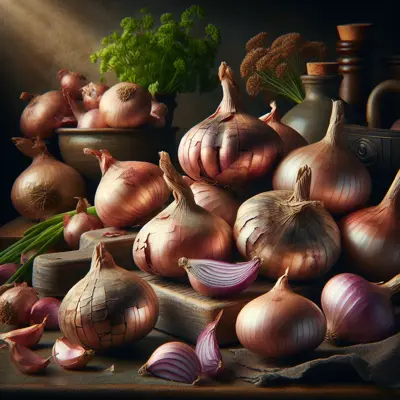
The gourmet cook's dream shallot, prized by French chefs for its complex, wine-like flavor and firm texture that holds up beautifully in cooking. These traditional gray-skinned shallots multiply from single bulbs into clusters of 6-12 bulbs with rose-colored flesh and incredible storage life. Their sophisticated flavor is milder than onions but more complex than garlic.
Harvest
90-120d
Days to harvest
Sun
Full sun
Zones
5–10
USDA hardiness
Height
12-18 inches
Planting Timeline
Showing dates for French Gray Shallot in USDA Zone 7
All Zone 7 allium →Zone Map
Click a state to update dates
French Gray Shallot · Zones 5–10
Growing Details
Succession Planting
French Gray Shallots don't suit tight succession planting the way greens do — each set goes in once and produces a cluster of bulbs over 90-120 days. In zone 7, plant sets from March through early May; anything going in after mid-May is racing the summer heat, and bulb sizing suffers when temperatures push past 85°F consistently. One planting per season is the norm.
If you want to spread the harvest workload, stagger by 3 weeks — put half your sets in early March and the rest in late March. You won't see dramatically different dig dates, but it distributes the curing and storage effort and gives you a small buffer if a late frost clips the first batch before it establishes.
Complete Growing Guide
French Gray Shallots require planting in fall (October-November in most regions) rather than spring, as they need vernalization to trigger proper bulb formation and clustering. Plant individual cloves 4-6 inches apart in well-draining soil enriched with compost, positioning them where they'll receive full sun and consistent moisture through winter and spring. This cultivar is notably prone to bolting if exposed to prolonged cold followed by warm temperatures, so choose a location with stable conditions and monitor for flower shoots, removing them immediately to redirect energy toward bulb development. While generally disease-resistant, ensure excellent drainage to prevent rot during wet springs. A practical tip: harvest when foliage yellows but before it completely dries, then cure in a warm, airy location for 3-4 weeks—this extended curing period is essential for developing their legendary storage life and allowing the distinctive gray skin to fully develop.
Light: Full sun (6 or more hours of direct sunlight a day). Soil: High Organic Matter, Loam (Silt), Sand. Soil pH: Alkaline (>8.0), Neutral (6.0-8.0). Drainage: Good Drainage, Moist. Height: 1 ft. 0 in. - 1 ft. 6 in.. Spread: 0 ft. 6 in. - 1 ft. 0 in.. Spacing: Less than 12 inches, 12 inches-3 feet. Maintenance: Medium. Regions: Coastal, Mountains, Piedmont.
Harvesting
Harvest French Gray Shallots when their distinctive gray outer skins begin to papery and crack slightly, and the tops yellow and fall over naturally—typically 90-120 days after planting. Individual bulbs should feel firm and dry when gently squeezed, and the clusters will have fully separated into distinct segments. Unlike onions grown for continuous harvest, shallots are pulled entirely at once when maturity signals appear, allowing proper curing. For this cultivar specifically, wait until at least 50% of the foliage has dried completely before harvesting; premature pulling reduces their legendary storage life and flavor concentration. Cure the clusters in a warm, well-ventilated space for 2-3 weeks before separating individual bulbs for storage.
Flowers wither and convert to bulblets
Type: Capsule.
Harvest time: Summer
Edibility: The bulb and tops are edible raw or cooked. However, the plant also has poisonous characteristics as noted in the "Poisonous to Humans" section of this record. Toxicity can depend on the age of the person or animal, the age of the plant, the part of the plant ingested, how much is ingested, whether the person or animal has sensitivities or allergies, whether it's eaten raw or cooked, and so forth. Consult with a medical professional for further details.
Storage & Preservation
Cure harvested French Gray shallots in a warm (80-85°F), well-ventilated area for 2-3 weeks until outer skins are papery and necks are completely dry. Once cured, trim roots and cut stems to 1 inch. Store in mesh bags or braided strands in a cool (32-40°F), dry location with good air circulation.
Properly cured French Gray shallots store 6-10 months—longer than most shallot varieties. Check monthly and remove any showing soft spots. For preservation, slice and dehydrate for seasoning blends, or freeze peeled cloves in oil. French Gray shallots make excellent pickled preserves due to their firm texture and complex flavor. Avoid refrigerating whole bulbs as humidity causes sprouting, but peeled shallots keep 7-10 days refrigerated.
History & Origin
The French Gray Shallot represents a traditional cultivar with deep roots in French culinary heritage, though precise breeding documentation remains limited in modern seed literature. These gray-skinned shallots emerged from classical European shallot breeding lines, likely developed through centuries of selection by French farmers and gardeners rather than from a single documented breeder or institution. The variety exemplifies the heritage shallot traditions of northern France, particularly associated with gourmet cooking practices established in the 19th and early 20th centuries. While specific provenance details are sparse in contemporary horticultural records, the French Gray's enduring presence in specialty seed catalogs confirms its status as an heirloom cultivar valued within professional culinary circles for generations.
Origin: Central Asia and central Persia
Advantages
- +Complex wine-like flavor makes French Gray superior for gourmet cooking
- +Multiplies into 6-12 bulbs per planted set, providing excellent yield
- +Exceptional storage life keeps bulbs fresh for months after harvest
- +Gray skin and rose flesh create visually striking, elegant presentations
- +Mild yet sophisticated taste balances well in refined French cuisine
Considerations
- -Requires 90-120 days, making it impractical for short growing seasons
- -Vulnerable to multiple diseases including neck rot and downy mildew
- -Onion thrips and bulb mites can significantly damage developing bulbs
- -Demands consistent moisture and well-draining soil for optimal bulb formation
Companion Plants
Carrots and shallots work well together for a practical reason: their root depths don't compete much, and the shallot's sulfur compounds are thought to deter carrot fly (Psila rosae). Lettuce tucks in between shallot rows without friction — shallow-rooted, tolerant of the partial shade as shallots fill in, and you'll pull the lettuce long before the shallots need the ground. Parsley planted at the row ends attracts parasitic wasps that prey on thrips, which French Gray shallots are prone to from about week 4 onward.
Beans and peas are the ones to plant elsewhere. Alliums suppress the Rhizobium bacteria that legumes need to fix nitrogen — crowd them together and your bean yield will show it. Asparagus is a permanent bed resident and resents competition from allium roots; both crops underperform if they share space, and asparagus takes years to recover from a bad season.
Plant Together
Carrots
Shallots repel carrot fly while carrots help break up soil for shallot bulb development
Tomatoes
Shallots deter aphids and other pests that commonly attack tomato plants
Lettuce
Shallots repel aphids and root maggots that damage lettuce, while lettuce doesn't compete for space
Brassicas
Shallots deter cabbage worms, flea beetles, and aphids that plague cabbage family plants
Strawberries
Shallots repel slugs and other pests while improving strawberry flavor and growth
Roses
Shallots deter aphids, thrips, and other rose pests while potentially reducing black spot disease
Peppers
Shallots repel aphids and may improve pepper flavor while not competing for nutrients
Parsley
Both plants have similar growing requirements and parsley attracts beneficial insects
Keep Apart
Beans
Legumes can inhibit allium growth and shallots may stunt bean development
Peas
Alliums can inhibit nitrogen fixation in peas and stunt their overall growth
Asparagus
Both are heavy feeders that compete for similar nutrients, potentially stunting growth of both crops
Nutrition Facts
Per 100g serving. % Daily Value based on 2,000 calorie diet. Source: USDA FoodData Central (FDC #170499)
Pests & Disease Resistance
Resistance
Good storage qualities, moderate disease resistance
Common Pests
Onion thrips, bulb mites, onion maggot
Diseases
Neck rot, downy mildew, purple blotch
Troubleshooting French Gray Shallot
What you'll see, why it happens, and what to do about it.
Leaf tips silvering or streaking, tiny black specks visible on foliage around weeks 4-6
Likely Causes
- Onion thrips (Thrips tabaci) — rasping feeders that scar epidermal tissue
- Dry, hot conditions that stress the plant and attract thrips populations
What to Do
- 1.Blast foliage with water early in the morning to knock thrips off — do this 3 days in a row
- 2.Apply spinosad-based spray (follow label rates) if populations are heavy; thrips hide in the neck folds, so aim there
- 3.Keep soil consistently moist — stressed plants get hit harder
Soft, water-soaked rot starting at the neck of the bulb at or near harvest time
Likely Causes
- Neck rot (Botrytis allii) — fungal infection that enters through the foliage, especially after wet weather close to maturity
- Harvesting before the necks have fully dried down
What to Do
- 1.Stop all irrigation when about 50% of the tops have fallen over naturally — let the soil dry out
- 2.Cure harvested bulbs in a single layer in a well-ventilated spot at 75-80°F for at least 2 weeks before storing
- 3.Don't store any bulb with a neck that still feels soft — those will rot and spread to neighbors
Gray-purple fuzzy coating on leaves, with foliage yellowing and collapsing in cool, wet weather
Likely Causes
- Downy mildew (Peronospora destructor) — worse in cool temps (50-70°F) with high humidity or overhead moisture
- Dense planting that restricts airflow between plants
What to Do
- 1.Space sets at least 4-6 inches apart and avoid overhead irrigation — drip or furrow watering keeps foliage dry
- 2.Remove and trash (don't compost) any heavily affected tops immediately
- 3.Apply a copper-based fungicide preventively if your springs tend to be wet — start before symptoms appear
Stunted, yellowing plants with bulbs that are small and scarred or tunneled when dug up
Likely Causes
- Onion maggot (Delia antiqua) — fly larvae that tunnel into developing bulbs underground
- Bulb mites (Rhizoglyphus robini) — secondary invaders that worsen damage in already-stressed roots
What to Do
- 1.Cover beds with floating row cover immediately after planting sets to exclude the adult fly — seal the edges
- 2.Rotate alliums to a different bed every year; onion maggot pupae overwinter in soil and will be waiting if you plant in the same spot
- 3.Destroy (don't compost) any infested plant material at the end of the season
Frequently Asked Questions
How long do French Gray shallots take to grow?▼
Can you grow French Gray shallots in containers?▼
What's the difference between French Gray shallots and regular shallots?▼
When should I plant French Gray shallots?▼
Are French Gray shallots good for beginners?▼
Do French Gray shallots multiply like regular onions?▼
Zone-by-Zone Planting Calendar
| Zone | Indoor Start | Transplant | Direct Sow | Harvest |
|---|---|---|---|---|
| Zone 3 | — | — | May – June | August – October |
| Zone 4 | — | — | April – June | August – October |
| Zone 5 | — | — | April – May | July – November |
| Zone 6 | — | — | April – May | July – November |
| Zone 7 | — | — | March – May | July – November |
| Zone 8 | — | — | March – April | June – December |
| Zone 9 | — | — | February – March | May – December |
| Zone 10 | — | — | January – March | May – December |
| Zone 1 | — | — | June – July | September – September |
| Zone 2 | — | — | May – July | September – September |
| Zone 11 | — | — | January – February | April – December |
| Zone 12 | — | — | January – February | April – December |
| Zone 13 | — | — | January – February | April – December |
Growing Guides from Wind River Greens
Sources & References
External authority sources used in compiling this guide.
- ExtensionNC State Extension
- USDAUSDA FoodData Central
See the Methodology page for how this data is sourced, what's AI-assisted, and known limitations.