Bouquet Dill
Anethum graveolens
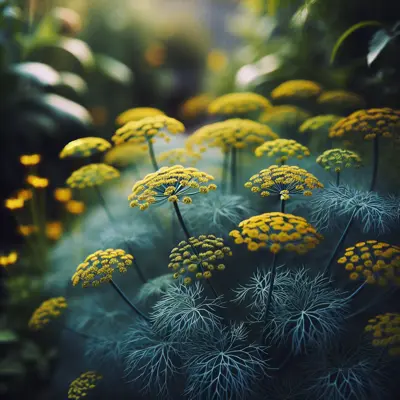
Early flowering plants produce large blooms, seed umbels, and foliage on long stems, making Bouquet the preferred dill for cut-flower use and pickling. Also an economical, fast-growing choice for baby-leaf production. Edible seeds, flowers, and greens flavor many foods. Popular addition to sauces, salads, and soup. Foliage known as dill weed. Edible Flowers: The flowers are used to garnish potato salad, green salads, and pickles. When broken into florets, they can be mixed into a cheese spread or omelet.Also available in organic seed.
Harvest
40-60d
Days to harvest
Sun
Full sun to partial shade
Zones
2–11
USDA hardiness
Height
2-5 feet
Planting Timeline
Showing dates for Bouquet Dill in USDA Zone 7
All Zone 7 herb →Zone Map
Click a state to update dates
Bouquet Dill · Zones 2–11
Growing Details
Succession Planting
Dill bolts fast once daytime temps push past 85°F, so in zone 7 you want to stagger direct sowings every 14-21 days starting around March 15 and stopping by late May. After that, the heat rushes everything straight to seed before you get much usable foliage. You can pick back up with a fall sowing around August 20-September 1, once nights drop back below 75°F — those fall plants grow slower and often stay in the foliage stage longer before flowering.
Bouquet Dill is a compact variety bred to hold off bolting a bit longer than standard dill, but "longer" is relative in a Georgia July. If you're growing primarily for seed (pickling dill), one or two late-spring sowings are plenty; if you want leaves across the season, the staggered approach is the only way to stay ahead of it.
Complete Growing Guide
Bouquet Dill's early-flowering tendency means it bolts quickly in warm weather, so sow seeds directly in spring as soon as soil is workable or in mid-summer for fall harvest to avoid premature flowering before foliage develops fully. This cultivar thrives in full sun with well-draining soil and moderate fertility—excessive nitrogen promotes leafy growth at the expense of the sturdy stems prized for cut flowers. Space plants 6–12 inches apart to encourage air circulation, which prevents powdery mildew and root rot in humid conditions. Bouquet's tall, branching growth habit makes it prone to lodging in windy sites, so staking taller plants ensures straight stems for harvesting. Unlike dwarf varieties, this tall cultivar demands consistent moisture during establishment but tolerates some drought once established. To maximize both foliage and seed production simultaneously, harvest outer leaves regularly before the plant reaches full bloom, which encourages bushier growth and delays complete senescence.
Light: Full sun (6 or more hours of direct sunlight a day), Partial Shade (Direct sunlight only part of the day, 2-6 hours). Soil: High Organic Matter, Loam (Silt), Sand. Soil pH: Acid (<6.0), Neutral (6.0-8.0). Drainage: Good Drainage, Moist. Height: 2 ft. 6 in. - 5 ft. 0 in.. Spread: 2 ft. 0 in. - 3 ft. 0 in.. Spacing: 12 inches-3 feet. Growth rate: Medium. Maintenance: Low. Propagation: Seed. Regions: Coastal, Mountains, Piedmont.
Harvesting
Bouquet Dill reaches peak harvest readiness when the seed umbels transition from green to yellow-brown and feel dry to the touch, while the stems remain sturdy and fully elongated at their mature 2–5 feet height. For continuous harvesting, pinch off outer leaves and flower heads regularly once plants reach 12 inches tall, encouraging bushier growth and extended productivity. Alternatively, cut entire stems at ground level for maximum yield of foliage and flowers. Time your main harvest in early morning after dew dries but before heat intensifies, as this preserves the plant's fresh, tangy flavor and aromatic oils. This cultivar's rapid growth cycle of 40–60 days allows successive plantings for uninterrupted supply throughout the season.
Dill fruits are oval, compressed with ridges and progress from bright green color to dark brown with age. They have a pleasant aromatic odor.
Color: Brown/Copper, Green. Type: Schizocarp. Length: < 1 inch. Width: < 1 inch.
Garden value: Edible, Fragrant
Harvest time: Fall, Spring, Summer
Edibility: Leaves (dill weed), seeds, and flowers are edible (used in teas, pickling, and as culinary seasoning). Dill herb and dill seed oils are steam-distilled and used by the food industry as seasonings. Add to pickles, mince in butter, and cook with salmon, borscht, fish, and soups. Dill can be used in teas and as seasoning for butter, cakes, bread, vinegars, soups, fish, pickles, salads, etc.
Storage & Preservation
Store fresh Bouquet Dill in the refrigerator at 35-40°F in a plastic bag or wrapped loosely in damp paper towels to maintain moisture without promoting rot. Keep humidity moderate, around 90-95%, to prevent wilting. Properly stored fresh dill lasts 7-10 days before declining in flavor and texture.
For longer preservation, freeze dill by chopping and placing it in ice cube trays with a splash of water, then transferring frozen cubes to freezer bags—this method works better than whole-leaf freezing since the herb's delicate structure doesn't hold up well to thawing. Dried dill is excellent for pickling projects; hang bundles upside down in a warm, airy space until fully dry, then crumble and store in airtight containers away from light. The tangy, pickle-like notes actually intensify slightly during drying, making this variety particularly suited to preservation for your pickling season. Avoid blanching before freezing, as it diminishes the bright, fresh character you want to capture.
History & Origin
The exact origin of Bouquet Dill is not extensively documented in readily available historical records, though it belongs to the broader Anethum graveolens heritage cultivated for thousands of years across Mediterranean and Asian regions. The variety appears to have emerged from conventional breeding programs focused on improving dill for commercial horticulture, particularly the cut-flower and pickling industries. Its emphasis on early flowering, tall stems with prominent seed umbels, and vigorous foliage production suggests deliberate selection within early-to-mid twentieth-century seed company breeding lines, though specific breeder attribution remains unclear. The cultivar represents a refinement of standard dill germplasm optimized for market demands rather than a distinct landrace heritage.
Origin: Mediterranean, southern Russia, northern and western Africa
Advantages
- +Early flowering and tall stems ideal for cut-flower arrangements and bouquets
- +Fast-growing variety perfect for quick baby-leaf harvesting and economic production
- +Edible flowers, seeds, and foliage provide multiple culinary uses simultaneously
- +Large seed umbels excellent for pickling and preserving applications
- +Classic fresh, tangy dill flavor works well in sauces, salads, soups
Considerations
- -Susceptible to parsley worm caterpillars requiring pest management attention
- -Prone to bolting quickly in warm weather, limiting harvest window
- -Vulnerable to powdery mildew and leaf blight in humid conditions
- -Tall growth habit may require staking or support in windy locations
Companion Plants
Dill's flat-topped umbel flowers — open by late spring if you sow in March — draw in parasitic wasps and predatory beetles that work over the aphids and parsley worm caterpillars hitting nearby cabbage, broccoli, and Brussels sprouts. That's an actual mechanism: the adult wasps need nectar to reproduce, and dill supplies it right when brassica pest pressure ramps up. Marigolds nearby add another layer; NC State Extension's IPM case work on nematode management notes that a solid planting of French marigolds can suppress root-knot nematode populations that would otherwise move into cucumber and tomato roots.
Carrots are the companion to skip. Both are Apiaceae, and if you let dill and carrots flower in the same bed, they'll cross-pollinate and ruin any seed stock you were planning to save. Fennel is a harder rule year-round: its roots release allelopathic compounds that stunt neighboring plants, and the two will cross freely if both bolt. In our zone 7 Georgia garden, that's easy to forget when you're filling a 4x8 bed in April — give fennel its own isolated corner and don't plant dill within 10 feet of it.
Plant Together
Cabbage
Dill repels cabbage worms and improves cabbage growth and flavor
Tomatoes
Dill attracts beneficial insects that prey on tomato hornworms and aphids
Cucumber
Dill repels cucumber beetles and attracts pollinators for better fruit set
Lettuce
Dill provides light shade and attracts beneficial insects while repelling aphids
Onions
Both plants repel common garden pests and do not compete for nutrients
Brussels Sprouts
Dill deters cabbage moths and improves the flavor of brassicas
Broccoli
Dill attracts parasitic wasps that control broccoli pests like aphids and caterpillars
Marigolds
Both attract beneficial insects and create a pest-deterrent combination
Keep Apart
Carrots
Mature dill can stunt carrot growth and affect root development
Fennel
Cross-pollinates with dill and can reduce seed viability and flavor
Lavender
Competes for similar nutrients and can inhibit dill's growth through allelopathy
Nutrition Facts
Per 100g serving. % Daily Value based on 2,000 calorie diet. Source: USDA FoodData Central (FDC #172233)
Pests & Disease Resistance
Resistance
Good resistance to most diseases, may get powdery mildew in humid conditions
Common Pests
Aphids, spider mites, parsley worm caterpillars
Diseases
Powdery mildew, damping off, leaf blight
Troubleshooting Bouquet Dill
What you'll see, why it happens, and what to do about it.
Seedlings collapse at the soil line — stems look pinched or water-soaked, sometimes with fuzzy white mold on the soil surface
Likely Causes
- Damping off — a complex of soil-borne fungi (Pythium, Rhizoctonia, Fusarium) that girdles stems right at the soil line
- Overwatering or poor drainage keeping the root zone saturated
- Sowing too densely, which traps moisture and cuts airflow between seedlings
What to Do
- 1.Pull and trash affected seedlings immediately — don't compost them
- 2.Let the top inch of soil dry out between waterings; dill doesn't need to stay consistently wet
- 3.Next sowing, thin to 4-6 inches at germination and stop overhead watering after 5 p.m.
White powdery coating on leaves and stems, usually appearing once plants hit 18-24 inches tall in late summer
Likely Causes
- Powdery mildew — a fungal disease that thrives in warm days, cool nights, and still air
- Crowded spacing or nearby tall crops blocking circulation around the dill
What to Do
- 1.Cut out and bag the worst-affected stems; don't leave debris on the soil surface where spores overwinter
- 2.Harvest or thin aggressively to open up the planting — dill packed at 4-inch spacing in a dense block invites this
- 3.If you're saving seed for next year's sowing, do it before mildew takes hold; plants don't recover well enough to be worth holding
Frequently Asked Questions
How long does Bouquet Dill take to grow?▼
Can you grow Bouquet Dill in containers?▼
Is Bouquet Dill good for beginners?▼
When should I plant Bouquet Dill?▼
What does Bouquet Dill taste like compared to other varieties?▼
Why does my Bouquet Dill keep bolting to seed?▼
Zone-by-Zone Planting Calendar
| Zone | Indoor Start | Transplant | Direct Sow | Harvest |
|---|---|---|---|---|
| Zone 2 | April – May | June – August | — | August – September |
| Zone 11 | January – January | January – March | — | March – December |
| Zone 3 | April – May | June – July | — | July – October |
| Zone 4 | March – April | June – July | — | July – October |
| Zone 5 | March – April | May – June | — | June – October |
| Zone 6 | March – April | May – June | — | June – November |
| Zone 7 | February – March | April – June | — | June – November |
| Zone 8 | February – March | April – May | — | May – December |
| Zone 9 | January – February | March – April | — | April – December |
| Zone 10 | January – January | February – April | — | April – December |
Growing Guides from Wind River Greens
Sources & References
External authority sources used in compiling this guide.
See the Methodology page for how this data is sourced, what's AI-assisted, and known limitations.