Bottle or Birdhouse
Lagenaria siceraria
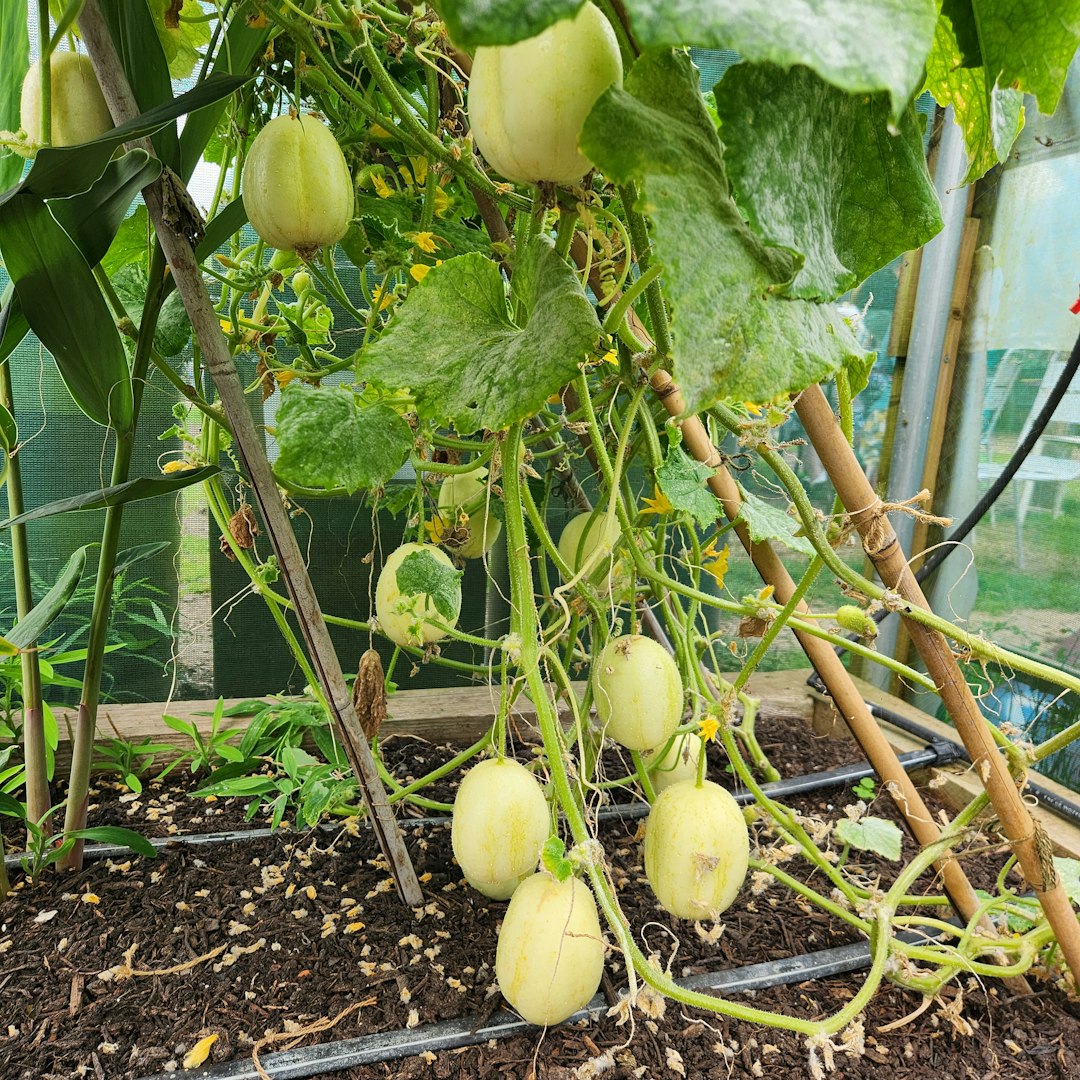
Bottle or Birdhouse squash is an heirloom decorative variety prized for its distinctive bulbous, bottle-shaped fruits with narrow necks resembling miniature gourds. Maturing in approximately 125 days, it produces tan or cream-colored gourds that are primarily ornamental, though the flesh is technically edible when young. The defining feature is its dramatic, whimsical form that makes it popular for fall decorations and dried arrangements rather than culinary use.
Harvest
125d
Days to harvest
Sun
Full sun
Zones
2–11
USDA hardiness
Height
9-18 inches
Planting Timeline
Showing dates for Bottle or Birdhouse in USDA Zone 7
All Zone 7 squash →Zone Map
Click a state to update dates
Bottle or Birdhouse · Zones 2–11
Growing Details
Succession Planting
Bottle gourd runs 125 days to harvest and produces gourds continuously until frost — a single sowing is all you need. Direct sow once between April and early June in zone 7. A second sowing in June puts your harvest window uncomfortably close to first frost, and these gourds need that full run to develop the hard shell that makes them worth keeping.
Complete Growing Guide
Larger, rounded blossom end with a narrow neck and slightly bulbed stem end. Harvest when the smooth, greenish rind turns white or starts to brown. Dry for crafting into durable bottles, birdhouses, etc. Trellis vines for consistent fruit shape. Avg. weight: 10-12 lb. According to Johnny's Selected Seeds, Bottle or Birdhouse is 125 days to maturity, annual, open pollinated.
Light: Full sun (6 or more hours of direct sunlight a day). Soil: Clay, High Organic Matter, Loam (Silt), Sand. Soil pH: Acid (<6.0), Alkaline (>8.0), Neutral (6.0-8.0). Drainage: Good Drainage, Moist. Height: 0 ft. 9 in. - 1 ft. 6 in.. Spread: 10 ft. 0 in. - 16 ft. 0 in.. Spacing: 3 feet-6 feet. Growth rate: Rapid. Maintenance: Medium. Propagation: Seed. Regions: Coastal, Mountains, Piedmont.
Harvesting
Bottle or Birdhouse reaches harvest at 125 days from sowing per Johnny's Selected Seeds. Expect 10-12 lb. at peak. As an annual, harvest continues until frost ends the season.
Fruit (a pepo to 3 feet long) has a smooth, light green skin when young, but matures to yellow or light brown. Mature fruits take a variety of shapes, including rounded, dumbbell-shaped, bottle-shaped or crookneck-shaped. The fruit is fleshy and dry but not split open.
Color: Cream/Tan. Length: > 3 inches. Width: > 3 inches.
Garden value: Edible, Showy
Harvest time: Summer
Edibility: Seeds, leaves, flowers, and young stems are all edible when the fruit is young. As it ages off the vine, the fruit hardens leaving the seeds inside.
Storage & Preservation
Harvest bottle gourds at full maturity (around 125 days) when the skin hardens completely and the stem begins to dry. For fresh storage, cure them in a warm, well-ventilated space for two to three weeks until the skin toughens further, then keep them in a cool (50–60°F), dry location with moderate air circulation—they'll last 3–6 months or longer if undamaged. Avoid plastic containers; use open shelving or mesh bags instead.
Bottle gourds are primarily grown as ornamental vessels rather than food, but the immature fruit can be treated like summer squash: freeze blanched and cubed pieces for up to eight months, or pressure-can at 10 pounds PSI for long-term shelf stability. Mature gourds are better dried whole for crafting; allow them to cure completely indoors before carving or treating. The thick, woody mature shell makes them ideal for storage vessels themselves—fill dried, hollowed gourds with dry goods like beans or seeds for pest-proof pantry storage.
History & Origin
Bottle or Birdhouse is open-pollinated, meaning seed saved from healthy plants will produce true-to-type offspring. Listed in the Johnny's Selected Seeds catalog.
Origin: Western Tropical Africa to Ethiopia and Tanzania
Advantages
- +Distinctive bottle shape makes attractive functional crafts and decorative birdhouses
- +Hard dried shell creates durable long-lasting vessels for storage or display
- +Trellising vines saves garden space while improving fruit shape consistency
- +Long 125-day season allows adequate time for complete maturation and hardening
- +Moderate difficulty accessible to intermediate gardeners with basic trellis support
Considerations
- -Extended growing season requires warm climate and full frost-free period
- -Heavy 10-12 lb fruits need sturdy trellis structures to prevent vine breakage
- -Requires careful drying time and proper storage to prevent mold or rot
Companion Plants
Corn and beans make sense here for practical reasons: beans fix nitrogen that feeds this heavy-feeding gourd, and corn gives the long vines something vertical to climb without taking up extra bed space. Nasturtiums work as a trap crop for aphids and cucumber beetles, drawing those pests away from the main plant. Tagetes patula (French marigold) has a documented repellent effect on cucumber beetles, and since NC State Extension points to overwintering eggs in soil debris as a key part of the beetle's life cycle, a dense border of marigolds pairs well with end-of-season bed cleanup. Keep potatoes out — they compete hard for the same moisture and share several fungal problems with cucurbits. Fennel is allelopathic to most vegetables and will suppress germination of nearby seeds; give it its own isolated spot far from this bed.
Plant Together
Corn
Provides natural trellis support for climbing squash vines, part of traditional Three Sisters planting
Beans
Fixes nitrogen in soil for heavy-feeding squash, completes Three Sisters companion system
Nasturtiums
Acts as trap crop for squash bugs and cucumber beetles, repels aphids
Radishes
Deters squash vine borers and cucumber beetles, breaks up soil for squash roots
Marigolds
Repels cucumber beetles, squash bugs, and nematodes with natural compounds
Catnip
Strongly repels squash bugs, cucumber beetles, and other squash pests
Dill
Attracts beneficial predatory insects that control squash pest populations
Oregano
Repels cucumber beetles and provides general pest deterrent through aromatic oils
Keep Apart
Potatoes
Compete for similar soil nutrients and space, may harbor similar fungal diseases
Fennel
Releases allelopathic compounds that inhibit squash growth and development
Aromatic Herbs (Sage)
Strong aromatic oils can inhibit squash growth and may attract harmful insects
Nutrition Facts
Per 100g serving. % Daily Value based on 2,000 calorie diet. Source: USDA FoodData Central (FDC #168040)
Pests & Disease Resistance
Common Pests
Squash vine borers, cucumber beetles, squash bugs
Diseases
Powdery mildew, squash vine blight, downy mildew
Troubleshooting Bottle or Birdhouse
What you'll see, why it happens, and what to do about it.
Vine wilts suddenly from the base up, with sawdust-like frass at the stem near soil level
Likely Causes
- Squash vine borer (Melittia cucurbitae) — larva tunnels into the main stem and feeds from inside
- Single-stemmed plants with no backup vines are especially vulnerable
What to Do
- 1.Wrap the lower 12 inches of stem with nylon stocking or foil before adults appear (early summer) to block egg-laying — NC State Extension's organic IPM guidance documents this working on cucurbit stems
- 2.If you find an entry hole with frass, slit the stem lengthwise with a razor blade, extract the larva, and bury that section under moist soil so it can re-root
- 3.After the season, pull all plant debris and turn the bed — borer pupae overwinter in the soil, and NC State Extension recommends rotating out of cucurbits for at least 3 years
White powdery coating spreading across upper leaf surfaces, usually after day 60, most visible during dry stretches with cool nights
Likely Causes
- Powdery mildew (Podosphaera xanthii or Erysiphe cichoracearum) — thrives when days are warm and nights drop, even without rain
- Dense canopy or vines left flat on the ground that trap humid air around the foliage
What to Do
- 1.Strip the worst-affected leaves and put them in the trash, not the compost pile
- 2.Apply potassium bicarbonate or a dilute baking soda solution (1 tablespoon per gallon of water) at first sign; repeat every 7 days
- 3.Train vines up a sturdy trellis and space plants the full 48 inches apart — airflow does more than any spray once the disease gets established
Frequently Asked Questions
How long does it take to grow Bottle Squash from seed to harvest?▼
Is Bottle Squash good for beginners?▼
Can you grow Bottle Squash in containers?▼
What should I use Bottle Squash for after harvest?▼
When should I plant Bottle Squash seeds?▼
How much sunlight does Bottle Squash need?▼
Zone-by-Zone Planting Calendar
| Zone | Indoor Start | Transplant | Direct Sow | Harvest |
|---|---|---|---|---|
| Zone 3 | — | — | June – July | November – October |
| Zone 4 | — | — | June – July | October – October |
| Zone 5 | — | — | May – June | October – October |
| Zone 6 | — | — | May – June | October – November |
| Zone 7 | — | — | April – June | September – November |
| Zone 8 | — | — | April – May | September – October |
| Zone 9 | — | — | March – April | August – September |
| Zone 10 | — | — | February – April | July – September |
| Zone 1 | — | — | July – August | December – August |
| Zone 2 | — | — | June – August | November – September |
| Zone 11 | — | — | January – March | June – August |
| Zone 12 | — | — | January – March | June – August |
| Zone 13 | — | — | January – March | June – August |
Growing Guides from Wind River Greens
Sources & References
External authority sources used in compiling this guide.
- ExtensionNC State Extension
- BreederJohnny's Selected Seeds
- USDAUSDA FoodData Central
See the Methodology page for how this data is sourced, what's AI-assisted, and known limitations.