Santa Rosa Plum
Prunus salicina 'Santa Rosa'
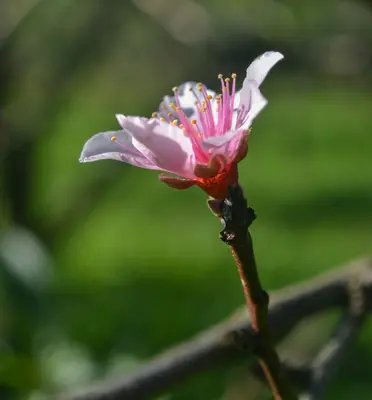
Luther Burbank's masterpiece, this Japanese plum variety produces gorgeous deep purple-red fruits with sweet, juicy yellow flesh that epitomizes summer stone fruit perfection. Santa Rosa is one of the most widely planted plum varieties due to its reliable production, excellent flavor, and beautiful appearance that makes it irresistible both in the garden and on the table. This vigorous tree blooms early with showy white flowers and typically produces heavy crops that benefit from thinning.
Harvest
100-120d
Days to harvest
Sun
Full sun to partial shade
Zones
5–8
USDA hardiness
Height
20-33 feet
Planting Timeline
Showing dates for Santa Rosa Plum in USDA Zone 7
All Zone 7 fruit-tree →Zone Map
Click a state to update dates
Santa Rosa Plum · Zones 5–8
Growing Details
Complete Growing Guide
Santa Rosa Plum requires cross-pollination with a compatible Japanese plum variety like 'Methley' or 'Ozark Premier' to set fruit reliably, making it essential to plant at least two trees if possible. This early-blooming cultivar demands full sun and well-draining soil to prevent root rot, particularly important given its susceptibility to brown rot and shot hole fungus in humid climates. Heavy fruit set is typical, so aggressive thinning to 4–6 inches apart prevents branch breakage and ensures larger, sweeter fruits. Watch for peach tree borers and spider mites, which favor stressed trees in hot, dry conditions. To maximize production and fruit quality, thin flowers or young fruitlets by mid-spring before the tree exhausts its resources on excessive fruit development.
Light: Full sun (6 or more hours of direct sunlight a day), Partial Shade (Direct sunlight only part of the day, 2-6 hours). Soil: Loam (Silt). Soil pH: Acid (<6.0), Alkaline (>8.0), Neutral (6.0-8.0). Drainage: Good Drainage, Moist. Height: 20 ft. 0 in. - 33 ft. 0 in.. Spread: 15 ft. 0 in. - 30 ft. 0 in.. Spacing: 12-24 feet, 24-60 feet. Growth rate: Medium. Propagation: Seed, Stem Cutting. Regions: Coastal, Mountains, Piedmont.
Harvesting
Santa Rosa plums reach peak harvest readiness when their deep purple-red skin darkens to nearly black and fruits yield slightly to gentle hand pressure, typically weighing around two to three ounces. Unlike single-harvest varieties, Santa Rosa produces its heavy crop over an extended period of two to three weeks, allowing for multiple picking rounds as fruits continue ripening on the tree. Harvest in the early morning when fruit is coolest and firmest for easier handling and better storage. Watch for the transition from firm to just-soft texture rather than waiting for complete softness, as this indicates maximum sugar development without overripeness. Thin fruit during late spring to encourage larger individual plums and reduce branch stress from the vigorous tree's prolific yield.
The fruit is a red to purple juicy drupe 1.5 to 3 in. in diameter with yellow-pink flesh. Harvested in the summer
Color: Gold/Yellow, Pink. Type: Drupe. Length: 1-3 inches. Width: 1-3 inches.
Garden value: Edible
Harvest time: Summer
Edibility: Fruits are edible raw or cooked. Fruit can be candied or made into a liqueur, pies, preserves or dried
Storage & Preservation
Store ripe Santa Rosa plums at room temperature for 2-3 days for immediate eating, or refrigerate for up to one week in the crisper drawer. For longer storage, pick fruits just before peak ripeness—they'll continue ripening at room temperature over several days.
For preservation, Santa Rosa's high sugar content and firm flesh make it ideal for jam-making and canning. Pit and quarter plums for freezing; their texture becomes soft after thawing but remains excellent for baking and sauces. The variety also produces exceptional dried plums (prunes) when dehydrated at 135°F for 18-24 hours until leathery.
Fresh plums can be fermented into wine or brandy, taking advantage of their natural sugars and complex flavor profile. Properly canned Santa Rosa plums maintain their taste and color for up to two years when processed using tested recipes.
History & Origin
Luther Burbank developed the Santa Rosa plum in his Sebastopol, California nursery around 1906, making it one of his most celebrated contributions to American horticulture. The variety emerged from Burbank's extensive breeding work with Japanese plum introductions, though the exact parentage remains somewhat unclear in historical records. Santa Rosa likely descended from Japanese plum varieties that Burbank imported and crossed with other cultivars to enhance flavor and commercial viability. The variety's introduction marked a turning point in plum breeding, combining the superior fruit quality of Japanese genetics with improved disease resistance and productivity for California's climate, ultimately revolutionizing fresh plum production across North America.
Origin: Russia, China, Vietnam, Taiwan
Advantages
- +Excellent sweet and juicy flavor with pleasant tartness appeals to most palates
- +Heavy crop production provides abundant harvests for fresh eating and preservation
- +Vigorous growth and reliable bearing make Santa Rosa a dependable choice
- +Showy white spring flowers add ornamental garden value before fruit production
- +Luther Burbank's masterpiece offers proven genetics and wide commercial availability
Considerations
- -Susceptible to brown rot, bacterial canker, and leaf spot diseases requiring management
- -Early bloom timing risks frost damage in areas with late spring freezes
- -Fruit requires thinning for optimal size and quality during heavy crop years
- -Multiple pest pressures including plum curculio and oriental fruit moth need monitoring
Companion Plants
Chives planted at the drip line are a reasonable starting point — their sulfur compounds are thought to deter aphids and scale insects, both of which will colonize Santa Rosa's new growth in spring. Marigolds (Tagetes spp.) work on similar principles and stay low enough not to compete for light. Lavender and tansy pull in parasitic wasps and hoverflies that keep oriental fruit moth populations from building up unchecked; you're essentially providing nectar and shelter for the insects that already want to kill your pests.
Comfrey is probably the most practically useful plant in this list. Put it 3-4 feet from the trunk and chop it down three or four times a season. The leaves are high in potassium and break down fast as surface mulch, feeding the tree without much effort on your part. White clover under the canopy fixes nitrogen and keeps foot traffic from compacting the soil. A mix of clover and one or two of the flowering herbs above is plenty — the understory doesn't need to be complicated.
Black walnut is the one exclusion worth taking seriously. Juglone — the allelopathic compound released from walnut roots, hulls, and leaf litter — is genuinely damaging to Prunus species; Santa Rosa will decline if planted within the root zone, which can extend well past the canopy edge on a mature tree. Fennel is similarly disruptive to most fruit trees and should stay out of the orchard. Tomatoes are a lesser concern but they compete hard for water during midsummer fruit development, exactly when Santa Rosa needs consistent moisture most.
Plant Together
Chives
Repels aphids and Japanese beetles while attracting beneficial insects
Marigolds
Deters nematodes and aphids, attracts pollinators and beneficial predatory insects
Comfrey
Deep roots bring nutrients to surface, leaves make excellent mulch and compost
Lavender
Repels moths and flies, attracts pollinators, and provides aromatic pest deterrent
Nasturtiums
Acts as trap crop for aphids and cucumber beetles, attracts beneficial predatory insects
White Clover
Fixes nitrogen in soil, provides ground cover, and attracts pollinators
Tansy
Repels ants, mice, and flying insects while deterring some fruit tree pests
Dill
Attracts beneficial wasps and ladybugs that control aphids and other soft-bodied pests
Keep Apart
Black Walnut
Produces juglone toxin that inhibits growth and can kill stone fruit trees
Fennel
Allelopathic properties inhibit growth of nearby plants including fruit trees
Tomatoes
Both susceptible to similar diseases and pests, creating concentrated disease pressure
Nutrition Facts
Per 100g serving. % Daily Value based on 2,000 calorie diet. Source: USDA FoodData Central (FDC #169949)
Pests & Disease Resistance
Resistance
Moderate disease resistance, susceptible to brown rot in humid conditions
Common Pests
Plum curculio, oriental fruit moth, aphids, scale insects
Diseases
Brown rot, bacterial canker, leaf spot, black knot
Troubleshooting Santa Rosa Plum
What you'll see, why it happens, and what to do about it.
Small crescent-shaped scars on developing fruit, with sticky gum weeping from the cuts, appearing in early summer
Likely Causes
- Plum curculio (Conotrachelus nenuphar) — a weevil that lays eggs in young fruit and leaves a telltale C-shaped scar
- Timing: adult weevils move in from woodland edges right after petal fall, which is the highest-risk window
What to Do
- 1.Spread a tarp under the tree and shake the trunk hard in the early morning — curculios drop and play dead, so you can collect and destroy them
- 2.Apply kaolin clay (Surround WP) as a barrier spray starting at petal fall and reapply after rain; this is your main tool in organic systems
- 3.Pick up dropped fruit daily — larvae complete their cycle in fallen fruit and pupate in the soil directly below the tree
Ripening fruit turning brown and soft with tan, powdery tufts on the surface, sometimes mummifying on the branch
Likely Causes
- Brown rot (Monilinia fructicola) — the most common stone fruit disease, hits hardest in warm, humid conditions right as fruit ripens
- Wounds from plum curculio or bird pecks give the fungus an entry point
What to Do
- 1.Remove and destroy mummified fruit — both fallen and those still hanging — before the next season; they're the primary inoculum source
- 2.Thin fruit to 3-4 inches apart so clusters don't trap moisture against each other
- 3.If you've had brown rot two years running, apply a copper-based fungicide at pink bud and again at petal fall; NC State Extension recommends timing sprays to weather events, not a fixed calendar
Sunken, dark, water-soaked cankers on branches or the trunk, with gummy amber sap oozing out; affected wood dies back over weeks
Likely Causes
- Bacterial canker (Pseudomonas syringae) — enters through pruning wounds, frost cracks, or leaf scars in wet weather
- Pruning during wet fall or winter weather dramatically raises infection risk
What to Do
- 1.Prune only during dry weather in late summer — August is better than February for Santa Rosa; cuts made in dry conditions seal faster and give Pseudomonas fewer entry points
- 2.Cut at least 6 inches below any visible discoloration and sterilize pruning tools with 70% isopropyl alcohol between cuts
- 3.Remove heavily cankered limbs entirely rather than treating them in place; Pseudomonas spreads through the vascular tissue and partial cuts just leave infected wood behind
Frequently Asked Questions
How long does Santa Rosa plum take to bear fruit?▼
Does Santa Rosa plum need a pollinator tree?▼
Can you grow Santa Rosa plum in containers?▼
What does Santa Rosa plum taste like?▼
When should I plant Santa Rosa plum trees?▼
How do you prevent brown rot on Santa Rosa plums?▼
Zone-by-Zone Planting Calendar
Growing Guides from Wind River Greens
Sources & References
External authority sources used in compiling this guide.
- ExtensionNC State Extension
- USDAUSDA FoodData Central
See the Methodology page for how this data is sourced, what's AI-assisted, and known limitations.