Lettuce Microgreens
Lactuca sativa
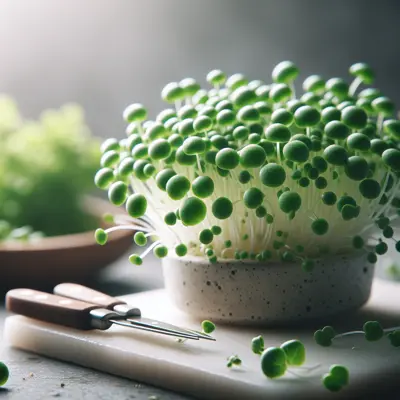
Lettuce microgreens are tender seedlings harvested at 1-2 inches tall, typically ready within 7-10 days of sprouting. These delicate greens feature soft, pale green leaves with a mild, slightly sweet flavor and buttery texture—distinctly different from mature lettuce. Unlike full-sized lettuce, microgreens are consumed whole, including the stem, delivering concentrated nutrients in a compact form. They excel as salad toppings, sandwich garnishes, and plate decorations, adding visual appeal and gentle flavor without bitterness. Their quick growth cycle and minimal space requirements make them ideal for indoor cultivation and home gardening beginners.
Harvest
47d
Days to harvest
Sun
Full sun to partial shade
Zones
2–11
USDA hardiness
Height
6-12 inches
Planting Timeline
Showing dates for Lettuce Microgreens in USDA Zone 7
All Zone 7 microgreen →Zone Map
Click a state to update dates
Lettuce Microgreens · Zones 2–11
Growing Details
Succession Planting
Lettuce microgreens run from sow to harvest in roughly 10-14 days when cut at the first true leaf stage — well short of the 47-day figure, which reflects full leaf development. Start a new tray every 7 days and you'll have cuts staggered enough to avoid a glut. Because you're growing indoors, there's no summer heat threshold or frost date to work around; the cadence stays the same in January as it does in August. The main thing that breaks people's succession rhythm is running low on coco coir or growing medium, not anything on the calendar — keep a backup bag on hand.
Complete Growing Guide
This patented red butterhead microgreen reaches maturity in 47 days and demands consistent moisture and cool temperatures between 60–65°F to prevent bolting, which is its primary challenge in warm climates. Unlike lighter varieties, the dark red pigmentation requires 12–14 hours of quality light daily to develop properly; insufficient light will result in pale, weak heads. Space seedlings to allow 4–6 inches of air circulation to minimize fungal issues, particularly powdery mildew, which favors dense plantings of this cultivar. Watch for aphids on the inner leaves during spring. The mild, buttery flavor develops best when you harvest at the full 6–12 inch height rather than cutting early, as immature heads lack the characteristic sweetness. Start seeds indoors 8–10 weeks before your target harvest date to account for the longer growing season compared to standard green microgreens.
Light: Full sun (6 or more hours of direct sunlight a day), Partial Shade (Direct sunlight only part of the day, 2-6 hours). Soil: High Organic Matter. Soil pH: Neutral (6.0-8.0). Drainage: Good Drainage, Moist. Height: 0 ft. 6 in. - 1 ft. 0 in.. Spread: 0 ft. 6 in. - 1 ft. 0 in.. Spacing: Less than 12 inches. Growth rate: Rapid. Maintenance: Medium. Propagation: Seed. Regions: Coastal, Mountains, Piedmont.
Harvesting
Harvest Lettuce Microgreens when the dark red outer leaves have fully developed their rich coloring while the green centers remain vibrant and tender, typically around the 7-10 day mark. The plants should feel crisp and firm to the touch, and the true leaves will have begun unfurling above the cotyledons. For continuous harvesting, cut the outer red leaves individually from the base, allowing the inner growth to mature for subsequent pickings over 2-3 weeks. Alternatively, a single harvest involves cutting all plants at soil level for maximum yield. Begin checking for readiness by day five, as these microgreens develop rapidly and peak flavor and texture occur within a narrow window before the leaves become tough or excessively bitter.
Tiny seeds with a dandelion-like tuft (pappus) to aid in wind dispersal.
Color: Brown/Copper. Type: Achene. Length: < 1 inch. Width: < 1 inch.
Harvest time: Summer
Edibility: Leaves can be used raw or cooked in salads, sandwiches, and other dishes. Head lettuce can be stored for 2-3 weeks while leaf and butterhead store for 1-2 weeks.
Storage & Preservation
Fresh lettuce microgreens are highly perishable and best used within 3-5 days of harvest. Store them immediately in the refrigerator between 35-40°F with high humidity. Place the cleaned microgreens in a breathable container lined with slightly damp paper towels, or use perforated plastic bags to maintain moisture while preventing condensation buildup.
Avoid washing until just before use, as excess moisture accelerates decay. For optimal freshness, store in crisper drawers where humidity levels remain consistent. Unlike mature lettuce, microgreens don't preserve well through traditional methods—they're too delicate for freezing and lose their crisp texture when dried. Your best preservation strategy is successive planting, starting new trays every 3-4 days to ensure continuous harvest of peak-quality microgreens.
History & Origin
The origins of Lettuce Microgreens remain largely undocumented in publicly available breeding records, though the variety belongs to the red butterhead lettuce class, a group developed through decades of selective breeding for heading ability and color contrast. Red butterheads emerged from European lettuce breeding traditions, particularly in regions with strong horticultural cultures. The MT0-30 designation suggests commercial development, likely by a seed company specializing in microgreen production, though specific breeding details and the year of introduction are not widely recorded. The recent grant of a Utility Patent indicates modern optimization for microgreen cultivation, distinguishing this variety from traditional field-grown butterheads and suggesting deliberate selection for the compact, dense growth characteristics required in controlled-environment microgreen production.
Origin: Mediterranean to Siberia
Advantages
- +Mild, sweet, buttery flavor makes lettuce microgreens highly palatable for salads
- +Large dark red heads with green centers provide attractive visual contrast
- +Excellent texture and consistent heading performance require minimal growing expertise
- +Easy difficulty level suits beginner and commercial microgreen growers
- +Beautiful appearance adds premium market value to fresh microgreen bundles
Considerations
- -Damping off disease risk requires careful watering and moisture management
- -Aphids can infest indoor lettuce microgreens despite generally uncommon occurrence
- -Forty-seven day maturation period is longer than faster microgreen varieties
- -Susceptible to bolting and bitterness if temperatures exceed optimal growing range
Companion Plants
Lettuce microgreens live in trays indoors, so the usual field-companion logic doesn't translate directly. If you're running multiple trays side by side, radish microgreens are a useful pairing — they germinate in 2-3 days, faster than nearly anything else, so a radish tray acts as a quick read on whether your temperature and moisture conditions are dialed in before your slower lettuce trays commit. Chives grow slowly enough that they won't race ahead and crowd a neighboring tray, and their light and misting needs line up well with lettuce. Cilantro and dill are similarly easygoing neighbors in a shared indoor setup.
Fennel is a problem even at the microgreen scale — it releases allelopathic compounds (sesquiterpene lactones, primarily) that suppress nearby seedlings. Brassica microgreens like broccoli or cabbage aren't chemically hostile, but their faster, denser growth makes them bad tray-mates for lettuce — mix them together and the brassicas physically crowd the lettuce out before you get a clean cut.
Plant Together
Chives
Repels aphids and other soft-bodied insects that attack lettuce
Radish
Quick germination helps break soil crust and deters flea beetles
Marigold
Repels aphids, whiteflies, and nematodes while attracting beneficial insects
Dill
Attracts beneficial insects and may improve lettuce flavor and growth
Garlic
Natural fungicide properties help prevent damping-off disease in microgreens
Nasturtium
Acts as trap crop for aphids and adds pest-repelling compounds to soil
Cilantro
Attracts beneficial insects and has similar growing requirements
Sweet Alyssum
Attracts parasitic wasps that control aphids and other lettuce pests
Parsley
Compatible growth habits and may help deter some flying pests
Keep Apart
Fennel
Produces allelopathic compounds that inhibit germination and growth of lettuce
Brassicas
Compete for similar nutrients and may harbor pests like flea beetles
Sunflower
Releases allelopathic chemicals that can inhibit lettuce seed germination
Nutrition Facts
Per 100g serving. % Daily Value based on 2,000 calorie diet. Source: USDA FoodData Central (FDC #167782)
Pests & Disease Resistance
Resistance
Downy Mildew (EU) races 16-26, 32 (High); Downy Mildew (US) races 5-9 (High); Lettuce Leaf Aphid Nasonovia ribisnigri (High); Lettuce Mosaic Virus (Intermediate)
Common Pests
Aphids (uncommon indoors)
Diseases
Damping off if kept too wet
Troubleshooting Lettuce Microgreens
What you'll see, why it happens, and what to do about it.
Seedlings collapse at the base and fall over, usually between days 3 and 7 after germination
Likely Causes
- Damping off (Pythium or Rhizoctonia fungal complex) — triggered by overwatering and poor airflow
- Tray left sitting in standing water
What to Do
- 1.Toss the tray — damping off doesn't reverse once it starts
- 2.Mist only 2-3 times daily and never let the tray sit in a drainage saucer with water pooled in it
- 3.Run a small fan nearby to keep air moving across the surface
Seeds germinate unevenly — patchy coverage with bare spots across the tray by day 5
Likely Causes
- Uneven seed distribution during sowing
- Dry pockets in the growing medium where seeds lost contact with moisture
- Seed viability issues, especially with older saved seed
What to Do
- 1.Sow densely and evenly — about 1 oz of seed per 10x20 tray works for most lettuce varieties
- 2.After sowing, press seeds gently into the medium with a flat board to ensure full contact
- 3.Test germination rate on any seed older than 2 years before committing a full tray
Greens are pale yellow or washed-out at harvest instead of deep green
Likely Causes
- Insufficient light — fewer than 4 hours of direct sun or weak grow-light coverage
- Blackout period extended too long past the point of germination
What to Do
- 1.Move trays to a south-facing window or position grow lights 2-3 inches above the canopy
- 2.Pull the blackout dome as soon as seeds have visibly germinated (usually day 3-4) — keeping them covered longer starves them of light
- 3.If using grow lights, run them 12-16 hours per day
Fuzzy white growth spreading across seeds or along the soil line within the first 3 days
Likely Causes
- Mold (commonly Botrytis or Mucor species) from excess humidity trapped under the blackout dome
- Seed density too high, creating anaerobic conditions at the surface
What to Do
- 1.Distinguish mold from root hairs before panicking — root hairs grow from the seed itself and look wispy and uniform; mold spreads irregularly across the medium surface
- 2.If it's mold, lift the blackout dome for 30 minutes twice a day to let moisture escape
- 3.Back off misting frequency and make sure the growing medium is damp but not saturated before you sow
Frequently Asked Questions
How long do lettuce microgreens take to grow?▼
Can you grow lettuce microgreens without soil?▼
Do lettuce microgreens need light to grow?▼
Are lettuce microgreens good for beginners?▼
What do lettuce microgreens taste like?▼
How many times can you harvest lettuce microgreens?▼
Zone-by-Zone Planting Calendar
| Zone | Indoor Start | Transplant | Direct Sow | Harvest |
|---|---|---|---|---|
| Zone 3 | January – December | — | — | January – December |
| Zone 4 | January – December | — | — | January – December |
| Zone 5 | January – December | — | — | January – December |
| Zone 6 | January – December | — | — | January – December |
| Zone 7 | January – December | — | — | January – December |
| Zone 8 | January – December | — | — | January – December |
| Zone 9 | January – December | — | — | January – December |
| Zone 10 | January – December | — | — | January – December |
| Zone 1 | January – December | — | — | January – December |
| Zone 2 | January – December | — | — | January – December |
| Zone 11 | January – December | — | — | January – December |
| Zone 12 | January – December | — | — | January – December |
| Zone 13 | January – December | — | — | January – December |
Growing Guides from Wind River Greens
Sources & References
External authority sources used in compiling this guide.
See the Methodology page for how this data is sourced, what's AI-assisted, and known limitations.