Early Arrow White
Matthiola incana
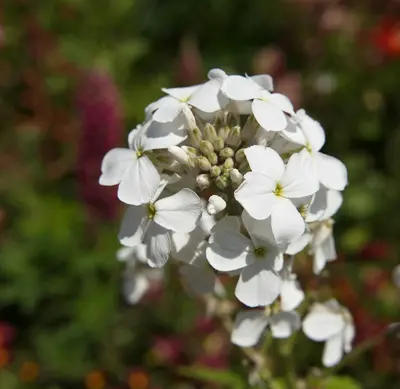
"Hi-double" plants produce 90% or more double-flowering plants. From the same breeder as the Iron series, Early Arrow is very similar to Iron in overall performance with very straight, strong stems and highly uniform plants. Long stems with 1 1/2-2", pure white blooms. One-cut series. Performed well in our spring, early summer, and fall trials. Seedling selection for double flowers is not necessary; plants will yield at least 90% double blooms without selection. NOTE: This variety produces one flowering stem per plant. Pinching is not advisable as it will terminate flowering. Edible Flowers: The peppery, clove-like flavor of the flowers lends itself well to use as a garnish on salads, desserts, and drinks.
Harvest
90-105d
Days to harvest
Sun
Full sun to partial shade
Zones
6–10
USDA hardiness
Height
1-3 feet
Planting Timeline
Showing dates for Early Arrow White in USDA Zone 7
All Zone 7 flower →Zone Map
Click a state to update dates
Early Arrow White · Zones 6–10
Growing Details
Succession Planting
Stock is a cool-to-warm season annual that doesn't rebloom once cut, so staggered sowings matter if you want more than one flush of flowers. In zone 7, start a first round indoors in late February, transplant out in April, and follow with a second direct sow in early May. That typically spreads your bloom window across 4-6 weeks rather than getting everything at once. Stop sowing by early June — daytime highs above 85°F cause buds to blast before they open, and you'll get foliage with no payoff.
For a fall cut, work backward from your first frost date (around mid-November in zone 7) and start seeds indoors in late August, transplanting out in September. Stock needs 90-105 days, so the math is tight but workable if you don't drag your feet getting seeds started.
Complete Growing Guide
"Hi-double" plants produce 90% or more double-flowering plants. From the same breeder as the Iron series, Early Arrow is very similar to Iron in overall performance with very straight, strong stems and highly uniform plants. Long stems with 1 1/2-2", pure white blooms. One-cut series. Performed well in our spring, early summer, and fall trials. Seedling selection for double flowers is not necessary; plants will yield at least 90% double blooms without selection. NOTE: This variety produces one flowering stem per plant. Pinching is not advisable as it will terminate flowering. Edible Flowers: The peppery, clove-like flavor of the flowers lends itself well to use as a garnish on salads, desserts, and drinks. According to Johnny's Selected Seeds, Early Arrow White is 90 - 105 days to maturity, annual, open pollinated. Notable features: Use for Cut Flowers and Bouquets, Edible Flowers, Fragrant.
Light: Full sun (6 or more hours of direct sunlight a day), Partial Shade (Direct sunlight only part of the day, 2-6 hours). Soil: Clay, High Organic Matter, Loam (Silt), Sand. Soil pH: Alkaline (>8.0), Neutral (6.0-8.0). Drainage: Good Drainage, Moist. Height: 1 ft. 0 in. - 3 ft. 0 in.. Spread: 0 ft. 9 in. - 1 ft. 6 in.. Spacing: Less than 12 inches, 12 inches-3 feet. Growth rate: Rapid. Maintenance: Low. Propagation: Seed. Regions: Coastal, Mountains.
Harvesting
Early Arrow White reaches harvest at 90 - 105 days from sowing per Johnny's Selected Seeds. Expect 1 1/2-2" at peak. As an annual, harvest continues until frost ends the season.
Seeds will ripen in August and September.
Harvest time: Fall
Storage & Preservation
For fresh storage, keep cut stems in a clean vase with fresh, cool water at 65-72°F, changing water every 2-3 days for a vase life of 7-10 days. Store arrangements away from direct sunlight, ripening fruit, and ethylene-producing appliances. For preservation, air-dry stems by hanging them upside down in a dark, well-ventilated space for 2-3 weeks to create long-lasting dried arrangements. Alternatively, press individual blooms between parchment paper under weight for 1-2 weeks to preserve as flat specimens for crafts or arrangements. For edible use, harvest petals fresh and use immediately, or dry them on screens at room temperature for herbal tea or garnish storage in airtight containers.
History & Origin
Early Arrow White is open-pollinated, meaning seed saved from healthy plants will produce true-to-type offspring. Listed in the Johnny's Selected Seeds catalog.
Origin: The Coast of Europe from Spain to Greece.
Advantages
- +90% double flowers without seedling selection saves time and labor
- +Very straight, strong stems ideal for professional cut flower arrangements
- +Performs consistently well across spring, summer, and fall growing seasons
- +Long stems with pure white blooms offer premium market appeal
- +Edible flowers with peppery clove flavor add culinary versatility
Considerations
- -Single stem per plant limits yield compared to pinchable varieties
- -One-cut series means no regrowth after harvest reduces productivity
- -Requires 90-105 days to flower, longer than some competing varieties
- -Stock flowers susceptible to root rot in poorly drained soils
Companion Plants
Marigolds (especially Tagetes patula) are the workhorses here — they deter aphids and whiteflies through root secretions and scent, and both plants want full sun with similar water needs, so they don't compete for resources. Sweet alyssum fills in at ground level, drawing in hoverflies and parasitic wasps that knock back soft-bodied pests before they establish on the stock. Chives do similar work through scent disruption, and at 8-12 inches they won't shade the stock out. Calendula earns a spot as a trap crop as much as a companion — aphids tend to hit it first, giving you an early warning and a sacrificial buffer.
Keep stock well away from black walnut trees (Juglans nigra), which release juglone from their roots — a compound that stunts or kills many broadleaf annuals, sometimes well beyond the canopy edge. In our zone 7 Georgia gardens, sunflowers are trouble too: they're allelopathic, and the tall ones cast enough afternoon shade to slow flowering on a plant that needs every one of those 90-105 days of light to perform.
Plant Together
Marigolds
Repel aphids, whiteflies, and nematodes while attracting beneficial insects
Sweet Alyssum
Attracts beneficial insects like hoverflies and parasitic wasps for pest control
Nasturtiums
Act as trap crops for aphids and cucumber beetles while repelling squash bugs
Calendula
Attracts pollinators and beneficial predatory insects while deterring harmful nematodes
Chives
Repel aphids and thrips with their strong sulfur compounds
Petunias
Natural pest deterrent against aphids, tomato hornworms, and asparagus beetles
Lavender
Repels moths, fleas, and mosquitoes while attracting beneficial pollinators
Cosmos
Attract beneficial insects and provide habitat for pest predators
Keep Apart
Black Walnut Trees
Release juglone toxin that inhibits growth and can kill sensitive plants
Eucalyptus
Produces allelopathic compounds that suppress growth of nearby plants
Sunflowers
Compete aggressively for nutrients and water, may stunt growth of smaller plants
Troubleshooting Early Arrow White
What you'll see, why it happens, and what to do about it.
Stem at soil line turns dark brown and pinches in, seedling collapses — typically 1-2 weeks after germination or transplant
Likely Causes
- Damping off (Pythium or Rhizoctonia solani) — fungal rot triggered by wet, poorly drained soil and low airflow
- Overwatering or containers without adequate drainage holes
What to Do
- 1.Remove and discard collapsed seedlings immediately — they won't recover
- 2.Let the top inch of soil dry slightly between waterings; stock is not as thirsty as it looks
- 3.If starting indoors, run a small fan near the trays for 1-2 hours a day to improve airflow and reduce surface moisture
Lower leaves develop gray, powdery coating; plant looks dusty by midsummer
Likely Causes
- Powdery mildew (Erysiphe cruciferarum) — common on Brassica-family plants including Matthiola, especially as nights cool and days stay warm
- Overcrowded planting at less than 12 inches apart, restricting air circulation
What to Do
- 1.Strip affected leaves and bag them — don't compost Brassica-family debris
- 2.Apply a diluted neem oil spray (2 tsp per quart of water) every 7-10 days once you see the first signs
- 3.Next season, hold to the 12-18 inch spacing — stock planted tighter than that invites this every time
Frequently Asked Questions
How long does Early Arrow White take from seed to flowers?▼
Is Early Arrow White a good choice for beginner flower growers?▼
Can I grow Early Arrow White in containers?▼
What does Early Arrow White taste like, and how do I use the flowers?▼
When should I plant Early Arrow White seeds?▼
Why shouldn't I pinch Early Arrow White plants?▼
Zone-by-Zone Planting Calendar
| Zone | Indoor Start | Transplant | Direct Sow | Harvest |
|---|---|---|---|---|
| Zone 1 | May – June | July – August | July – September | — |
| Zone 2 | April – May | June – July | June – August | — |
| Zone 11 | January – January | January – February | January – March | — |
| Zone 12 | January – January | January – February | January – March | — |
| Zone 13 | January – January | January – February | January – March | — |
| Zone 3 | April – May | June – July | June – August | — |
| Zone 4 | March – April | June – June | June – July | — |
| Zone 5 | March – April | May – June | May – July | — |
| Zone 6 | March – April | May – June | May – July | — |
| Zone 7 | February – March | April – May | April – June | — |
| Zone 8 | February – March | April – May | April – June | — |
| Zone 9 | January – February | March – April | March – May | — |
| Zone 10 | January – January | February – March | February – April | — |
Growing Guides from Wind River Greens
Sources & References
External authority sources used in compiling this guide.
- BreederJohnny's Selected Seeds
See the Methodology page for how this data is sourced, what's AI-assisted, and known limitations.