Cascadia
Pisum sativum
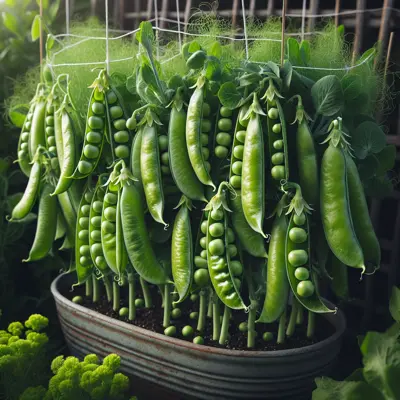
Cascadia boasts high yields of 2 1/2-3" pods on 18-20" vines. Similar in maturity to PLS 141, but with slightly smaller pod size. 2 pods per node on upright plants. Remove string from pods before cooking.
Harvest
60d
Days to harvest
Sun
Full sun to partial shade
Zones
2–11
USDA hardiness
Height
12-18 inches
Planting Timeline
Showing dates for Cascadia in USDA Zone 7
All Zone 7 pea →Zone Map
Click a state to update dates
Cascadia · Zones 2–11
Growing Details
Succession Planting
Direct sow Cascadia every 14 days starting when soil hits 45°F — in zone 7, that's typically around early March — and keep going through late April. Stop sowing once daytime highs are consistently above 75°F; pea flowers drop and pods don't set well in heat, and Cascadia's 60-day window means a mid-May sow is already a gamble. The planting calendar shows harvest running through November, which points to a fall planting — sow again in late August once the worst heat breaks, targeting pod fill before first frost.
For fall successions, count back 65–70 days from your average first frost date to find your last viable sow date. In zone 7 that's usually a mid-September cutoff. Two or three rounds — early spring, a cautious late-spring push, early fall — is plenty. Trying to squeeze in more just means racing weather you're likely to lose.
Complete Growing Guide
Start preparing your Cascadia pea beds in late winter, choosing a location that receives morning sun but benefits from some afternoon shade in hot climates. Work compost or aged manure into well-draining soil, aiming for a pH between 6.0-7.0. Avoid fresh nitrogen-rich fertilizers, as peas fix their own nitrogen and excess can reduce pod production.
Direct sow Cascadia seeds 2-4 weeks before your last expected frost when soil temperature reaches 45°F. Plant seeds 1-2 inches deep and 2-3 inches apart in rows spaced 18 inches apart. In zones 3-5, wait until soil is workable but still cool. Southern gardeners in zones 8-9 should plant in late fall for spring harvest. Soak seeds for 6-8 hours before planting to improve germination, but avoid soaking longer as they may split.
Install support structures at planting time since Cascadia grows 24-30 inches tall and produces heavy pods. Use bamboo stakes with string or small trellises. While more compact than traditional varieties, proper support prevents wind damage and makes harvesting easier.
Water consistently but avoid overwatering, which leads to root rot. Cascadia performs best with 1 inch of water weekly, applied at soil level to prevent foliar diseases. Mulch around plants once they're 4 inches tall to retain moisture and suppress weeds.
Avoid the common mistake of harvesting too late—Cascadia pods should snap crisply when bent. Check plants daily once flowering begins, as pods can become tough within 2-3 days of peak ripeness. For continuous harvest, succession plant every 2 weeks through early spring, stopping 10 weeks before hot summer weather arrives.
Maximize yield by pinching growing tips once plants reach full height, which encourages more pod development on side shoots. Handle plants when dry to prevent spreading bacterial diseases, and harvest in the morning when pods are fully hydrated and crisp.
Harvesting
Harvest Cascadia pods 60-70 days from planting when they're bright green, plump, and the peas inside are clearly visible but still tender. The pod should snap cleanly when bent—this is your primary ripeness test. Pods ready for harvest will be 3-4 inches long with a glossy, bright green color and firm texture.
Harvest in early morning when pods are fully hydrated and at peak crispness. Use both hands when picking: hold the vine with one hand while gently pulling pods upward and outward with the other to avoid damaging the delicate stems. Never yank or twist, as this can break branches and reduce future production.
Check plants daily during peak season, as Cascadia pods can go from perfect to tough and fibrous within 48 hours. Pick all ready pods to encourage continued flowering and pod development. If you miss the sugar snap stage, allow pods to mature fully for fresh shelling peas, though this will reduce overall yield.
Storage & Preservation
Fresh Cascadia pods maintain peak quality for 3-5 days when stored in perforated plastic bags in the refrigerator crisper drawer. Don't wash before storing, as excess moisture promotes decay. For best flavor and crispness, consume within 24-48 hours of harvest.
For longer preservation, blanch whole pods in boiling water for 2-3 minutes, immediately plunge into ice water, then freeze in airtight containers for up to 8 months. Frozen Cascadia pods work well in stir-fries and cooked dishes but lose their characteristic snap when thawed.
Dehydrate young, tender pods at 125°F for 8-12 hours for a healthy snack that retains much of the sweet flavor. Properly dried pods should snap cleanly and can be stored in airtight containers for 6 months. Avoid canning sugar snap peas, as the process makes pods mushy and unpalatable.
History & Origin
Cascadia was developed through the collaborative breeding efforts of Dr. Jim Baggett at Oregon State University and released in the 1980s as part of a focused program to create disease-resistant pea varieties for Pacific Northwest growing conditions. The variety was specifically bred to combine the eating qualities of snow peas and shell peas while addressing the region's persistent problems with powdery mildew and pea enation mosaic virus.
This hybrid variety earned All-America Selections recognition for its exceptional disease resistance and reliable production across diverse growing conditions. The breeding program crossed traditional sugar snap varieties with disease-resistant breeding lines, selecting for plants that maintained excellent flavor while showing superior resistance to common pea ailments.
Cascadia's development represented a significant advancement in sugar snap pea breeding, proving that disease resistance didn't require sacrificing the sweet, crisp texture that makes sugar snaps so popular. The variety's compact growth habit was an additional breeding goal, making it suitable for smaller gardens and container growing while maintaining commercial-level productivity.
Advantages
- +Exceptional resistance to powdery mildew and pea enation mosaic virus eliminates common disease problems
- +Compact 24-30 inch height requires minimal staking compared to 6-foot traditional varieties
- +All-America Selections winner with proven performance across diverse climates and growing conditions
- +Extended harvest window of 2-3 weeks from a single planting maximizes garden space efficiency
- +Superior pod quality retention—stays crisp and sweet longer than most sugar snap varieties
- +Reliable germination and establishment in cool, wet spring conditions that challenge other varieties
- +Heavy production with multiple pods per node increases yield per square foot
Considerations
- -Hybrid variety means seeds cannot be saved for replanting true-to-type plants
- -Still susceptible to root rot in poorly-drained soils despite general disease resistance
- -Requires consistent moisture—irregular watering leads to tough, fibrous pods
- -Performance declines rapidly in hot weather above 75°F, limiting summer growing
- -More expensive seed cost compared to open-pollinated varieties
Companion Plants
Carrots and radishes are the most practical neighbors for Cascadia. Carrots share root depth without competing for the same nutrients, and radishes do double duty — they break up compacted soil as they push through, and their pungency trips up aphids and thrips, two pests NC State Extension flags as common on peas. Chives work on the same principle: sulfur compounds deter aphids without claiming much square footage. French marigolds at row ends are worth planting if you've had root-knot nematode pressure in the bed before — NC State Extension's IPM materials specifically recommend a solid French marigold planting to knock back nematode populations before returning to susceptible crops.
Onions and garlic are the ones to pull off the list. Both release allelopathic compounds that suppress legume growth and can interfere with the nitrogen-fixing rhizobia living in pea root nodules — you'd essentially be undermining one of the few things peas do for your soil. Gladiolus brings a different problem: it competes hard for the same shallow 6–12 inches of soil and acts as a thrips reservoir, so putting it in the same bed just seeds a pest outbreak.
Plant Together
Chives
Repel aphids and improve overall garden ecosystem health
Carrots
Peas improve soil nitrogen for carrots, while carrots don't compete for nutrients
Radishes
Break up soil for pea roots and mature quickly before peas need full space
Lettuce
Benefits from nitrogen fixed by peas and provides ground cover to retain moisture
Spinach
Enjoys the nitrogen-rich soil created by pea root nodules
Marigolds
Repel aphids and other pests that commonly attack pea plants
Nasturtiums
Act as trap crops for aphids and cucumber beetles that target peas
Mint
Deters ants and aphids while attracting beneficial predatory insects
Keep Apart
Onions
Can inhibit pea growth and nitrogen fixation through root secretions
Garlic
Allelopathic compounds can stunt pea growth and reduce pod production
Gladiolus
Competes heavily for nutrients and can harbor thrips that damage pea pods
Nutrition Facts
Per 100g serving. % Daily Value based on 2,000 calorie diet. Source: USDA FoodData Central (FDC #170419)
Pests & Disease Resistance
Resistance
Fusarium Wilt (Intermediate); Pea Enation Mosaic Virus (High); Powdery Mildew (Intermediate)
Common Pests
Aphids, thrips, pea weevils, leaf miners
Diseases
Root rot (in poorly drained soils), bacterial blight, downy mildew
Troubleshooting Cascadia
What you'll see, why it happens, and what to do about it.
Yellowing leaves with a grayish-purple fuzz on the undersides, spreading fast in cool, wet weather
Likely Causes
- Downy mildew — a fungus-like oomycete pathogen that thrives when nights are cool (below 65°F) and foliage stays wet
- Crowded plantings at less than 2-inch spacing that trap humidity
What to Do
- 1.Pull and bag affected plants — don't compost them
- 2.Water at the base, not overhead, and water in the morning so foliage dries before nightfall
- 3.Next planting, space to at least 3 inches and consider a row of radishes alongside to break up the canopy density
Water-soaked spots on leaves and pods that turn brown and papery, sometimes with a yellow halo, early in the season
Likely Causes
- Bacterial blight (Pseudomonas syringae pv. pisi) — spreads readily in cool, wet conditions and on wet hands or tools
- Working in the garden when plants are wet
What to Do
- 1.Stay out of the bed while foliage is wet — that's the main way bacterial blight moves plant to plant
- 2.Remove affected stems cleanly with sanitized scissors and trash the cuttings
- 3.Rotate peas out of this bed for at least 2 seasons; the bacterium persists in plant debris
Plants stunted with yellowing foliage, collapsing at the soil line, roots brown and mushy
Likely Causes
- Root rot — most often Pythium or Fusarium species in poorly drained or compacted soil
- Direct sowing into cold, wet soil below 45°F, which slows germination and extends pathogen exposure
What to Do
- 1.Don't sow until soil temperature is at least 45°F — Cascadia germinates in 7–14 days under good conditions, but seeds sitting in cold mud just rot
- 2.Amend heavy clay beds with compost before planting and raise rows 3–4 inches if drainage is poor
- 3.Affected plants can't be saved; pull them, improve drainage, and wait until conditions dry before resowing
Frequently Asked Questions
How long does Cascadia pea take to grow from seed to harvest?▼
Can you grow Cascadia peas in containers?▼
Is Cascadia pea good for beginners?▼
What does Cascadia pea taste like compared to other sugar snap varieties?▼
When should I plant Cascadia peas in spring?▼
Do Cascadia peas need full sun or can they handle shade?▼
Zone-by-Zone Planting Calendar
| Zone | Indoor Start | Transplant | Direct Sow | Harvest |
|---|---|---|---|---|
| Zone 3 | — | — | May – June | July – October |
| Zone 4 | — | — | April – June | June – October |
| Zone 5 | — | — | April – May | June – November |
| Zone 6 | — | — | April – May | June – November |
| Zone 7 | — | — | March – May | May – November |
| Zone 8 | — | — | March – April | May – December |
| Zone 9 | — | — | February – March | April – December |
| Zone 10 | — | — | January – March | March – December |
| Zone 1 | — | — | June – July | August – September |
| Zone 2 | — | — | May – July | July – September |
| Zone 11 | — | — | January – February | February – December |
| Zone 12 | — | — | January – February | February – December |
| Zone 13 | — | — | January – February | February – December |
Growing Guides from Wind River Greens
Sources & References
External authority sources used in compiling this guide.
- BreederJohnny's Selected Seeds
- USDAUSDA FoodData Central
See the Methodology page for how this data is sourced, what's AI-assisted, and known limitations.